The Critical Need for Biocide in Closed Loops
In modern building services, the move toward lower operating temperatures in LTHW systems (typically 45°C to 55°C) has created an environment conducive to microbial growth. Unlike traditional high-temperature systems that naturally pasteurise the water, contemporary circuits require active chemical intervention. BSRIA BG50 emphasises that biocide dosing is not merely an option but a necessity to prevent the formation of biofilm, which acts as an insulator and increases pumping energy requirements.
Biocides are generally categorised into oxidising and non-oxidising agents. For closed loops, non-oxidising biocides—such as Isothiazolinone or Isothiazolone—are preferred as they do not contribute to the oxidative corrosion of metallic components. These chemicals must be introduced in 'slug doses' to achieve a high enough concentration to kill bacteria throughout the circuit, rather than allowing them to build a resistance to low-level continuous dosing.
- Pseudomonas: Common in CHW systems, forming thick biofilms that block valves and strainers.
- Sulphate Reducing Bacteria (SRB): Thrive in anaerobic conditions under deposits, producing sulphuric acid that causes rapid pitting.
- Nitrite Reducing Bacteria (NRB): Degrade nitrite-based inhibitors, leaving the system vulnerable to oxygen-led corrosion.
Positioning and Installation within the Plant Room
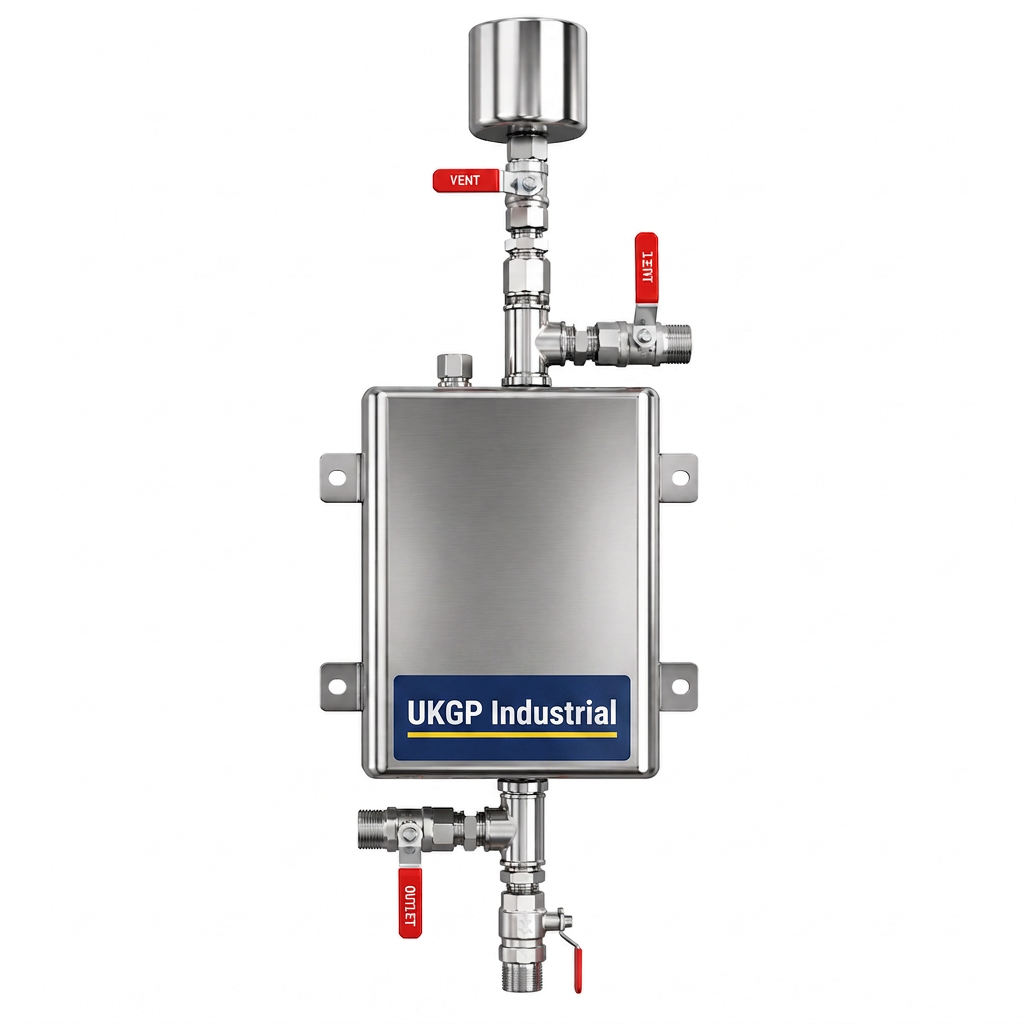
A chemical dosing pot should be installed across the flow and return headers, or across the primary circulating pump, to utilise the differential pressure (ΔP) for chemical induction. It is essential that the pot is piped in parallel to the main system flow. UKGP Industrial dosing pots are equipped with stainless steel shells as standard, ensuring compatibility with a wide range of biocides and inhibitors that might react with mild steel over time.
The installation should include isolation valves, a non-return valve to prevent backflow into the chemical vessel, and a tundish for safe drainage. The orientation is critical: the flow into the pot should enter via the bottom valve, and the chemical-laden water should exit via the top valve. This ensures that the chemical is thoroughly mixed within the vessel before entering the system. Safety is paramount; ensure the pot is rated for the system’s maximum working pressure, typically 5 bar or 10 bar in commercial UK installations.
Sequential Procedure for Biocide Dosing
The process of 'shot' dosing requires a methodical approach to ensure both operator safety and system integrity. Before commencing, engineers must consult the system volume data and the specific concentration requirements of the biocide. Over-dosing can be wasteful and potentially damage seals, while under-dosing leads to microbial resistance. Protective equipment (PPE) including gloves and eye protection is mandatory when handling biocides, as these chemicals are skin and eye irritants.
Once the biocide is sealed within the pot, the induction process begins. Slowly open the inlet valve (bottom) to pressurise the pot, followed by the outlet valve (top). The differential pressure across the circuit will force system water through the pot, displacing the biocide into the main flow. It is recommended to leave the valves open for approximately 15 to 30 minutes to ensure full displacement, although the chemical transfer usually occurs within the first few minutes of flow.
- Isolate the pot from the system by closing both the inlet and outlet valves.
- Open the drain valve at the base of the pot and the air vent at the top to clear the water into the tundish.
- Close the drain valve once the vessel is empty.
- Calculate the required volume of biocide based on total system volume (typically 100-200ml per 1000 litres, subject to the biocide manufacturer's MSDS).
- Pour the biocide into the pot via the filling tun-dish/funnel. Top up with water if necessary to minimise air space.
- Close the filling valve and the air vent securely.
Integration with Side-Stream Filtration and Deaeration
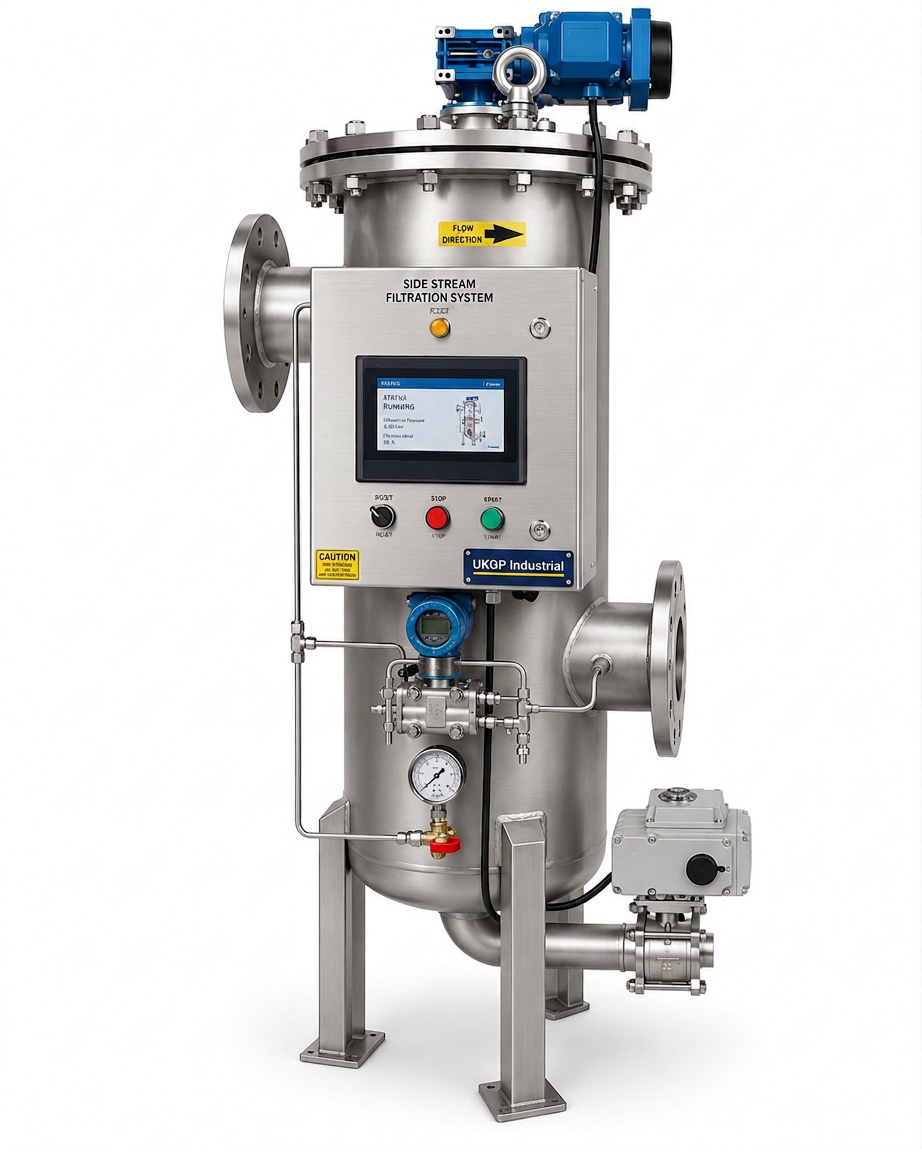
For biocide dosing to be effective, it must be supported by physical filtration and air removal. Dead bacteria and dislodged biofilm can quickly clog fine-mesh strainers and heat exchanger plates. BSRIA BG50 highlights the importance of side-stream filtration in removing the suspended solids that provide food sources and shelter for microbial colonies. By integrating a dosing pot with a side-stream filter, engineers can ensure that after the 'kill' phase, the resulting debris is physically removed from the circuit.
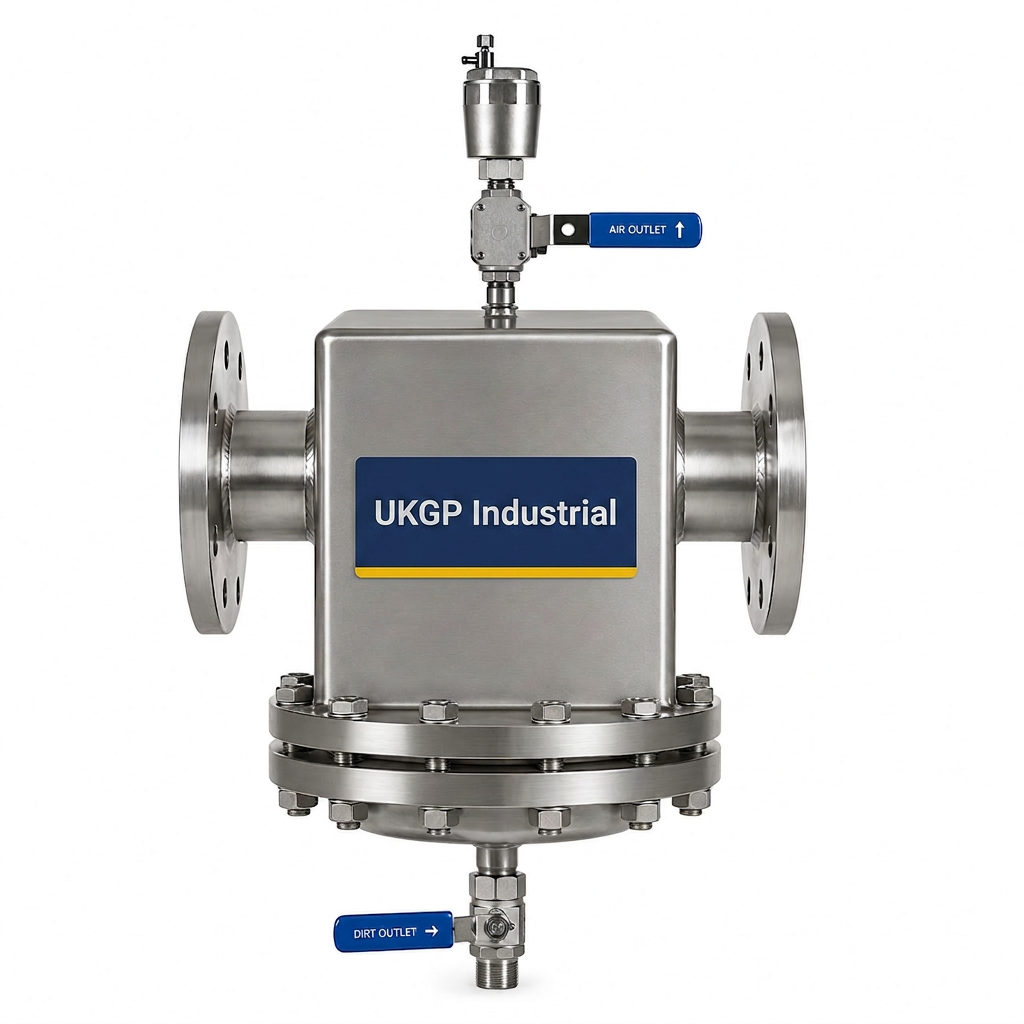
Furthermore, the presence of air in the system provides the oxygen required for aerobic bacteria to thrive. High-performance air and dirt separators should be installed to strip microbubbles from the water. Combined with biocide dosing, this creates an environment that is hostile to microbial life. When using a dosing pot, always ensure the air vent is used both to evacuate air during filling and to prevent vacuum formation during draining, protecting the system from unwanted oxygen ingress.
Post-Dosing Monitoring and Maintenance
Dosing biocide is not a 'fit and forget' exercise. Engineers must conduct follow-up testing to verify the effectiveness of the treatment. Under BSRIA guidelines, water samples should be taken from various points in the system, including dead-legs and low-flow areas, where bacteria are most likely to persist. Dipslides are the standard tool for monitoring TVC (Total Viable Count) levels; if levels remain high after 48 hours, a secondary dose or a different class of biocide may be required.
It is also vital to coordinate biocide dosing with the addition of corrosion and scale inhibitors. Biocides can sometimes alter the pH of the system water, which in turn affects the stability of the protective film formed by inhibitors. Regular water analysis—at least quarterly for most commercial systems—should be logged to track trends in microbial growth and chemical residuals, providing a robust audit trail for facilities managers and insurance compliance.
- Dipslides: Used to measure Total Viable Count (TVC). A reading of <10³ CFU/ml is generally considered controlled.
- SRB/NRB Test Kits: Specific tests for anaerobic bacteria that cause corrosion.
- Inhibitor Concentration: Ensure that biocide dosing hasn't significantly diluted the corrosion inhibitor levels.
Conclusion and Engineering Best Practices平衡
Successful biocide dosing via a chemical dosing pot is fundamental to the longevity of UK building services infrastructure. By adhering to a strict sequential protocol and selecting high-quality, stainless steel dosing vessels, M&E contractors can prevent the catastrophic failures associated with MIC. The use of dosing pots remains the industry standard for controlled chemical induction due to their reliability, lack of dependence on electrical power, and ease of maintenance.
Remember that water treatment is a holistic process. A dosing pot is most effective when the system is properly cleaned (to BG29/21 standards), filtered, and deaerated. As plant rooms become increasingly compact, the selection of horizontally or vertically configured dosing pots, like those available from UKGP Industrial, allows for flexible installation without compromising on the critical task of chemical management.
Frequently asked questions
What are the standard pressure ratings for UKGP Industrial dosing pots?
- Typically 3.5 bar, 5 bar, 7 bar, and 10 bar. Ensure the pot's maximum working pressure (MWP) exceeds the system's safety valve setting. For high-rise or high-pressure process circuits, 14 bar variants may be required.
Which BSRIA guidelines cover biocide dosing?
- BG50 (Water treatment for closed heating and cooling systems) and BG29/21 (Pre-commission cleaning of pipework systems) are the primary documents. They specify the necessity of biocide treatment in low-temperature systems to prevent MIC and biofilm.
Can I dose biocide through a pressurisation unit?
- While biocides can be introduced this way, it is inefficient and increases the risk of oxygen ingress. A dedicated dosing pot allows for controlled, concentrated 'shot' dosing without draining large volumes of treated water.
How do I determine the correct pot size?
- This depends on the system volume and the biocide concentration required. UKGP Industrial pots range from 3.5 litre to 25 litre capacities. For very large volumes, multiple 'shots' may be required, or a larger 25-litre floor-standing model should be specified.