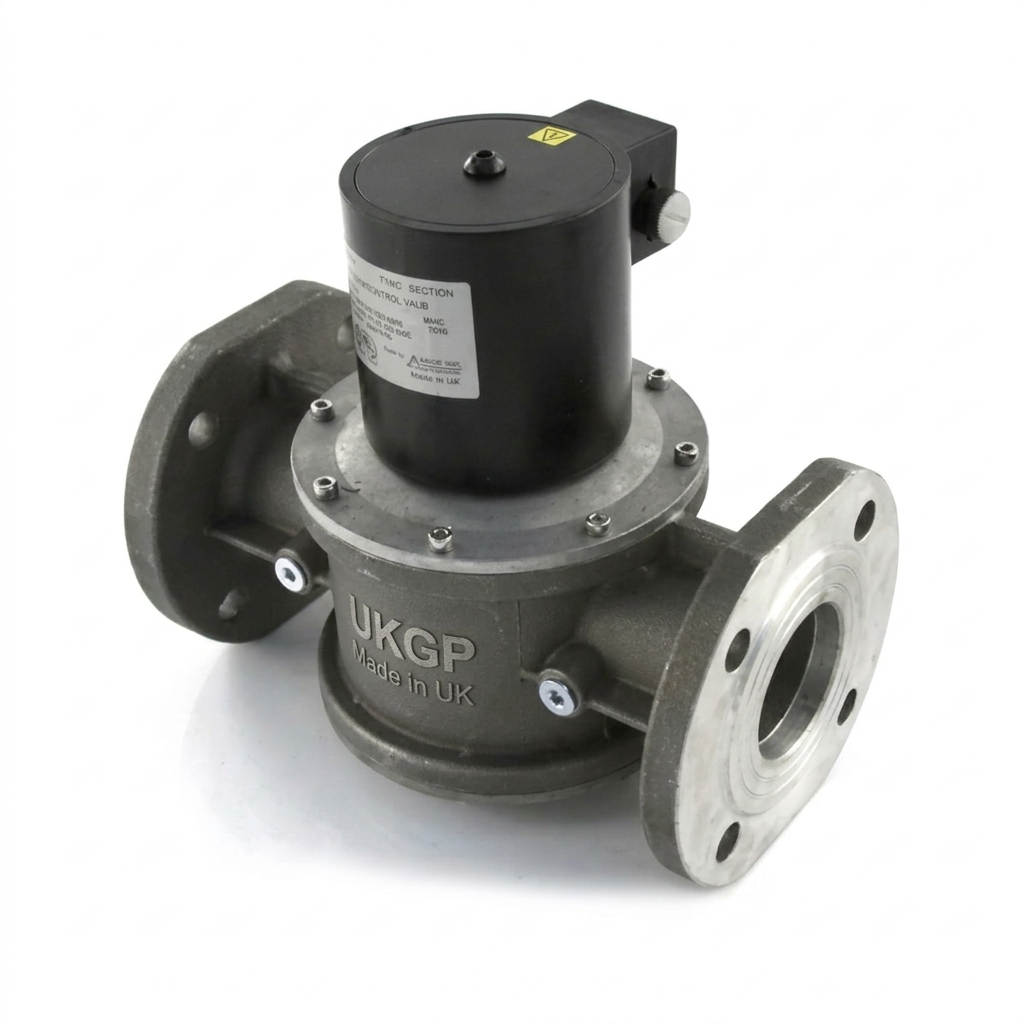
The Case for 230V AC Solenoid Coils
230V AC coils are the industry standard for most standalone commercial boiler rooms in the UK. Their primary advantage lies in their simplicity of integration; they can be wired directly into standard burner control circuits or gas-sensing panels without the need for additional step-down transformers. This eliminates a potential point of failure within the control string.
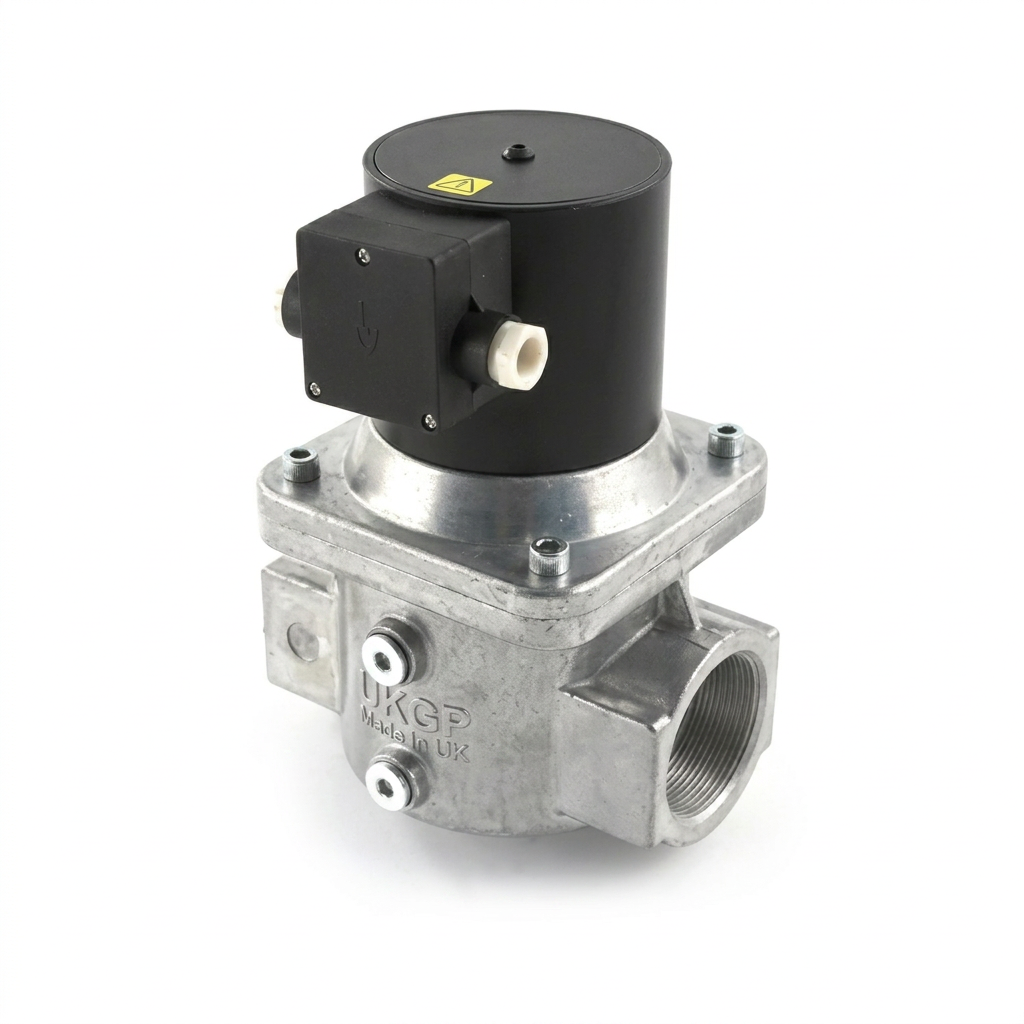
From an engineering perspective, 230V coils are highly effective for high-pressure applications or large orifice valves. Because the magnetic flux generated is a function of turns and current, 230V systems can often provide the necessary 'inrush' current to overcome heavy internal return springs required for Class A safety shut-off. This makes them the default choice for main gas incoming supplies (GIS) where large diameter cast iron or steel valves are utilised.
- Direct compatibility with standard UK mains supply.
- Higher torque/force capabilities for larger diameter valves (DN65+).
- Negligible voltage drop over long cable runs in large industrial sites.
- Lower current draw (Amps) compared to 24V equivalents.
Advantages of 24V Low Voltage Specification
The shift towards 24V (particularly 24V DC) is driven largely by the integration of Gas Proving Systems and Building Management Systems (BMS). In modern 'Smart' buildings, control logic often operates on 24V. Specifying a 24V coil allows for direct connection to digital outputs without the need for intermediate interposing relays, reducing panel complexity and footprint.
Safety is the secondary driver. In environments such as commercial kitchens (governed by BS 6173) or industrial wash-down areas, low voltage reduces the risk of electric shock for maintenance personnel. Furthermore, 24V DC coils do not suffer from the 50Hz 'hum' or vibration sometimes associated with AC coils, which can lead to mechanical wear on the plunger assembly over extended periods of operation.
- Elimination of high-voltage risks in damp or confined plant rooms.
- Direct interfacing with 24V DC BMS controllers and PLCs.
- Reduced electromagnetic interference (EMI) in sensitive environments.
- Compatibility with battery-backed safety systems for mission-critical shut-off.
Compliance and Regulatory Considerations
Regardless of voltage, any valve used for safety shut-off in the UK must be certified to EN 161 (Class A). This ensures the valve is normally closed and will close in less than one second upon loss of power. Designers must ensure that the voltage supply to the coil is interlocked with the necessary safety devices: emergency stop buttons, thermal links, and gas detection systems.
When using 24V systems, engineers must be particularly cautious regarding voltage drop. According to BS 7671, the voltage at the coil terminals must remain within the manufacturer's specified tolerance (typically +/- 10%). A 2V drop on a 230V circuit is negligible (0.8%), but a 2V drop on a 24V circuit (8.3%) can prevent the solenoid from lifting the plunger, leading to intermittent 'null' faults or burner lockout.
- EN 161: Automatic shut-off valves for gas burners and gas appliances.
- IGEM/UP/2: Installation of gas piping, valves, and regulators in commercial/industrial premises.
- The Gas Safety (Installation and Use) Regulations 1998.
- BS 7671 (IET Wiring Regulations) regarding segregation of services.
Operational Reliability and Maintenance
Maintenance regimes for gas solenoids, as outlined in BSRIA BG50, include checking the integrity of the coil insulation. 230V coils are more susceptible to insulation breakdown over time due to thermal cycling. In contrast, 24V DC coils are less prone to such failures but are highly sensitive to the quality of the DC power supply. 'Noisy' power supplies with high ripple voltage can cause 24V coils to chatter, damaging the valve seat.
UKGP Industrial recommends that for any critical plant, spare coils should be kept on-site. The mechanical valve body typically outlasts the electrical coil. In high-ambient temperature environments, such as above a steam boiler, 230V coils may reach their Curie point faster than low-current 24V alternatives, leading to a temporary loss of magnetic force and nuisance tripping of the gas supply.
- Heat Dissipation: 230V coils often run hotter; ensure adequate ventilation.
- Inrush Current: Ensure transformers for 24V systems are sized for the peak 'pull-in' VA, not just the 'holding' VA.
- Rectification: Some 230V coils include internal rectifiers; ensure compatibility if using with external frequency drives.
Summary: Selection Criteria for the Building Services Engineer
Choosing between 230V and 24V is a balance of infrastructure and safety. For a standard commercial boiler house with a local gas proving panel, 230V remains the most cost-effective and robust solution. It simplifies the electrical design and ensures there is sufficient power to operate larger valves without expensive DC power plants.
Conversely, for laboratory gas taps, school MDPE gas systems, or industrial process lines where PLC control is central, 24V DC is the superior choice. It offers safer integration with low-voltage sensors and aligns with modern BS EN 60204-1 safety of machinery standards. Engineers should specify UKGP Industrial 230V or 24V coils based on the total system architecture to ensure long-term stability of the gas safety string.
- Cabling Cost: High-voltage cabling may require more robust containment.
- Component Cost: 24V systems require a high-quality Power Supply Unit (PSU).
- Complexity: 230V is simpler for 'dumb' systems; 24V is superior for integrated control.
Frequently asked questions
Can I switch a 230V valve to 24V by just changing the wiring?
- No. To switch between 230V and 24V DC/AC, you must replace the coil assembly. Ensure the replacement coil is compatible with the physical valve stem and check the valve's technical data sheet for approved spare parts.
Does cable distance affect the choice of voltage?
- Voltage drop is significantly more impactful at 24V. For long cable runs between the control panel and the valve, 230V is often preferred to ensure the coil receives sufficient holding current. Consult BS 7671 for cable sizing.
Are 230V valves rated for higher gas pressures than 24V valves?
- Generally, no. The pressure rating (e.g., 200mbar or 6bar) is determined by the valve body design and the strength of the return spring, not the coil voltage. However, higher pressure valves may require higher wattage coils.
What does 'Class A' mean in the context of EN 161?
- Class A valves are 'automatic' and 'normally closed'. They are required for most commercial gas lines to ensure immediate shut-off upon power loss or signal from the Gas Proving System or Fire Alarm.