The basic principle
A plate heat exchanger (PHE) stacks dozens of thin, corrugated stainless steel plates inside a frame, separated by gaskets (or brazed together). The corrugations force hot and cold fluids to flow in opposite directions through alternating channels — one channel hot, one channel cold, all the way through the pack.
Heat moves across the plate wall by conduction. Because the plates are thin (0.4–0.6 mm), the corrugations create high turbulence, and the surface area is enormous relative to the unit's footprint, a PHE will transfer the same kW as a shell-and-tube unit at a fraction of the size and weight.
Why turbulence matters
The chevron pattern pressed into each plate creates contact points that force the flow to break into a turbulent regime even at low velocities. Two things follow:
- Higher heat-transfer coefficient. Turbulence keeps the boundary layer thin, so more heat crosses per square metre per Kelvin of temperature difference.
- Self-cleaning effect. Solids that would settle in a tube are kept in suspension and flushed through — provided you keep the feed water clean upstream.
Cleaning a plate heat exchanger
Fouling shows up as falling secondary flow, rising approach temperature and increasing differential pressure across the unit. There are two routine cleaning methods:
- CIP (clean in place). Circulate a 2–5% acid solution (for scale) or alkaline (for biofilm) at ~60 °C for 2–4 hours, then flush with clean water. Works on both gasketed and brazed units.
- Open-and-clean. Gasketed units only — open the frame, lift out the plate pack, pressure-wash both sides, replace gaskets if hardened, then reassemble to the marked compression dimension.
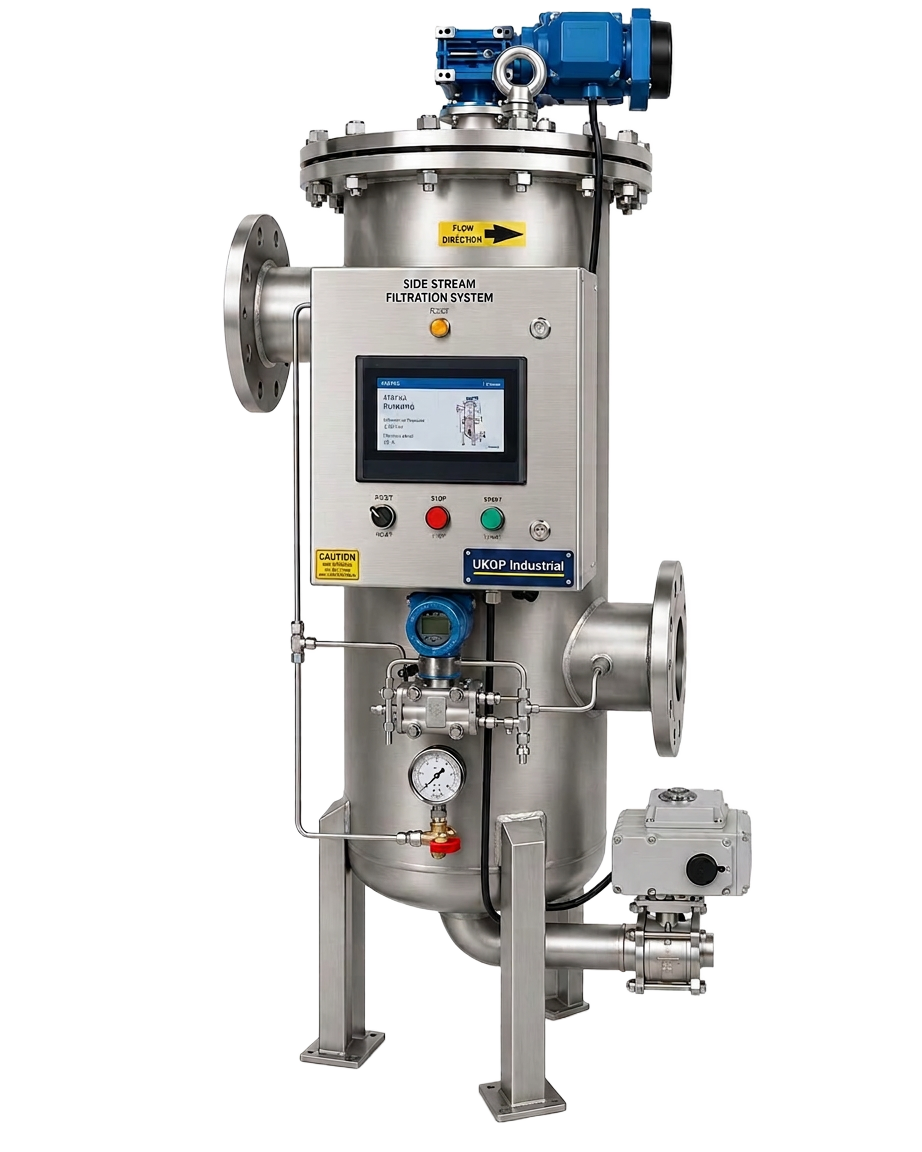
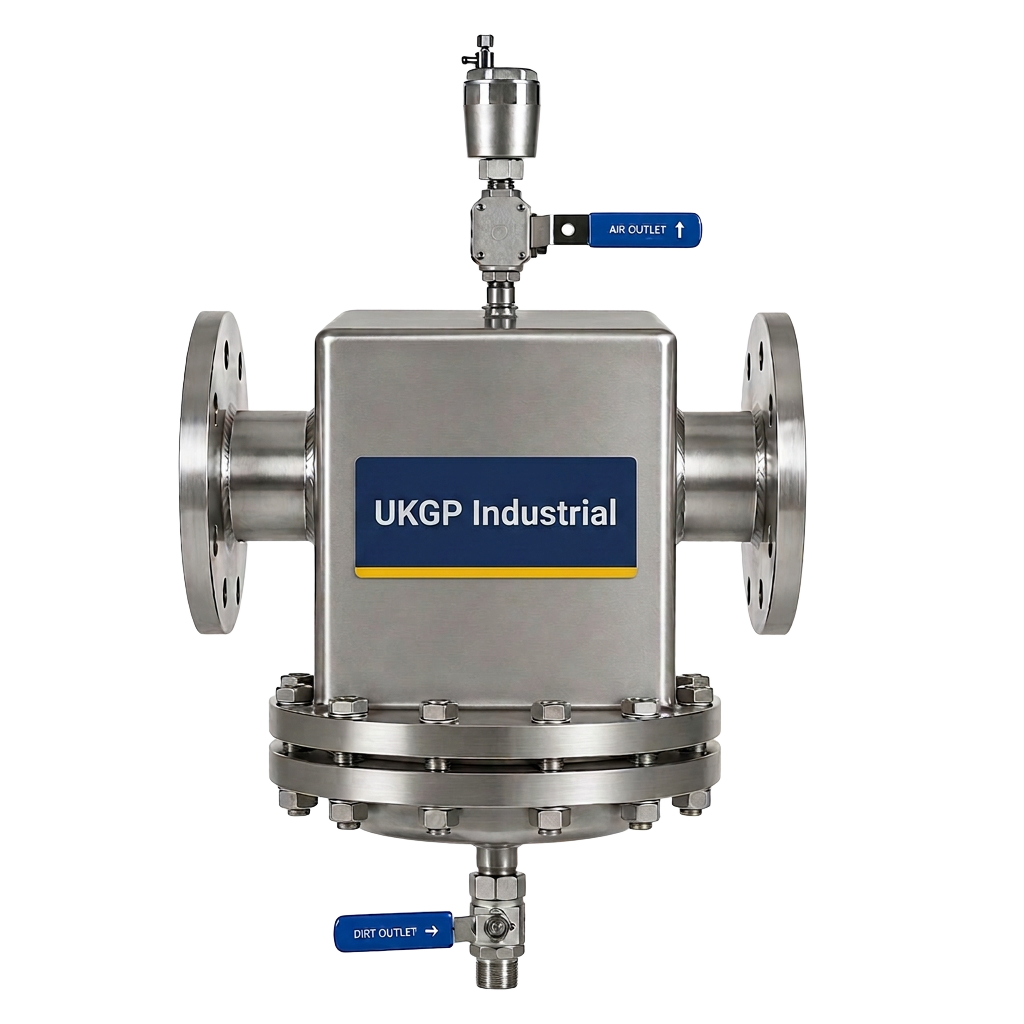
The single biggest extender of cleaning intervals is keeping debris out of the unit in the first place. We always recommend installing an air and dirt separator on the flow side and, for systems above 500 kW, continuous side stream filtration to keep magnetite and suspended solids out of the plate channels permanently.
Sizing a plate heat exchanger
Sizing needs five numbers:
- Duty (kW)
- Hot-side inlet and outlet temperatures (°C)
- Cold-side inlet and outlet temperatures (°C)
- Working pressure (bar)
- Fluid type (water, glycol, seawater, process media)
From those, the selection software calculates LMTD (logarithmic mean temperature difference), the required heat-transfer area, the number of plates and the channel arrangement. Send the duty sheet to sales@ukgpindustrial.co.uk and we'll return a quoted unit with full datasheet inside one working day.
Brazed vs gasketed — quick selection
- Brazed plate. Compact, copper- or nickel-brazed, non-serviceable, sealed duty up to ~30 bar. Best for DHW heat interface units, hydraulic separation skids and modular plant.
- Gasketed plate. Openable, expandable, re-gasketable. Best for district heating, large DHW, industrial process, anywhere the duty might change or routine maintenance matters.
For a comparison of the wider expansion-and-isolation hardware that often sits alongside a PHE, see our rubber vs metal expansion joints guide.