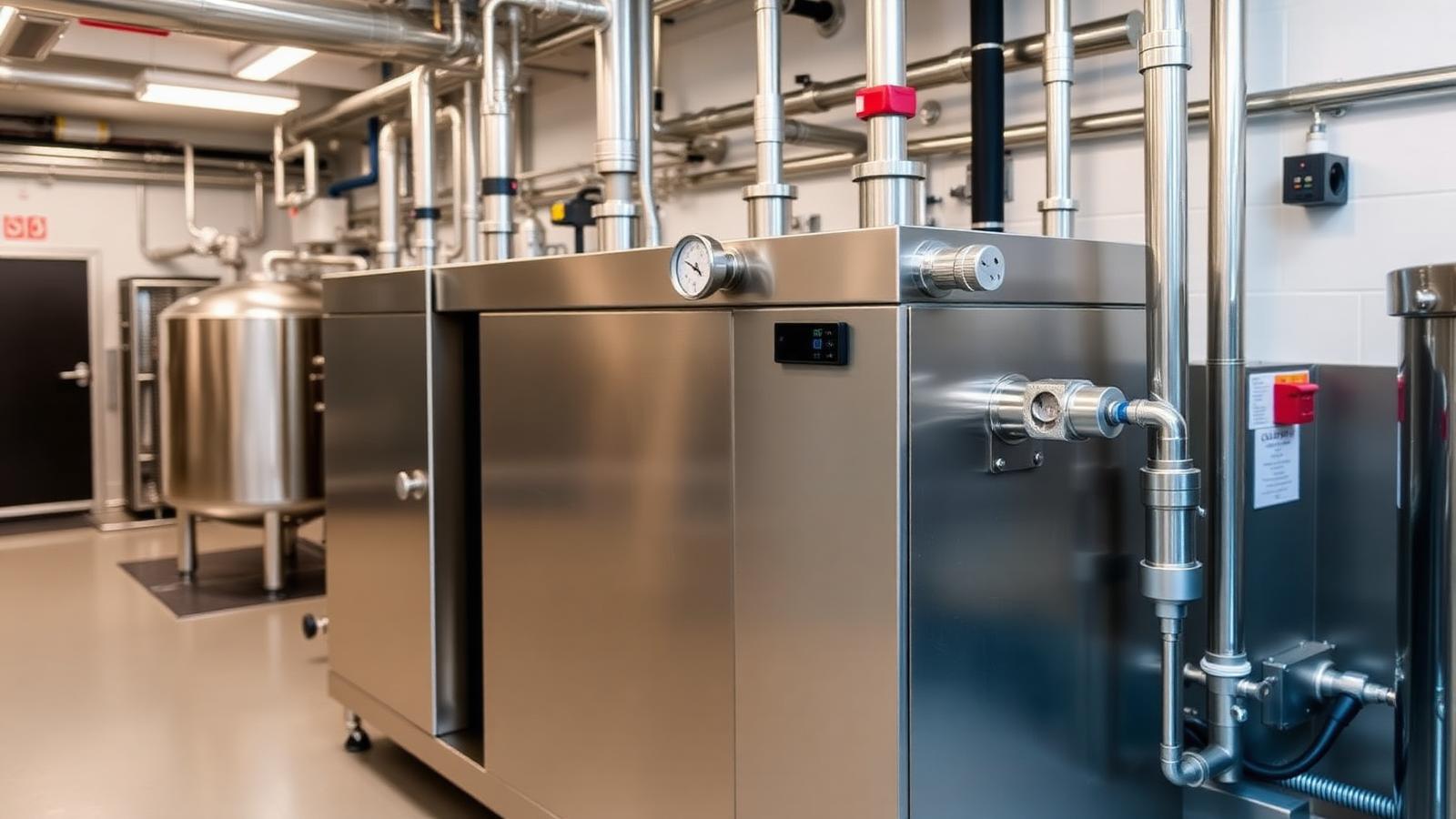
The Engineering Logic to Retrofit Side Stream Filtration
In many UK commercial buildings, older closed-loop HVAC systems suffer from the cumulative effects of corrosion and magnetite build-up which creates a viscous sludge that hampers heat transfer. Deciding to retrofit side stream filtration is one of the most cost-effective interventions an Facilities Manager can undertake to restore design efficiency without the prohibitive cost of a full system flush. Unlike full-flow filters, a side stream unit continuously treats a percentage of the circulating volume, typically between 5% and 15%, ensuring that suspended solids are removed without causing a significant pressure drop across the main circuit. This method is particularly favoured for older infrastructures where the integrity of pipework might be compromised by high-pressure chemical cleaning processes often found in traditional remediation strategies.
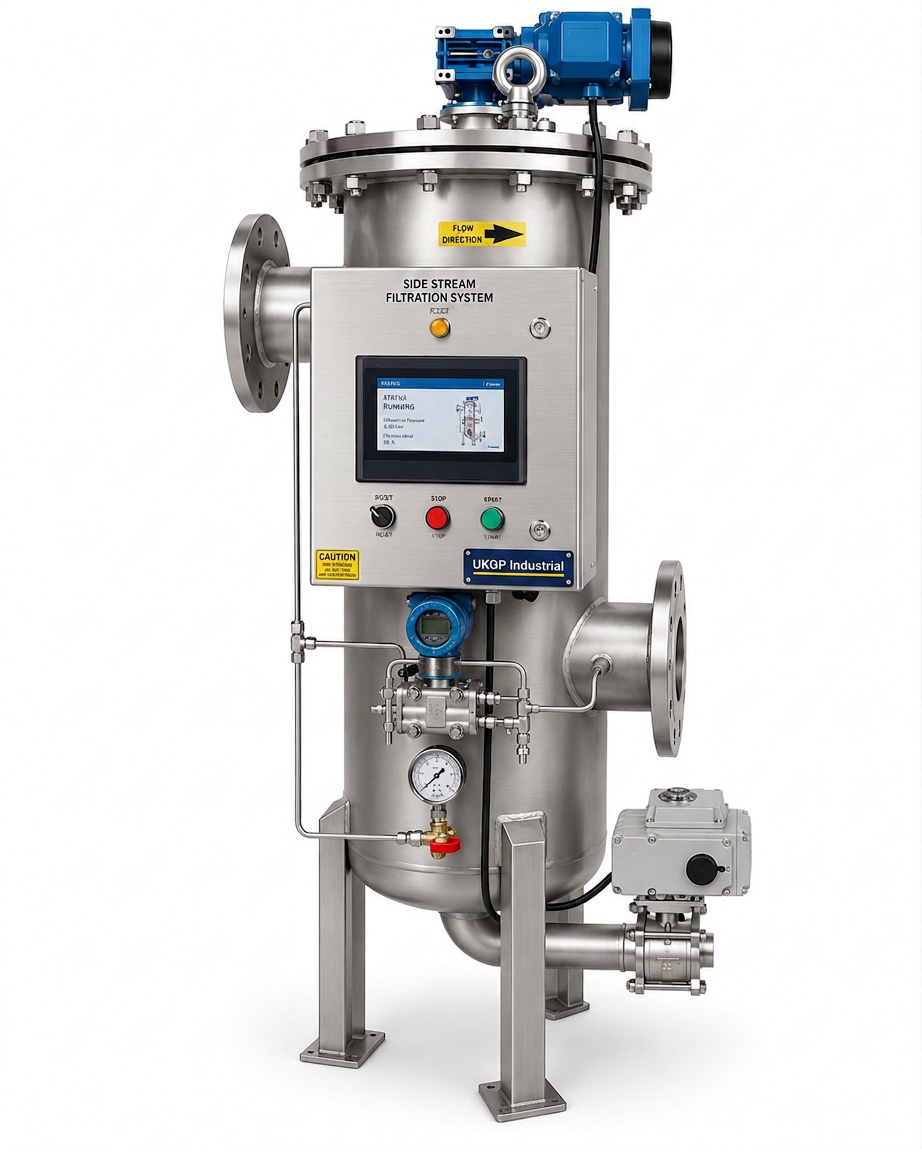
From a technical perspective, the decision to retrofit side stream filtration is driven by the need to meet BSRIA BG50 guidelines for water quality in older buildings. These standards emphasize the prevention of scale, corrosion, and bio-fouling, all of which are accelerated in systems with high levels of suspended solids. By installing a dedicated filtration skid, plant-room engineers can achieve water clarity levels that protect expensive downstream components like centrifugal pumps and modulating valves. UKGP Industrial specializes in providing these robust solutions for the UK market, ensuring that engineers have access to performance-driven, made-to-order equipment that fits specific spatial constraints often found in cramped, historical basement plant rooms across London and other major UK cities.
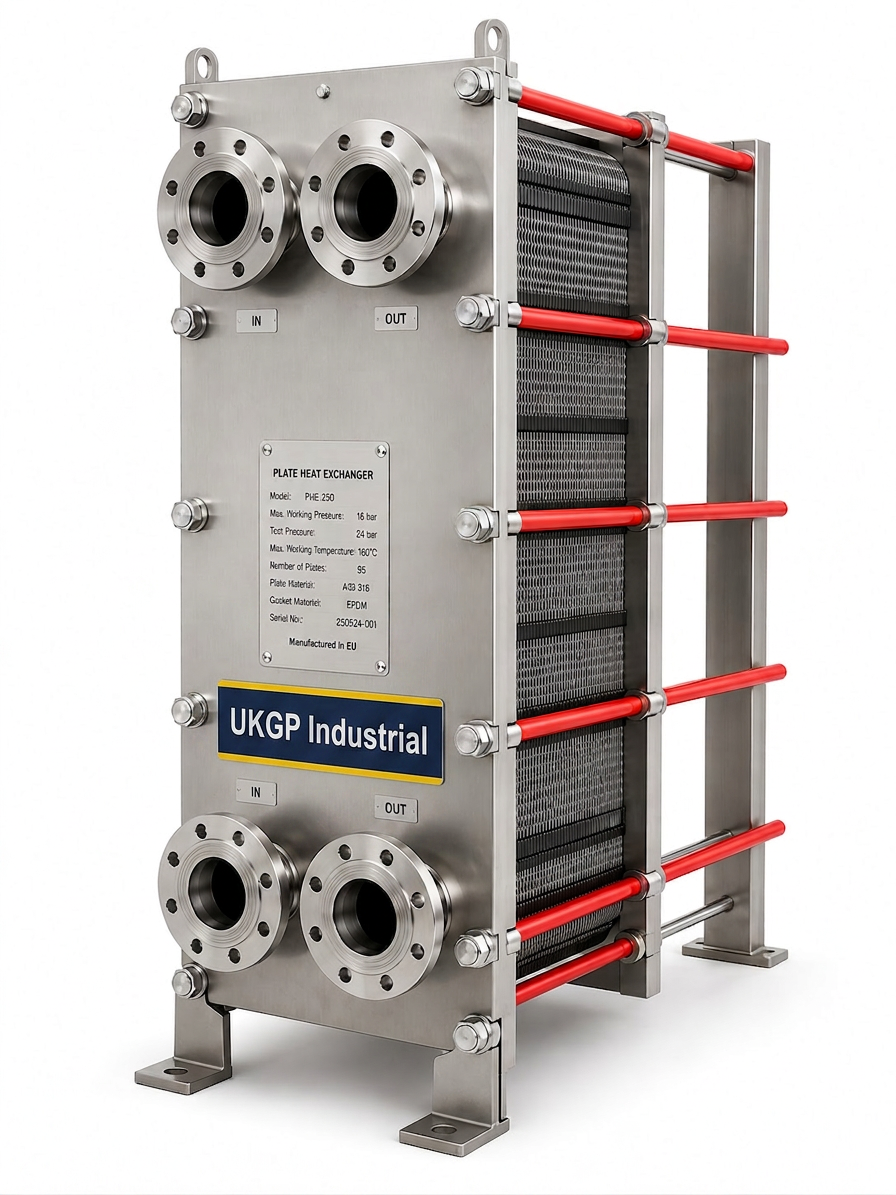
Commercial viability is a key factor when upgrading aged assets. A UKGP side stream filtration skid, typically starting from £6,800+VAT, represents a fraction of the cost compared to replacing a fouled plate heat exchanger or a corroded boiler. When you factor in the 2-year warranty and the typical 6-8 week lead time, it becomes clear that a planned retrofit is more economical than an emergency reactive repair. Furthermore, reducing the particulate load in the system water lowers the energy required for pumping and improves the delta-T across heat emitters, directly impacting the building's carbon footprint and operational expenditure in an era of fluctuating energy prices and strict ESG reporting requirements.
- Mitigates the risk of sudden component failure in aged systems
- Reduces circulating suspended solids to levels specified by BSRIA BG50
- Avoids the hydraulic shocks associated with high-velocity full-flow flushing
- Protects new high-efficiency boilers when connected to old pipework
Technical Site Assessment and Hydraulic Integration
Before you retrofit side stream filtration, a comprehensive site survey is required to identify the optimal connection points. In an old plant room, hydraulic balance is sensitive, and the skid must be piped in parallel to the main return header to ensure it does not starve the primary pump sets of their required suction pressure. We recommend installing the unit at a point of high pressure and returning it to a lower pressure point, utilizing the system's differential pressure where possible, though many UKGP skids come equipped with their own dedicated pumps to ensure consistent flow regardless of main system fluctuations. This independent operation is vital for maintaining BSRIA compliance during low-load periods when main variable speed drives might be ramped down.
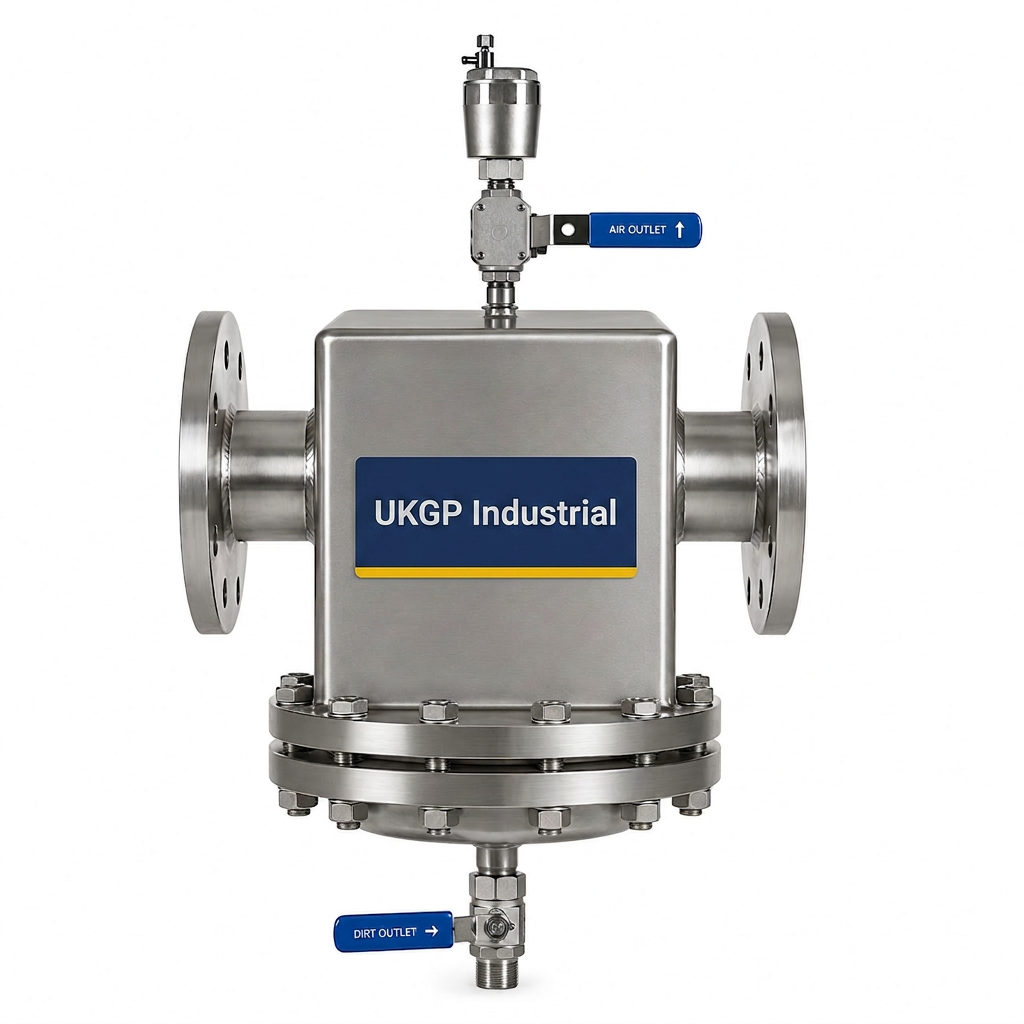
Material compatibility is another critical factor for senior engineers to consider. Older systems often contain a mix of black iron, galvanized steel, and copper. The introduction of a side stream unit allows for the integration of high-quality stainless steel components and bag filters that capture debris down to 5 microns. During the retrofit process, it is also the ideal time to inspect existing air and dirt separators. If the existing separators are non-functional or severely undersized for the current system load, they should be replaced in tandem with the side stream installation to maximize the removal of both trapped gases and heavy magnetite particles that naturally settle in slow-moving areas of the loop.
Space constraints are frequent hurdles in UK retrofit projects. UKGP manufacturing processes account for this by offering skid-mounted solutions that are compact and accessible for maintenance. A standard DN50 to DN100 unit is designed to fit through standard plant room doorways, easing the logistical burden for M&E contractors. When specifying your unit, consider the ease of access for filter bag changes; a poorly placed skid will lead to neglected maintenance. Our technical team works closely with consultants to ensure the chosen skid geometry matches the available footprint, providing CAD drawings and technical data sheets during the 6-8 week lead time to facilitate precise planning and pipework pre-fabrication before the unit arrives on-site.
- Identify high-pressure and low-pressure connection points for optimal flow
- Evaluate the condition of existing air and dirt separators for potential replacement
- Verify power availability for the skid's independent pump and control panel
- Ensure adequate clearance for internal filter vessel maintenance and bag disposal
Adherence to BSRIA BG50 and BS 8552 Standards
The regulatory landscape for water treatment in the UK has tightened, and simply adding chemicals is no longer sufficient for managing old systems. BSRIA BG50, 'Water Treatment for Closed Heating and Cooling Systems,' clearly states that physical filtration should be used to support chemical regimes. By choosing to retrofit side stream filtration, you are implementing a physical barrier that removes the solids that chemicals merely keep in suspension. This dual-action approach is the gold standard for preventing the 'black water' syndrome common in UK office blocks. BS 8552 also provides a framework for sampling and monitoring, which is made significantly easier by the integrated sampling points found on UKGP filtration skids, allowing for accurate water quality audits.
Monitoring is the backbone of modern facilities management. When you retrofit side stream filtration, you gain a diagnostic tool as much as a mechanical one. The pressure differential gauges on the skid provide immediate feedback on the quantity of debris being captured. In older systems, the initial few weeks after installation will usually see rapid loading of the filter bags, requiring frequent changes. This 'cleanup phase' is a positive indicator that the retrofit is actively stripping years of accumulated sludge from the pipework. Following this intensive period, the system typically stabilizes, and the frequency of bag changes will normalize, providing a clear visual metric of the system’s internal hygiene levels to stakeholders.
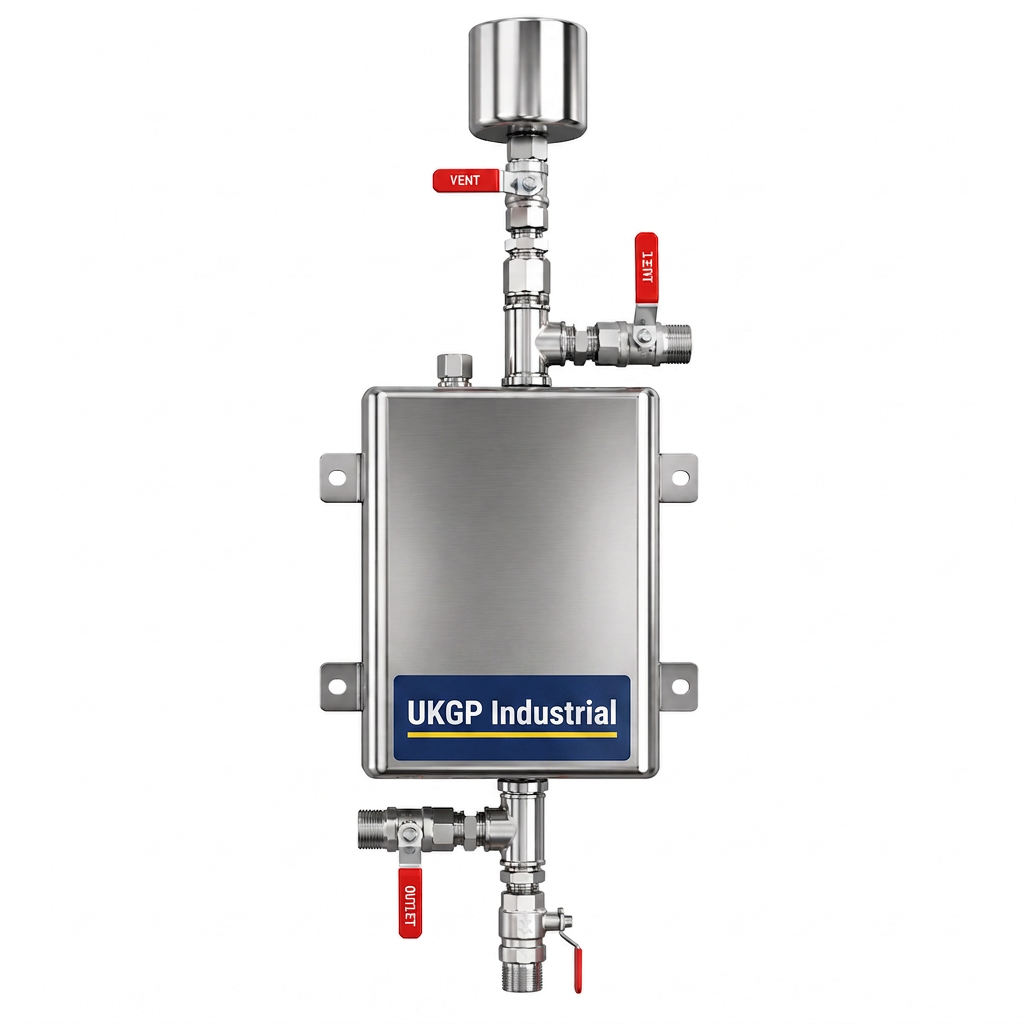
Consultants specifying these systems must also account for oxygen ingress, which is prevalent in older systems with leaking seals or faulty expansion vessels. While a side stream filter removes the result of corrosion (magnetite), the cause (oxygen) must also be addressed. Therefore, the retrofit of a filtration skid should often be part of a wider plant room refurbishment that includes checking the nitrogen charge in expansion bellows and ensuring the chemical dosing pots are being used correctly. UKGP offers a holistic range of plant room components that work in synergy with our filtration skids to ensure that once the system is cleaned, it stays clean for the duration of its operational life.
- Ensures compliance with BSRIA BG50 and CIBSE recommendations
- Facilitates easy water sampling in accordance with BS 8552
- Provides visual proof of system cleaning via pressure gauge monitoring
- Supports the efficacy of corrosion inhibitors by removing reactive solids
Selection Criteria for Filtration Skids in Retrofit Scenarios
Selecting the correct size of filtration unit is paramount. For a retrofit side stream filtration project, sizing is typically based on the total system volume rather than the boiler output. A general rule of thumb followed by UKGP engineers is to circulate the entire building's water volume through the filter at least once every 24 hours. For large-scale university campuses or NHS hospitals, this might require a DN100 unit, whereas a standard commercial office may only need a DN50 skid. Getting the flow rate right ensures that the particulate capture rate exceeds the rate of new corrosion, gradually improving the water quality continuously without triggering low-flow alarms in the main building management system.
Maintenance requirements must be simplified for the end-user. The UKGP range of side stream filtration skids is designed with the Busy Facilities Manager in mind. Features such as simple isolation valves, vent points, and drain valves make the process of changing a filter bag a five-minute task rather than an afternoon’s ordeal. This ease of use ensures that the investment in the retrofit continues to pay dividends. If a system is too complex to maintain, it will eventually be bypassed or ignored, leading to a return of the very problems the retrofit was intended to solve. We prioritize mechanical simplicity and high-quality UK manufacturing to ensure maximum uptime for our UK customers.
Budgetary considerations often dictate the pace of retrofit works. While our units start from £6,800+VAT, the long-term ROI is found in reduced chemical consumption and lower pump maintenance costs. For many M&E contractors, specifying a UKGP unit allows them to offer a competitive tender backed by a 2-year warranty and a product that is made to order for the specific needs of the project. With a 6-8 week lead time, these units can be scheduled for installation during summer shutdown periods or low-demand shoulder seasons, minimizing disruption to building occupants while providing a massive leap forward in system reliability and efficiency.
- Sizing based on total system volume to ensure 24-hour turnover
- Available in sizes from DN50 to DN100 to suit various system scales
- User-friendly design for rapid filter media replacement
- High-grade UK manufacturing with 2-year warranty for peace of mind
Implementation Challenges and Solutions for Old Pipework
When you retrofit side stream filtration to 20 or 30-year-old pipework, the primary challenge is often the physical connection to the header. Years of internal scaling can narrow the effective diameter of the pipe, and the exterior may be heavily insulated with legacy materials. It is essential to ensure that the hot-tap or tee-in point is structurally sound. UKGP recommends a thorough ultrasonic thickness test on the main header before cutting in. Once the structural integrity is confirmed, the side stream unit can be connected using flexible hoses or rigid pipework, depending on the vibration profile of the plant room. This careful approach prevents the retrofit from causing new leaks in an already fragile system.
Another common issue is the presence of non-magnetic particulates. While magnetite is the most common problem in UK systems, many older buildings also suffer from sand, scale, and biological slime. A standard magnetic separator might miss these, but a dedicated side stream filtration skid with a 5-micron bag filter will capture them effectively. This is why the comprehensive nature of a UKGP skid—combining magnetic capture with high-efficiency bag filtration—is superior for retrofit scenarios compared to simple magnetic inserts. It provides a 'catch-all' solution that addresses the diverse range of contaminants found in neglected or older closed-loop circuits.
Finally, the commissioning phase is where many retrofit projects fail. It is not enough to simply turn the unit on; the flow must be verified, and the BMS must be integrated to monitor for pump failure within the skid. UKGP provides detailed O&M manuals and commissioning support to ensure that the retrofit side stream filtration unit is operating at its design point from day one. By ensuring the skid is correctly commissioned, the M&E contractor can confidently hand over the system, knowing that the water quality will steadily improve and meet the stringent requirements of BSRIA BG29 and BG50, thereby protecting their reputation and the client's asset.
- Perform ultrasonic thickness testing on headers before installation
- Utilize bag filtration to capture non-magnetic debris and biological matter
- Integrate skid alarms with the Building Management System (BMS)
- Follow BSRIA commissioning protocols to verify multi-pass filtration performance
Sustainability and Life Cycle Benefits of Side Stream Upgrades
Sustainability is no longer optional in the UK B2B sector. Retrofitting side stream filtration is a major contributor to a building's 'Green' credentials by significantly extending the life of the existing HVAC infrastructure. Instead of the carbon-heavy process of ripping out and replacing entire systems, filtration allows for the rejuvenation of existing assets. This circular economy approach is favoured by public sector procurement leads and ESG-conscious corporations. By maintaining clean water, the heat transfer efficiency of boilers and chillers remains close to their nameplate ratings, preventing the gradual creep in energy consumption that occurs as systems foul over time.
Reduced chemical dependency is another significant environmental benefit. While inhibitors are still necessary, a clean system requires lower dosages and less frequent 'dump and fill' operations, which are both environmentally damaging and expensive. The high-quality construction of UKGP skids, featuring robust components and a 2-year warranty, ensures that the unit itself is a long-term fixture in the plant room, not a disposable fix. Our made-to-order approach ensures that we don't over-engineer or waste materials, providing exactly what is needed for the specific volumetric requirements of your DN50 to DN100 system, with a typical 6-8 week lead time.
In conclusion, the decision to retrofit side stream filtration is an investment in the future of the building. With prices for UKGP units starting at £6,800+VAT, it is a commercially savvy move that pays for itself through avoided downtime and reduced energy bills. As the UK moves towards more stringent building regulations and the Net Zero 2050 goal, the maintenance of existing HVAC efficiency via advanced filtration solutions will become an industry standard. Contact UKGP Industrial today to discuss your retrofit requirements and receive a bespoke quote for a filtration skid that will transform your system's performance and ensure long-term BSRIA compliance.
- Extends the operational life of boilers, pumps, and heat exchangers
- Lowers building carbon footprint through improved heat transfer
- Reduces the volume of chemical waste discharged to sewers
- Aligns with UK government decarbonization and asset management targets
Frequently asked questions
What is the typical lead time for a UKGP side stream filtration skid?
- Our side stream filtration skids are made to order with a standard lead time of 6-8 weeks, ensuring each unit meets your specific system requirements.
Can side stream filtration be installed without shutting down the heating?
- Yes, one of the primary benefits of a retrofit side stream filtration system is that it can be installed in parallel to the main flow, often requiring only a brief or zero-downtime connection period.
What is the starting price for a commercial-grade filtration skid?
- UKGP side stream filtration units start from £6,800+VAT, depending on the required flow rate and connection size (typically DN50 to DN100).
Does your equipment come with a warranty?
- Yes, all our filtration skids come with a 2-year warranty as standard, reflecting our confidence in UK manufacturing and component quality.
Which BSRIA standards apply to these installations?
- Retrofit side stream filtration is primarily used to achieve and maintain the water quality standards set out in BSRIA BG50 for older systems and BG29 for new builds.