The Impact of Fouling on Thermal Performance
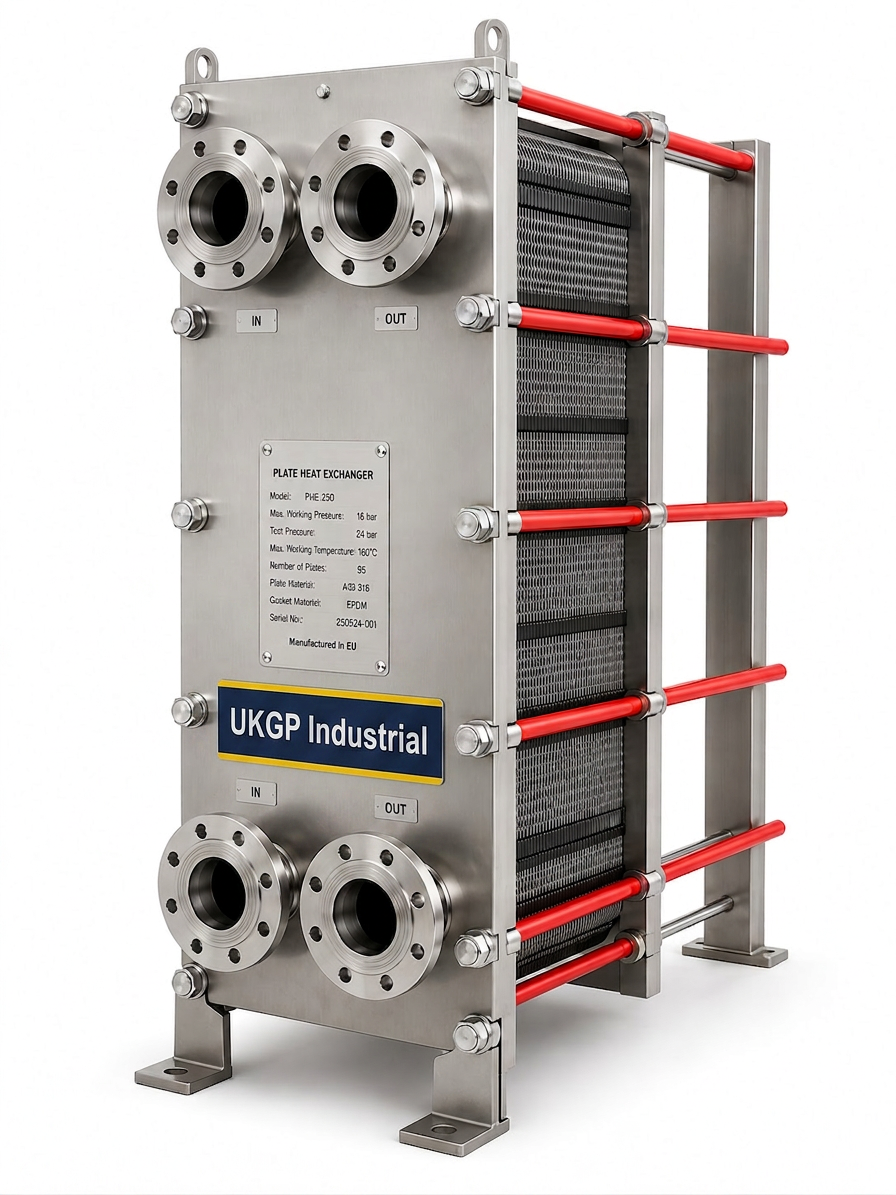
In modern UK building services, the plate heat exchanger (PHE) is the heart of the thermal distribution system. However, these components are highly sensitive to suspended solids and recirculating debris, which naturally accumulate in aged or even newly commissioned closed-loop systems. When debris settles on the corrugated plates, it creates an insulating layer of fouling that drastically reduces the heat transfer coefficient. This degradation means your primary heat source must work harder and consume more energy to achieve the required secondary flow temperature. By implementing proactive measures to reduce heat exchanger cleaning frequency, energy managers can prevent this 'efficiency creep' and ensure that the system operates as close to its design parameters as possible throughout the heating season.
Fouling is not merely a performance issue; it is a precursor to localized under-deposit corrosion. When particulate matter, such as magnetite or calcium carbonate, settles in low-velocity areas of the PHE, it creates an anaerobic environment where microbial growth can flourish even in treated systems. This leads to premature equipment failure and the need for frequent, costly chemical descaling or manual plate cleaning. Following the advice set out in BSRIA BG50 (Water Treatment for Closed Heating and Cooling Systems) is essential. A well-designed filtration strategy acts as the first line of defence, ensuring that contaminants are removed before they have the opportunity to plate out on sensitive thermal surfaces, thereby extending the mean time between service intervals.
Choosing to reduce heat exchanger cleaning frequency is a strategic financial decision for UK FM providers. Manual cleaning is a labour-intensive process that often requires a total system shutdown, draining of the primary circuit, and the replacement of expensive EPDM or NBR gaskets. If your facility is experiencing pressure drops across the PHE or a noticeable drop in secondary output, it is often a sign that the water chemistry has already compromised the hardware. UKGP Industrial specializes in providing the filtration hardware necessary to stop this cycle of reactive maintenance. By installing high-efficiency side stream filtration early in the system lifecycle, or as a retrofit, you can move from a reactive maintenance model to a predictive one, saving thousands in annual contractor fees.
- Reduction in unnecessary energy consumption caused by thermal resistance
- Prevention of under-deposit corrosion and pitting on stainless steel plates
- Extended lifespan of plate gaskets by reducing the need for plate pack opening
- Alignment with BSRIA BG50 best practices for closed-circuit water quality
- Lower annual operational expenditure (OPEX) for high-occupancy buildings
Leveraging Side Stream Filtration for System Longevity
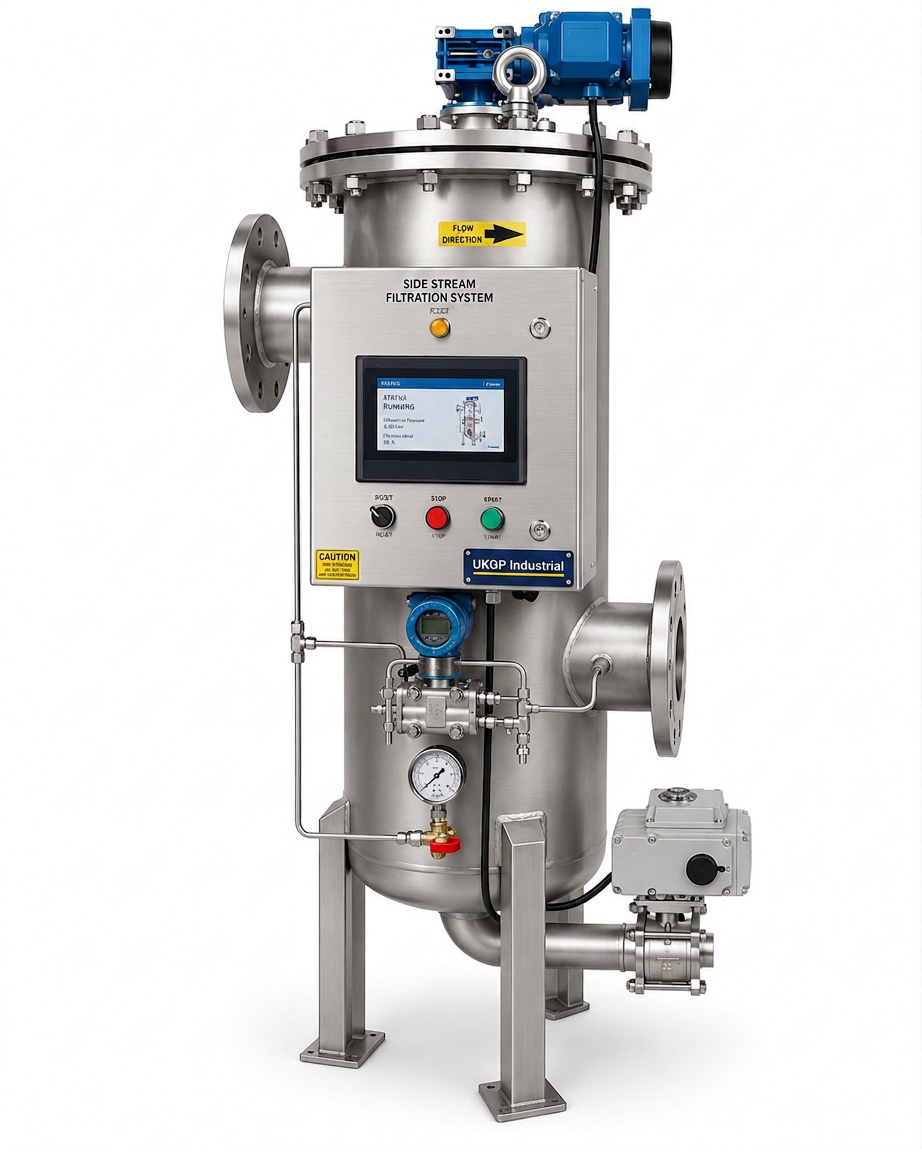
To effectively reduce heat exchanger cleaning frequency, a high-performance side stream filtration skid is the most reliable solution for commercial HVAC systems. Unlike full-flow filters which can suffer from high pressure drops if they become blocked, a side stream system continuously diverts 5-15% of the total flow through a high-efficiency multi-media or bag filter. This ensures that even the smallest suspended solids, down to sub-micron levels when specified correctly, are physically removed from the system loop. For UK plant rooms, our bespoke skids are made to order with a typical 6-8 week lead time, ensuring they integrate perfectly into your existing pipework without the need for significant layout alterations or down-time.
Our UKGP side stream filtration units are designed for durability and ease of use, featuring a 2-year warranty as standard to provide peace of mind for procurement leads and M&E contractors. Available in sizes from DN50 to DN100, these units start from £6,800 +VAT, representing a cost-effective long-term investment compared to the recurring costs of system flushes and emergency repairs. By constantly cleaning the water in accordance with BS 8552 monitoring protocols, you maintain a level of water clarity that protects the narrow channels within a plate heat exchanger from blockage and scaling. This proactive capture of magnetite and debris is the most reliable way to reduce heat exchanger cleaning frequency while extending the life of circulating pumps.
The technical specification of your filtration skid is critical to achieving the desired system hygiene. We offer manual or fully automated backwash options to minimize the intervention required by site staff. For consultants designing to BG29 pre-commission cleaning standards, including a dedicated filtration skid ensures that the system remains clean long after the initial flush is complete. Given that a single manual cleaning of a large PHE can cost upwards of £2,000 in labour and materials, a UKGP skid often pays for itself within two to three years of operation. Contact our Surrey-based technical team today to request a quote and secure a bespoke solution tailored to your specific flow rates and system volume requirements.
- British manufactured skids available from DN50 up to DN100 sizes
- Pricing from £6,800+VAT with a competitive 6-8 week lead time
- Includes a comprehensive 2-year warranty for industrial reliability
- Continuous removal of magnetite and suspended solids to sub-micron levels
- Minimal pressure drop across the primary circuit due to side stream design
The Role of Air and Dirt Separators in Debris Control
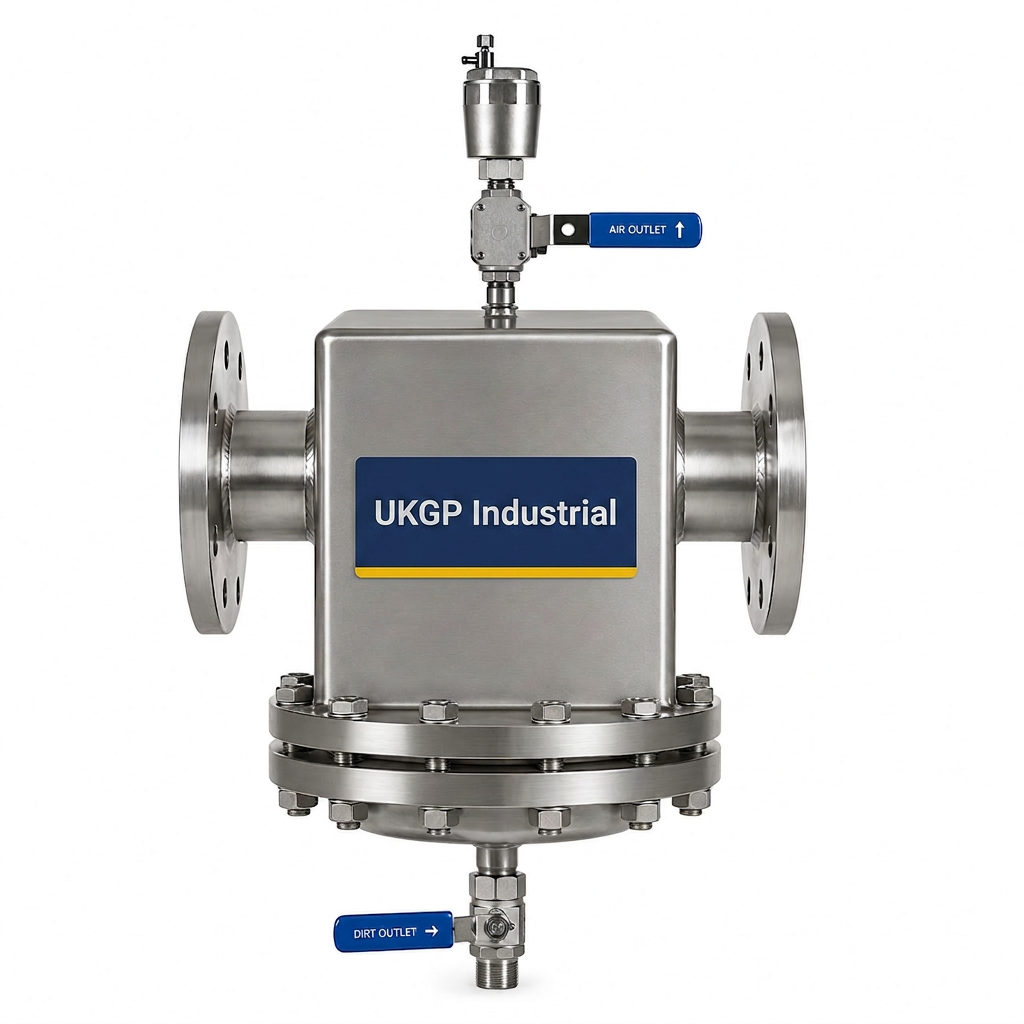
While side stream filtration captures the bulk of the fine suspended solids, an air and dirt separator is vital for managing larger debris and microbubbles that can also compromise heat exchanger efficiency. When air is present in a closed-loop system, it promotes oxidative corrosion, which increases the production of iron oxide (magnetite). By installing a high-quality separator at the hottest point of the circuit, you remove the oxygen that fuels these chemical reactions. This combined approach is the most effective way to reduce heat exchanger cleaning frequency by tackling both the symptoms and the root causes of water contamination in commercial heating systems.
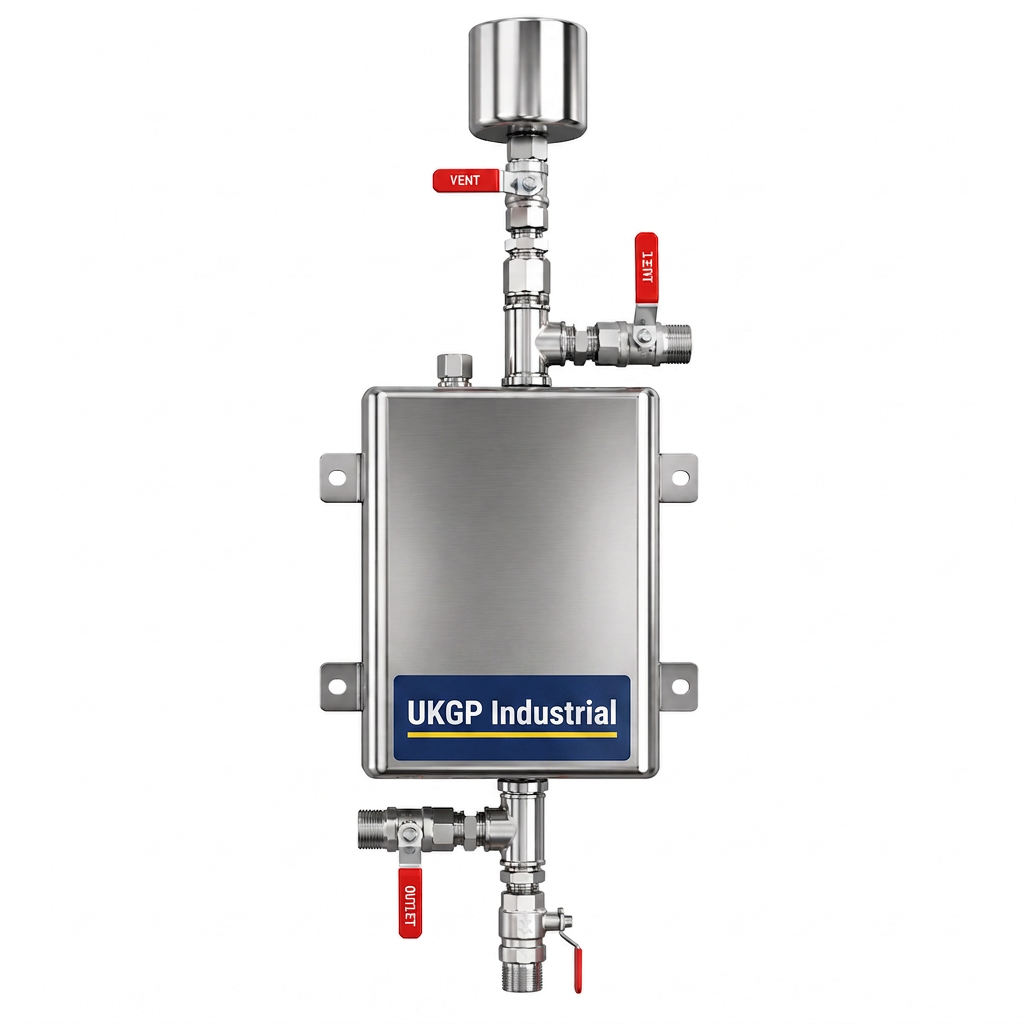
Effective dirt separation works on the principle of collision and velocity reduction, allowing heavier particles to settle into a collection chamber at the base of the unit. This prevents these particles from reaching the PHE, where they would otherwise get trapped in the plate turbulators. For engineers managing BSRIA BG50 compliance, the use of these separators is a standard recommendation to keep the bulk of the debris away from critical components. When paired with a UKGP dosing pot for accurate chemical treatment, the air and dirt separator becomes a fundamental part of the plant room hierarchy, ensuring that the water quality meets the stringent targets required for modern high-efficiency heat exchangers.
Adding an air and dirt separator also assists in the venting of microbubbles, which can cause erratic flow and noise within the heat exchanger. These bubbles often coat the plates, creating temporary hot spots and reducing the effective surface area for heat transfer. By ensuring a 'dead' zone for air to escape, the separator maintains the density of the fluid, ensuring that the pump curves and heat transfer rates remain consistent. We recommend that contractors specify UKGP separators alongside our filtration skids to create a comprehensive debris management strategy. This integrated approach is widely recognized by CIBSE as the best practice for maintaining long-term system integrity and operational efficiency.
- Removes microbubbles to improve overall fluid thermal conductivity
- Captures larger debris before it enters heat exchanger channels
- Reduces oxidative corrosion rates by eliminating dissolved oxygen
- Low-maintenance design with easy-drain valves for collected sludge
- Essential for meeting BSRIA water quality guidelines in commercial plant
BSRIA BG29 and BG50: Navigating Compliance
Compliance with BSRIA BG29 (Pre-commission Cleaning of Pipework Systems) and BG50 (Water Treatment for Closed Heating and Cooling Systems) is non-negotiable for modern UK commercial projects. These documents provide the framework for maintaining energy efficiency and preventing the premature failure of multimillion-pound HVAC assets. A key component of these guidelines is the maintenance of low suspended solids levels. To reduce heat exchanger cleaning frequency, the system must be meticulously monitored following BS 8552 protocols. If the iron, copper, or TSS levels exceed the recommended thresholds, it is an immediate indicator that your filtration or chemical dosing strategy is failing to protect your plate heat exchangers.
Implementing a UKGP side stream filtration skid allows facility managers to stay well within the BSRIA limits without the need for constant manual system flushes. The data collected from periodic water sampling often shows that systems with dedicated side stream filtration have significantly lower rates of bacterial growth and physical fouling. This is because the continuous removal of solids removes the 'habitat' for bio-films to develop. When consultants specify these systems at the design stage, they are providing the end-user with a plant room that is inherently more robust and easier to manage, fulfilling the professional obligations set out in CIBSE Guide M for maintainable building services.
Furthermore, the presence of a filtration skid provides a tangible method for verifying system health. By monitoring the pressure drop across the filter bag or media bed, maintenance teams can quantify the amount of debris being removed from the system over time. This data is invaluable for annual audits and for proving to stakeholders that the proactive maintenance budget is being spent effectively. Instead of waiting for a heat exchanger to fail, the filtration system allows for a controlled, planned maintenance schedule. This shift in strategy is the core of how one can reduce heat exchanger cleaning frequency while simultaneously improving the overall resilience of the building's thermal infrastructure.
- Ensures long-term compliance with BSRIA BG29 and BG50 standards
- Provides a measurable way to track debris accumulation via filter pressure
- Supports BS 8552 water quality monitoring and reporting protocols
- Reduces the risk of microbial-induced corrosion (MIC) within heat exchangers
- Simplifies the commissioning process for new-build commercial projects
The Economics of Proactive Water Treatment
The commercial logic for investing in filtration to reduce heat exchanger cleaning frequency is compelling. When a heat exchanger is fouled, the pump must operate at a higher frequency to maintain the same flow rate, and the boiler or chiller must consume more fuel to overcome the thermal resistance. On a 500kW system, even a 5% drop in efficiency can lead to thousands of pounds in wasted energy per year. When you add the cost of emergency call-outs, specialized cleaning chemicals, and potential damage to the secondary circuit, the initial investment in a UKGP side stream filtration skid starting from £6,800 +VAT becomes highly attractive for any FM budget holder.
Our bespoke filtration solutions are manufactured in the UK to suit your specific site requirements. With lead times of just 6-8 days for standard components and 6-8 weeks for full custom skids, we can support both emergency upgrades and planned refurbishments. The 2-year warranty ensures that your capital expenditure is protected, and the robust construction of our DN50 to DN100 units means they are built to withstand the rigours of an industrial plant room for decades. By reducing the frequency of mechanical cleaning, you also reduce the wear and tear on the heat exchanger frame and the risk of leaks associated with re-torquing plate packs after every service intervention.
For procurement leads, the decision often comes down to Total Cost of Ownership (TCO). While a dosing pot and basic chemicals might seem sufficient at the outset, they cannot remove physical contaminants once they are in the system. The 'flush and forget' approach no longer meets modern environmental and economic standards. By integrating filtration, you transition to a closed-loop philosophy where the water is treated as a valuable asset rather than a waste product. This not only helps to reduce heat exchanger cleaning frequency but also aligns with corporate sustainability goals by minimizing water waste and chemical runoff during cleaning cycles. Request a quote from UKGP Industrial today to see how we can assist with your next project.
- Payback period often achieved within 24-36 months of installation
- Minimizes downtime for critical heating and cooling infrastructure
- Reduces chemical consumption by keeping the system naturally cleaner
- Protects high-value assets like boilers and chillers from debris
- Improves the carbon footprint of the building through better energy efficiency
Technical Best Practices for Filtration Specification
To maximize the ability to reduce heat exchanger cleaning frequency, the selection of the correct filtration media is paramount. For many UK applications, high-efficiency bag filters are the preferred choice due to their high dirt-holding capacity and ease of replacement. These bags can be supplied in ratings from 1 micron to 100 microns, allowing for a staged approach to system cleanup. If a system is heavily contaminated, we recommend starting with a coarser bag to remove large debris before moving to a fine mesh to polish the water. This staged approach prevents the filter from blinding too quickly and ensures a steady improvement in water quality over the first few months of operation.
The location of the filtration skid within the plant room is also a critical factor. It should ideally be installed in a bypass loop off the main return header, where the flow is most consistent. This allows the side stream filter to continuously pull out debris before it reaches the secondary heat exchangers or the primary boiler. By targeting the return side, you capture the products of corrosion from the building's pipework before they can settle in the narrow channels of the PHE. At UKGP Industrial, our engineers provide the technical guidance needed to ensure your DN50 to DN100 skid is positioned for maximum capture efficiency, helping you reduce heat exchanger cleaning frequency through intelligent design.
Finally, integrating the filtration system with the building management system (BMS) provides an extra layer of protection. Using differential pressure switches across the filter allows the BMS to alert the FM team exactly when the filter requires attention. This 'maintenance on demand' approach is far more efficient than scheduled checks, which may be too frequent or too late depending on the system conditions. With UKGP’s made-to-order units, we can include the necessary ports and sensors to facilitate this digital integration. By embracing these technical best practices, UK building managers can ensure their HVAC systems remain reliable, efficient, and compliant for the long term.
- Select filter micron ratings based on specific water quality analysis
- Optimise skid placement for maximum debris capture in the return loop
- BMS integration for real-time monitoring of filter performance
- Staged filtration approach for cleaning up heavily fouled legacy systems
- Expert technical support from Surrey-based engineers on every order
Frequently asked questions
How often should I clean my plate heat exchanger?
- Without secondary filtration, many PHEs require annual cleaning. However, with a UKGP side stream filtration skid, you can reduce heat exchanger cleaning frequency to once every 3-5 years, depending on the system's baseline water quality and adherence to BSRIA BG50 standards.
What is the typical lead time for a UKGP filtration skid?
- Our side stream filtration skids are made to order in the UK with a standard lead time of 6-8 weeks. This allows us to customize the unit to your specific pipe sizes (DN50 to DN100) and plant room configuration.
Does side stream filtration help with BSRIA compliance?
- Yes, BSRIA BG29 and BG50 both emphasize the importance of maintaining low levels of suspended solids. A side stream filter is the professionally recognized method for achieveing and maintaining these levels in high-volume commercial HVAC systems.
What is the cost of a side stream filtration unit?
- Pricing for our high-efficiency side stream filtration skids starts from £6,800 +VAT. This includes the pump, filter housing, and controls, backed by a comprehensive 2-year warranty.
Can I retrofit filtration to an existing plant room?
- Absolutely. Because our units operate on a side stream (bypass) basis, they can be retrofitted with minimal disruption to the main system flow. They are an ideal solution for reducing cleaning frequency in ageing systems that suffer from chronic magnetite issues.