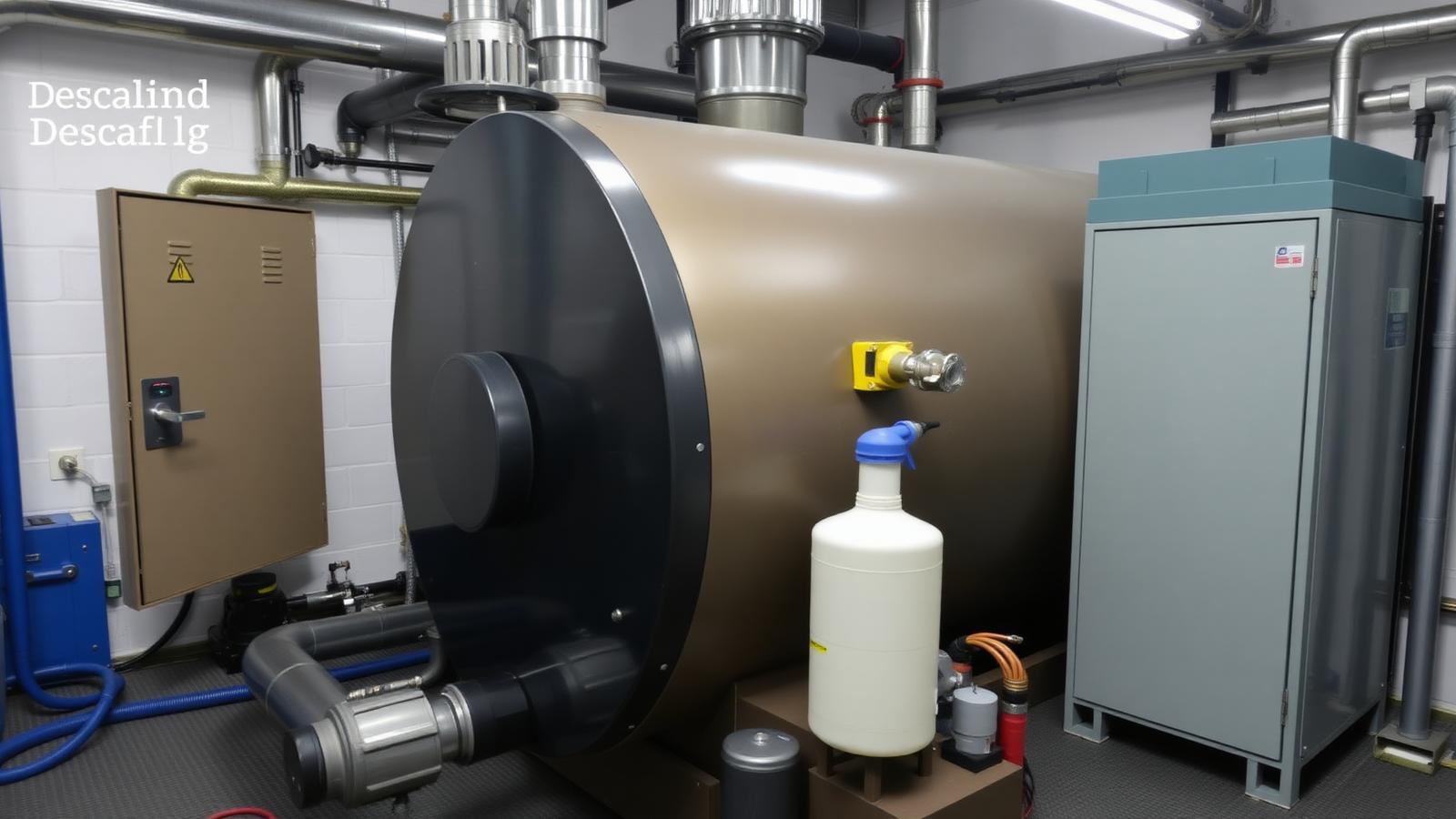
The Engineering Impact of Scale in Commercial HVAC
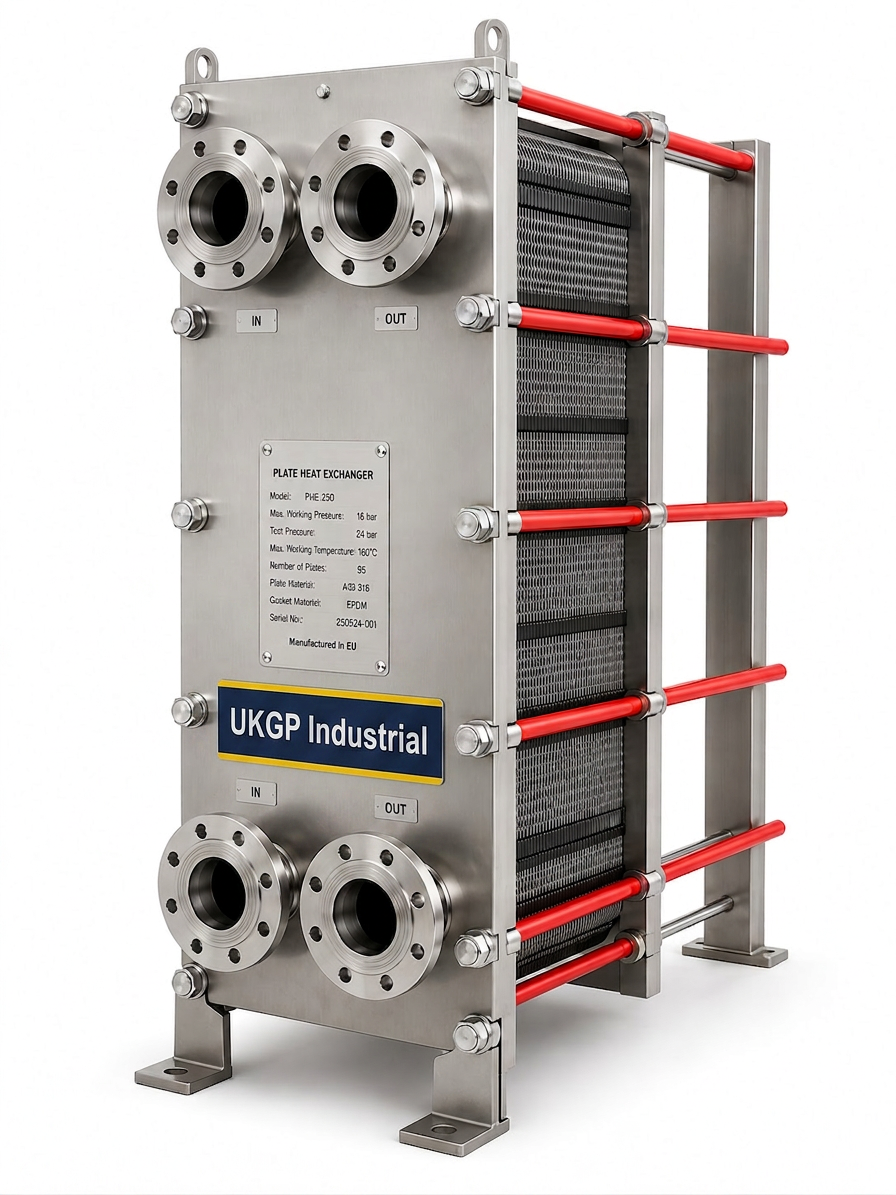
In the UK, particularly across the southern counties and London, water hardness poses a persistent threat to secondary and primary heating circuits. When building services engineers look to prevent boiler scale commercial facilities must focus on the inverse relationship between thermal conductivity and calcium carbonate thickness. Even a millimetre of scale on a heat exchanger surface can reduce thermal transfer efficiency by over 10 percent, leading to significantly higher carbon footprints and energy bills. This accumulation occurs most aggressively at high-temperature interfaces, such as those found in plate heat exchangers or the internal burner surfaces of condensing boilers, where the saturation point of magnesium and calcium ions is most easily surpassed.
Failure to implement a preventative strategy often results in localized overheating, known as 'kettling', which can stress the metallurgical integrity of the boiler vessel. For M&E contractors, the operational risk is not just limited to energy wastage; it extends to the premature failure of circulating pumps and the clogging of control valves, which adds unnecessary strain to the entire hydraulic circuit. By referencing BS 8552 for water quality sampling and BSRIA BG50 for closed-loop maintenance, facilities managers can establish a baseline that identifies when hardness levels exceed the safe operational parameters of their specific heating or cooling plant, ensuring that the system remains within its design lifespan.
The financial implications of ignoring scale prevention are often several orders of magnitude higher than the capital investment required for proper water treatment infrastructure. For instance, the cost of an emergency heat exchanger replacement or a reactive chemical power flush far exceeds the proactive installation of a high-quality side stream filtration skid or a bespoke chemical dosing station. UKGP Industrial specializes in providing the hardware necessary to enforce these water quality standards, offering technical support that aligns with the rigorous demands of modern British commercial infrastructure. Establishing a protocol for continuous monitoring and mechanical filtration is the first step toward long-term system stability and reduced operational expenditure.
- Thermal efficiency drops of up to 12% per 1.5mm of scale buildup
- Increased risk of localized boiler shell stress and stress-corrosion cracking
- Higher operational costs due to increased gas consumption and carbon levies
- Accelerated wear on mechanical seals and pump impellers from suspended solids
Side Stream Filtration: A Core Component to Prevent Boiler Scale
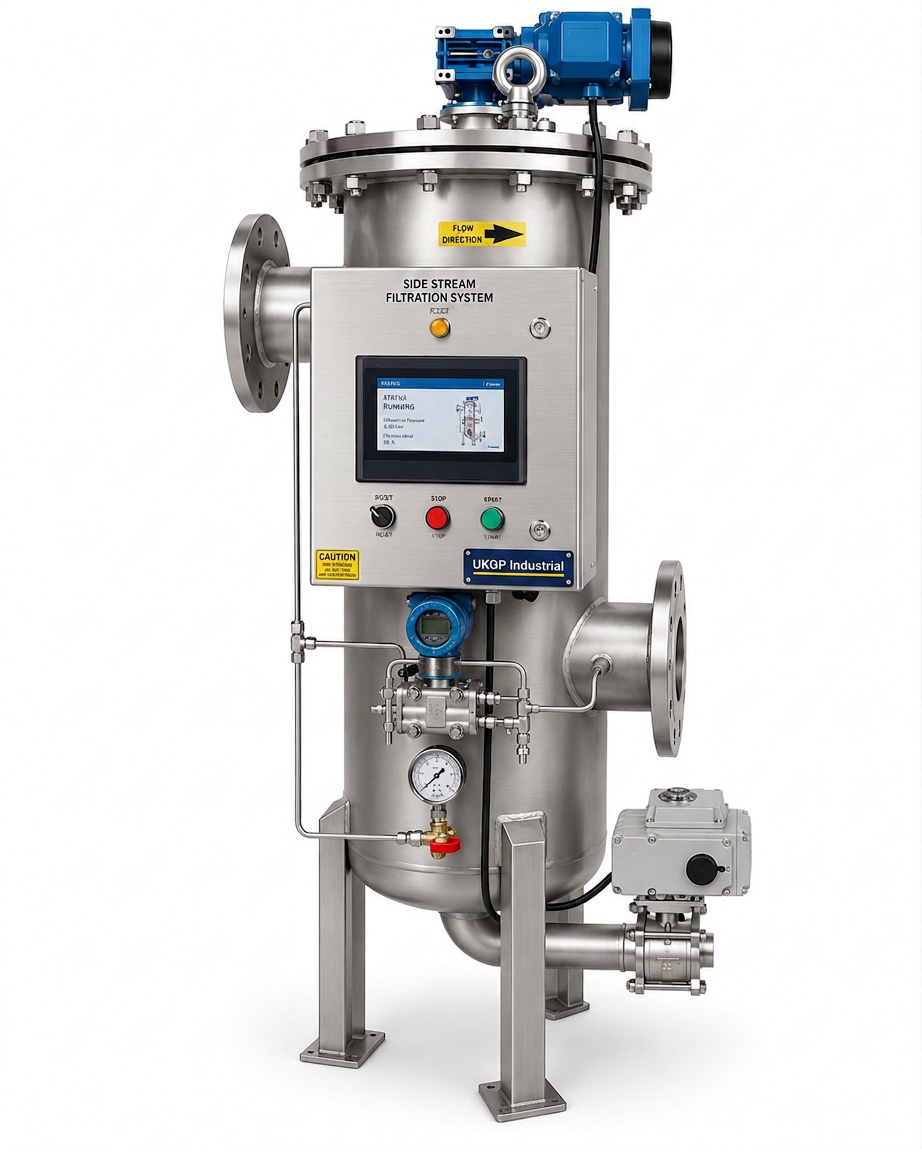
While traditional water softeners address the incoming hardness, side stream filtration remains the most critical mechanical safeguard for maintaining internal water quality and removing the seeds of scale formation. To prevent boiler scale commercial plants should utilize a skid that continuously processes a portion of the system volume, removing the magnetite, debris, and precipitated calcium that would otherwise bond to hot surfaces. These systems are designed to capture particles down to five microns, ensuring that the water circulating through delicate boiler heat exchangers is as clean as possible. This approach is sanctioned by BSRIA BG29 and BG50 as a primary method for ensuring the ongoing health of closed-loop heating and cooling circuits.
UKGP Industrial manufactures specialized side stream filtration skids that are engineered for the specific demands of UK commercial plant rooms. These units are available in sizes ranging from DN50 to DN100 and are designed to be integrated seamlessly into existing or new-build HVAC infrastructures. Starting from £6,800 +VAT, these skids are made to order with a typical lead time of 6 to 8 weeks, ensuring you receive a system tailored to your specific flow rates and pressure requirements. By choosing a UK-manufactured solution, engineers benefit from a 2-year warranty and the assurance that the components meet British engineering standards, providing a reliable barrier against the gradual degradation caused by fouling and mineral deposition.
Implementing a side stream solution from UKGP allows for easier system monitoring through manual or automated blowdown procedures. Rather than relying solely on chemical inhibitors, which can degrade over time if not properly replenished, mechanical filtration provides a tangible, constant removal of contaminants. This is particularly vital in retrofit scenarios where existing pipework may already contain significant amounts of loose scale following a chemical clean. A robust side stream arrangement ensures that these dislodged particles are captured before they can re-settle on the new boiler's high-efficiency heat transfer surfaces, protecting your primary investment and maintaining the high COP ratings expected by today's energy-conscious procurement leads.
- UKGP filtration skids available from DN50 to DN100 sizes
- Prices starting from £6,800 +VAT with a 2-year manufacturer warranty
- Continuous 24/7 removal of suspended solids and early-stage scale particles
- Compliant with BSRIA BG50 guidelines for closed-circuit water quality
The Role of Base Exchange Softeners and Reverse Osmosis
In regions with extreme water hardness, secondary filtration alone may not be sufficient to prevent boiler scale commercial systems require at the point of makeup water entry. Base exchange water softeners work by replacing calcium and magnesium ions with sodium ions, effectively preventing the formation of hard scale within the boiler. For many consultants, the selection between a simplex or duplex softener depends on the boiler's makeup demand; high-usage systems typically require a duplex model to ensure a constant supply of soft water even during the resin regeneration cycle. This prevents hard water from entering the loop during peak hours, which could otherwise introduce a significant mineral load in a single day.
Beyond standard softening, Reverse Osmosis (RO) provides a deeper level of demineralization, removing up to 98% of dissolved inorganic solids. While more complex to maintain, RO is often the preferred choice for high-pressure steam applications or very large commercial district heating schemes where water purity is non-negotiable. However, for the majority of LPHW (Low Pressure Hot Water) systems in the UK, a well-sized base exchange softener paired with effective chemical dosing is the industry standard. It is essential to monitor the salt levels in these units regularly, as a softener that has run out of salt is effectively doing nothing to mitigate the risk of scale formation within the heat exchangers.
When designing these systems, CIBSE guides suggest that the makeup water rate should be kept as low as possible to minimize the introduction of new oxygen and minerals. If your system is experiencing high makeup rates, it is often a sign of an undiagnosed leak or an incorrectly sized expansion vessel. Addressing these underlying hydraulic issues is just as important as the water treatment itself. By ensuring the makeup water is treated at the point of entry and the internal volume is maintained through side stream filtration, you create a multi-layered defense that vastly exceeds the protection offered by singular treatment methods, ensuring long-term asset protection for the client.
- Duplex softeners ensure continuous treated water during regeneration cycles
- RO systems for high-pressure or critical steam applications
- Monitoring of makeup water volume via pulse-output water meters
- Regular salt replenishment as a critical FM maintenance task
Chemical Dosing and Inline Dosing Pots for System Stability
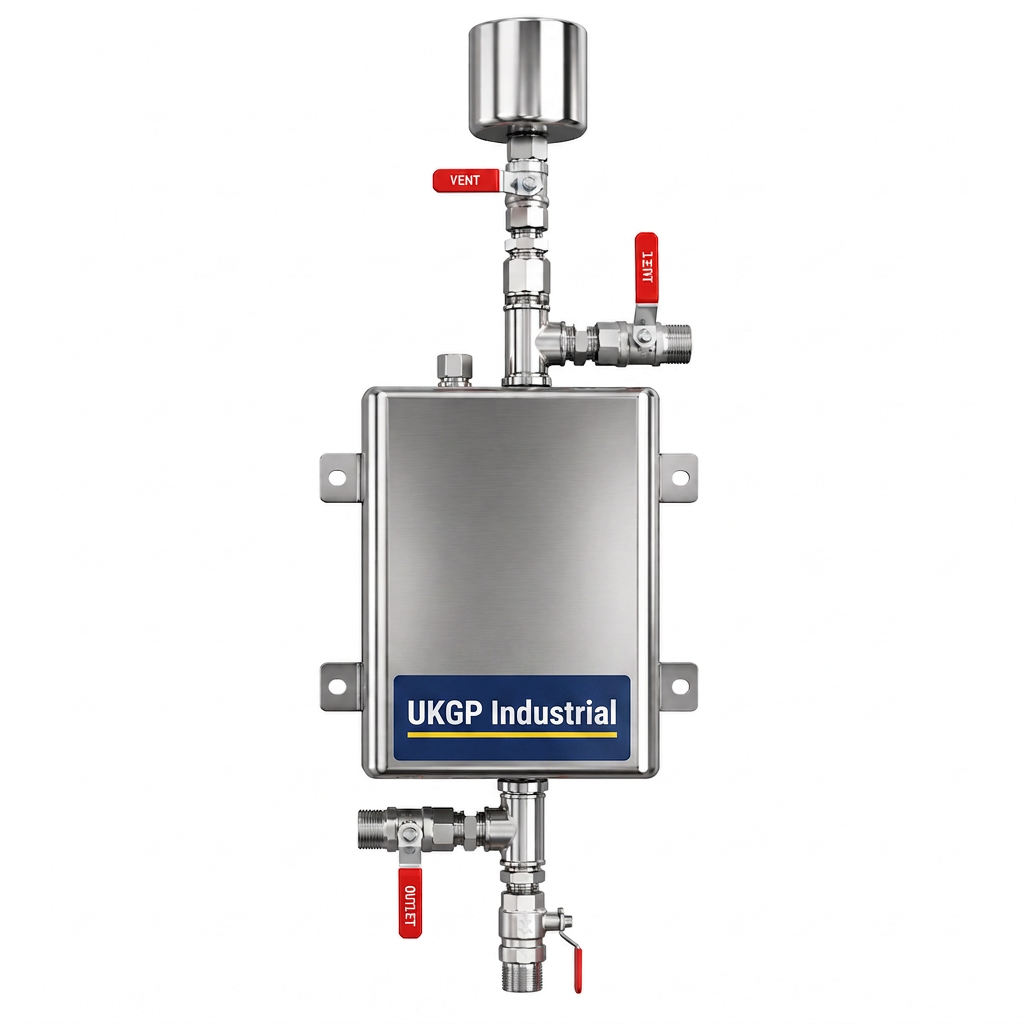
Chemical treatment is the third pillar in the strategy to prevent boiler scale commercial engineers rely on. Utilizing an inline dosing pot is the most practical way to introduce scale inhibitors and corrosion protection chemicals into a closed loop. These chemicals work by distorting the crystal structure of any remaining calcium carbonate, preventing it from adhering to metal surfaces, and instead keeping it in suspension where it can be effectively removed by the side stream filtration skid. This synergy between chemical and mechanical treatment is what separates professional-grade HVAC maintenance from basic, often ineffective, stop-gap measures that fail under real-world commercial loads.
UKGP Industrial provides a range of high-quality stainless steel and carbon steel chemical dosing pots designed to meet the rigours of the British plant room. These units allow for the safe and controlled introduction of chemicals without the need to shut down the system. For many FMs, the dosing pot is the primary point of contact for water treatment, providing a reliable method to boost inhibitor levels as part of a quarterly maintenance schedule. When combined with a 2-year warranty and UK-based technical support, our dosing pots provide the peace of mind that procurement leads require when specifying components for long-term service agreements.
It is crucial to follow the manufacturer's dosage rates and to conduct regular water tests in accordance with BS 8552. Over-dosing can be just as problematic as under-dosing, potentially leading to the degradation of pump seals or the promotion of certain types of bacterial growth if the chemical balance is shifted too far. A balanced chemical profile, maintained via a professional dosing pot and monitored by an experienced water treatment specialist, ensures that the metals within the system—whether copper, steel, or aluminium—are protected from both scale and the oxidative corrosion that often follows it. This integrated approach is the only way to adhere strictly to BSRIA BG50 standards.
- Dosing pots allow for safe chemical introduction without system downtime
- Scale inhibitors work by sequestering hardness ions in suspension
- Regular BS 8552 water testing to ensure correct chemical concentrations
- Compatibility with various pipe materials and system volumes
Integrating Air and Dirt Separators for Maximum Protection
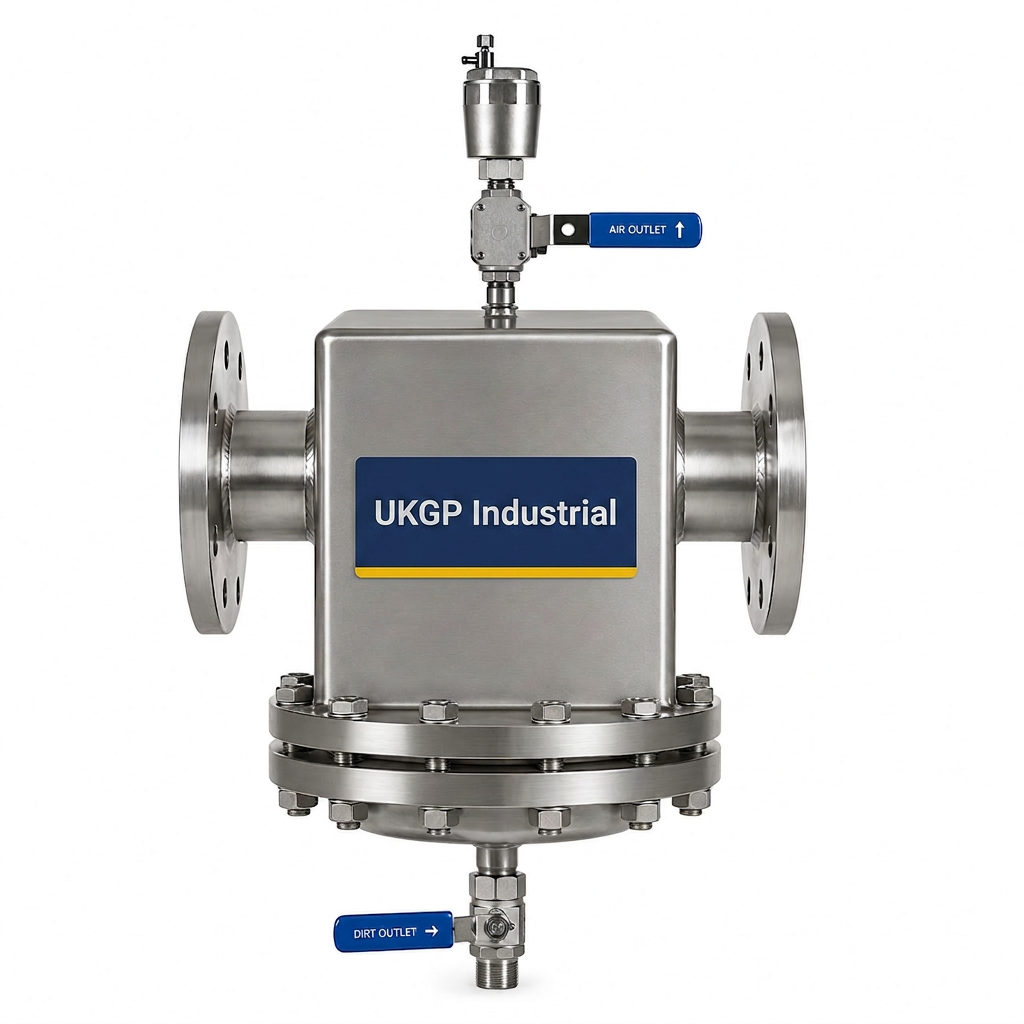
Air and dirt separators play a supporting but vital role in the prevention of scale and corrosion. Micro-bubbles in the system water can lead to localized corrosion, which creates a textured surface that is far more conducive to scale attachment. By removing both micro-bubbles and the heavier dirt particles through a dedicated separator, you ensure that the internal surfaces of the pipes remain smooth and less prone to mineral bonding. To prevent boiler scale commercial systems should ideally feature a high-performance separator positioned at the point of highest temperature and lowest pressure, typically on the flow pipe immediately following the boiler or heat exchanger.
Modern separators utilize pall rings or similar slowing media to encourage air to rise and dirt to fall out of the stream. This mechanical process is passive and requires very little maintenance, yet its impact on the efficacy of other water treatment equipment is substantial. When the air is removed, the chemical inhibitors can more effectively coat the metal surfaces, creating a molecular film that resists the thermal bonding of calcium. Furthermore, by removing the dirt before it reaches the side stream filter, you can extend the life of the filter bags or cartridges, making the overall maintenance regime more cost-effective for the building owner over the 2-year warranty period and beyond.
For M&E contractors, specifying a combined air and dirt separator is often a space-saving and cost-effective choice. UKGP Industrial offers various configurations that help manage these contaminants efficiently. By reducing the overall turbidity of the water, these devices directly support the goals of BSRIA BG50. A cleaner system is a more predictable system, and in the high-stakes environment of commercial heating, predictability translates to fewer call-outs and higher client satisfaction. Ensure that your next plant room specification includes these essential components to complement your side stream filtration and chemical dosing strategy.
- Elimination of micro-bubbles reduces oxygen-driven corrosion risks
- Internal pall rings facilitate high-efficiency dirt separation
- Protects secondary components like control valves and heat meters
- Reduces the surface 'roughness' that encourages scale crystallization
Maintenance Protocols and BSRIA Compliance
Achieving a scale-free system is not a 'set and forget' task; it requires a disciplined maintenance protocol aligned with BSRIA BG50. This involves regular sampling, the checking of softener salt levels, and the routine inspection of filter bags within the side stream filtration skid. For the FM, documenting these actions is essential for maintaining the 2-year warranty on equipment like the UKGP filtration units. If a boiler fails due to scale, the first thing an investigator will look for is the water quality logbook. If the documentation shows a failure to maintain chemical levels or an ignored side stream filter, the manufacturer's warranty on the boiler itself may be voided.
To prevent boiler scale commercial buildings should have a designated person responsible for weekly checks and quarterly professional water analysis. This analysis should check for pH, conductivity, hardness, and inhibitor levels. If the hardness starts to creep up despite a softener being in place, it could indicate that the resin bed is fouled or that the makeup water volume has exceeded the softener's capacity. By catching these issues early, the FM can prevent a minor technical glitch from turning into a major scale-related breakdown that could cost tens of thousands of pounds in repairs and lost productivity for the building's occupants.
In conclusion, preventing scale in a commercial environment is a multi-technology challenge that combines high-quality UK manufacturing with rigorous engineering standards. By investing in a UKGP side stream filtration skid (starting from £6,800 +VAT), along with proper dosing and softening, you are not just buying equipment; you are buying insurance for your plant room. With a typical 6 to 8-week lead time, these systems can be integrated into your next project to ensure that your heating system operates at peak efficiency for its entire design life. Trust in UK-made quality and BSRIA-compliant strategies to keep your boilers clear and your energy bills low.
- Weekly salt level checks for base exchange softeners
- Quarterly water analysis for pH, conductivity, and inhibitor levels
- Documented filter bag changes in side stream filtration systems
- Adherence to BSRIA BG50 logbook requirements for warranty protection
Frequently asked questions
How much does a commercial side stream filtration skid cost?
- A high-quality UKGP side stream filtration skid typically starts at £6,800 +VAT for standard sizes (DN50 to DN100). These are made to order with a 6-8 week lead time and include a 2-year warranty.
Why is BSRIA BG50 important for scale prevention?
- BSRIA BG50 provides the industry-recognised standards for maintaining water quality in closed-loop systems. Following it ensures that scale and corrosion are minimized through proper filtration, dosing, and monitoring.
Can I prevent boiler scale with chemicals alone?
- While chemicals are vital, they are most effective when used alongside mechanical filtration. Side stream filtration removes the physical particles and precipitated minerals that chemicals keep in suspension, preventing them from ever settling.
What is the lead time for UKGP water treatment equipment?
- Our specialized equipment, including side stream filtration skids and dosing pots, is generally made to order in the UK with a lead time of approximately 6 to 8 weeks, depending on the specific project requirements.
Is a softener better than a side stream filter?
- They serve different purposes. A softener treats the incoming makeup water to prevent new hardness from entering, whereas a side stream filter cleans the water already circulating in the system. Both are necessary for a comprehensive strategy to prevent boiler scale commercial systems.