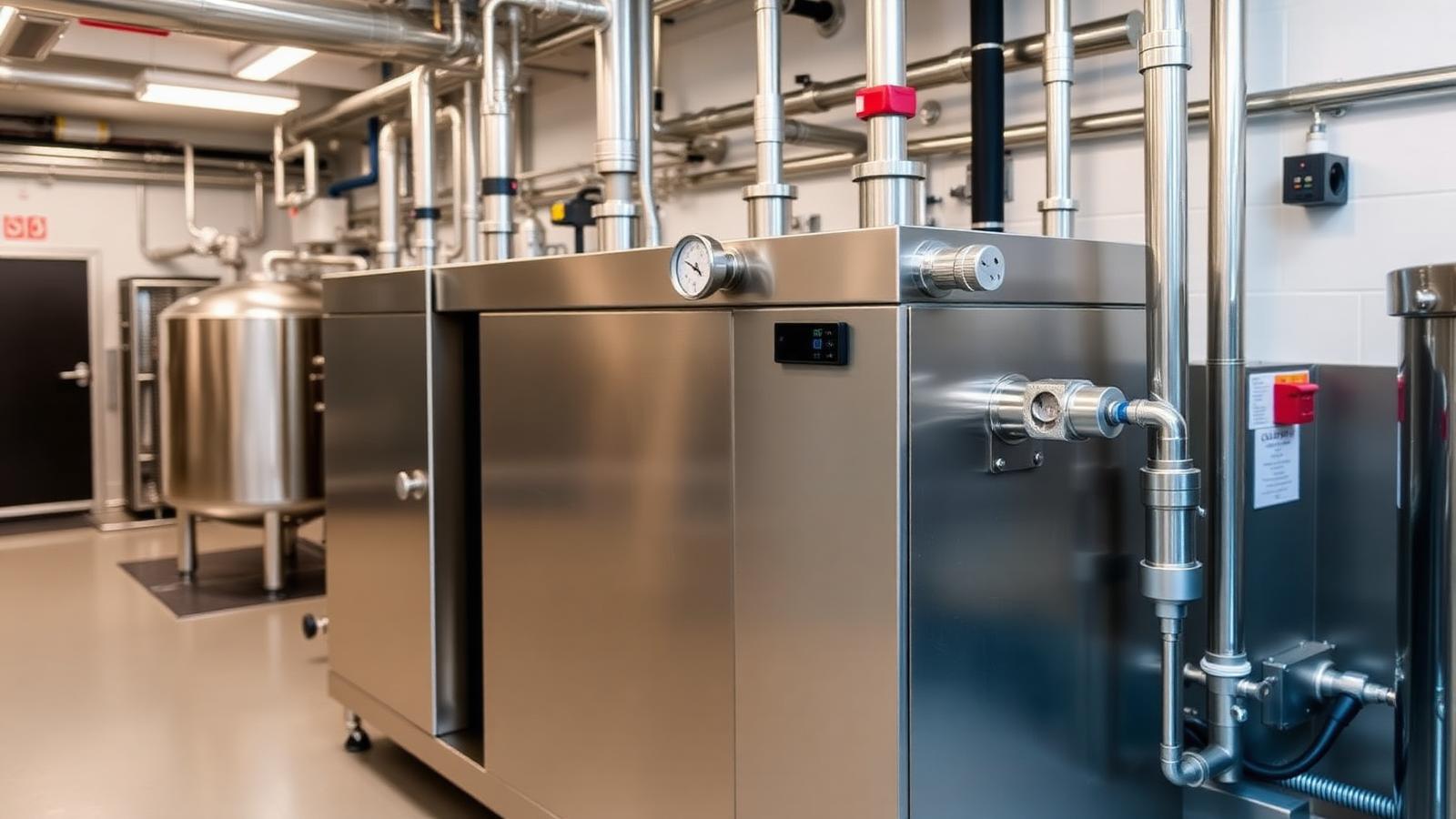
Understanding the Role of Pre-commission Cleaning Equipment
In the UK building services sector, the transition from installation to operation is perhaps the most critical stage for the long-term health of a closed-loop system. The specification of high-performance pre-commission cleaning equipment is not merely a box-ticking exercise for BSRIA BG29 compliance; it is a fundamental requirement to protect multi-million-pound assets like chillers and plate heat exchangers. Without the right flushing rigs and filtration units, suspended solids and metallic particles remain trapped in low-flow areas, leading to under-deposit corrosion and significant heat transfer losses. For M&E contractors and facility managers, the investment in reliable equipment from a UK manufacturer ensures that the system meets the stringent water quality criteria required by BS 8552 and CIBSE guidelines right from the initial fill.
Choosing the right equipment necessitates an understanding of the chemical and mechanical processes involved in a standard flush. A robust pre-commission cleaning equipment list will typically include high-velocity flushing pumps, chemical dosing units, and temporary side stream filtration skids. These components work in tandem to circulate cleaning agents, such as acid or alkaline cleaners, and then physically remove the dislodged debris from the loop. In Surrey and across the UK, project leads are increasingly looking for skid-mounted solutions that can be easily integrated into the plant room during the construction phase. By sourcing professional-grade equipment, engineers can avoid the common pitfalls of inadequate flushing, which often result in costly remedial works and delayed project handovers.
Precision in equipment selection also impacts the environmental footprint of the cleaning process. Modern BSRIA-compliant systems focus on reducing water wastage during the flushing stages. Efficient pre-commission cleaning equipment allows for high-velocity particle displacement without the need for excessive 'dump and fill' cycles that are common with antiquated methods. This efficiency is particularly important when managing larger DN80 or DN100 pipework systems where water volumes are substantial. UKGP Industrial specializes in providing the hardware required to manage these flows efficiently, ensuring that the water chemistry is stabilized and the system is passivated against future aerobic and anaerobic microbial growth as per BG50 maintenance standards.
- Ensures compliance with BSRIA BG29:2020 flushing standards
- Reduces the risk of under-deposit corrosion in new-build HVAC
- Optimises heat transfer efficiency from Day 1 of commissioning
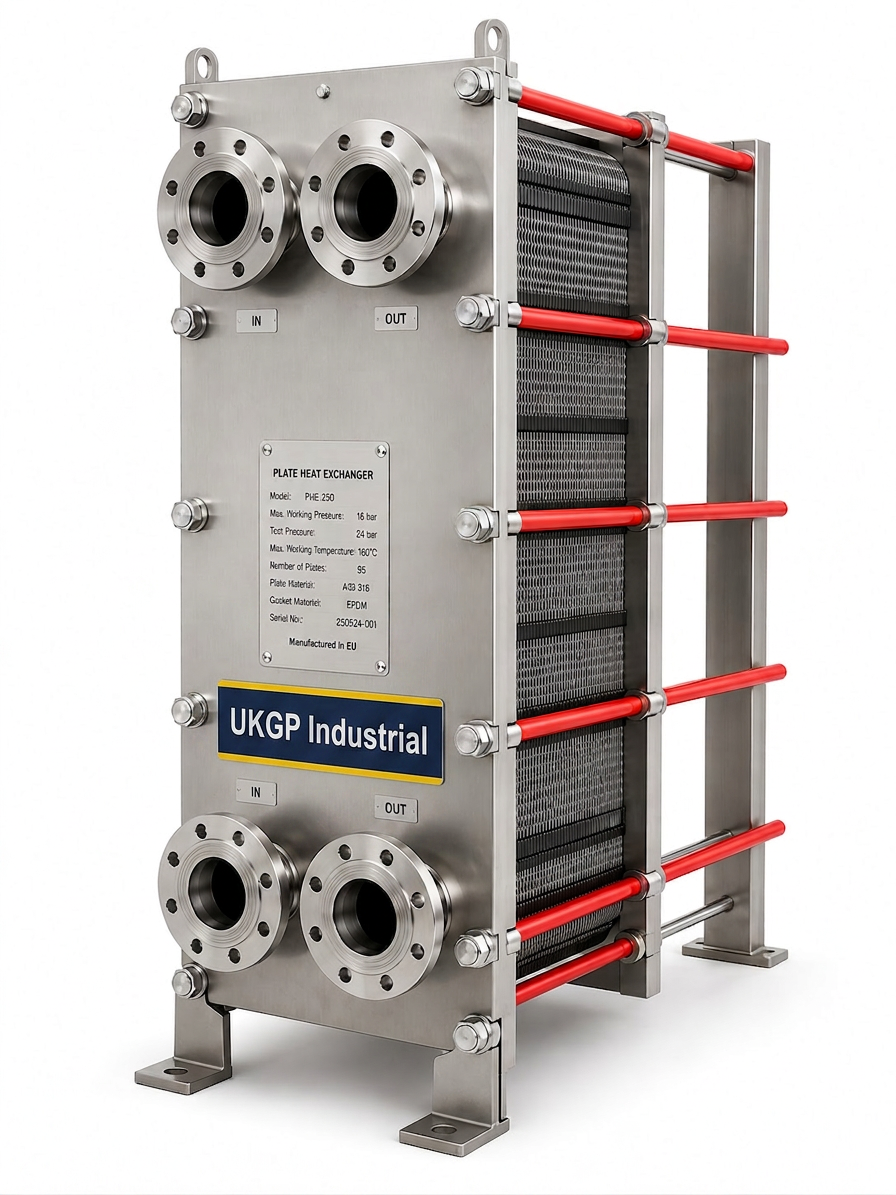
- Protects sensitive components like plate heat exchangers and valves
Core Components: The Side Stream Filtration Skid
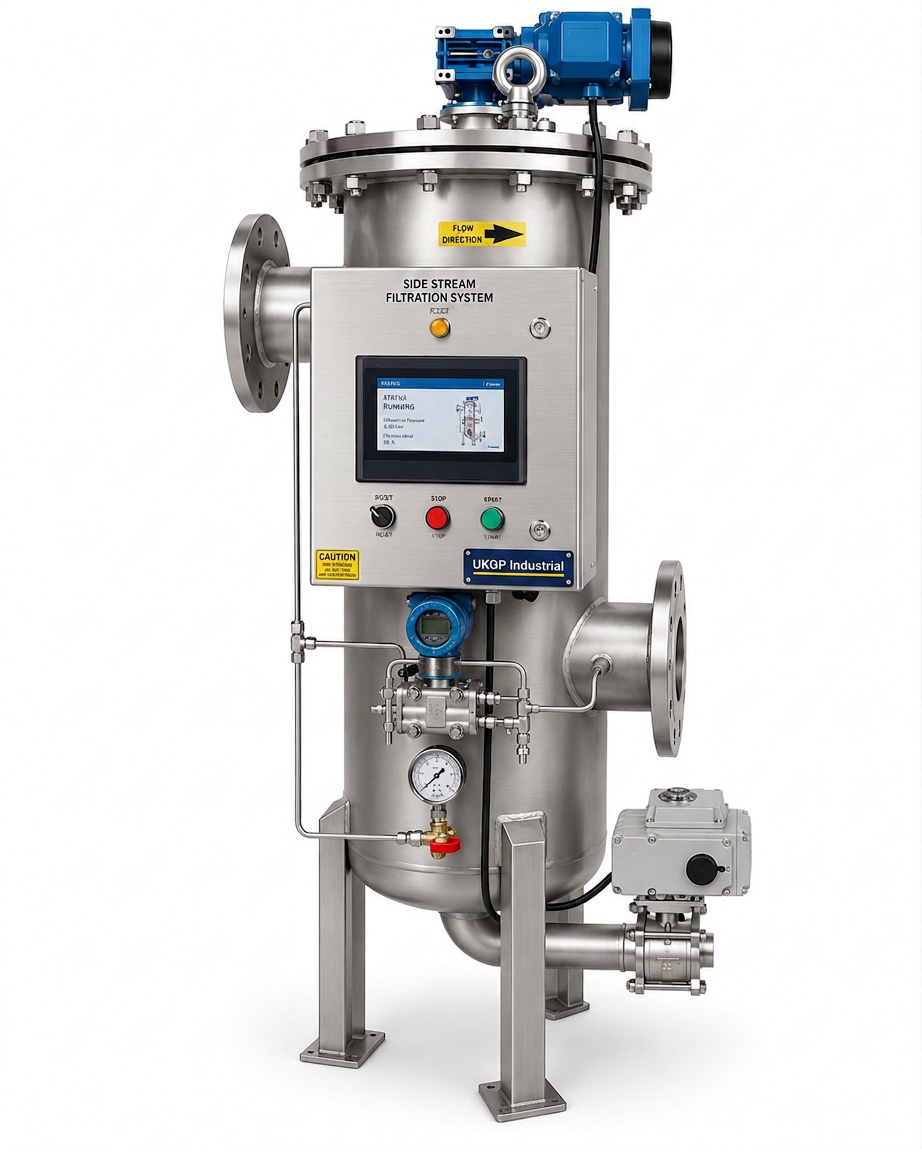
The cornerstone of any modern pre-commission cleaning equipment list is the side stream filtration skid. While high-velocity flushing moves the debris, the filtration skid is what actually removes it from the water circuit. Unlike traditional full-flow filters which can create massive pressure drops and are difficult to maintain during a chemical clean, a side stream unit diverts a portion of the flow through high-efficiency filter bags or cartridges. Our UK-manufactured skids, specifically designed for closed-loop systems, are capable of removing particles down to 5 microns, significantly exceeding the base requirements for most commercial installations. This ensures that even fine magnetite and construction dust, which are often missed by standard strainers, are successfully captured and removed from the system.
When specifying a side stream filtration unit for a UK project, engineers must consider the flow rate and the physical footprint within the plant room. Our skids are made to order with a standard lead time of 6 to 8 weeks, ensuring they are ready for the critical commissioning phase of your construction program. Prices start from £6,800 + VAT for standard configurations, providing a cost-effective alternative to long-term remedial chemical treatments. These units are built to withstand the rigours of site work, featuring durable DN50 to DN100 connections and high-quality pumps. Because we manufacture in Surrey, we can ensure that every skid meets our exacting quality standards and comes with a full 2-year warranty, giving long-term peace of mind to FM teams and building owners.
Integrating side stream filtration into your pre-commissioning phase also simplifies the ongoing maintenance according to BSRIA BG50. By establishing a clean system from the start, the frequency of manual cleaning and chemical replenishment is reduced. Contractors who utilize our side stream filtration skids report significantly faster attainment of the water clarity targets required for final sign-off. If you are currently drafting a specification for a commercial plant room, including a UKGP Industrial filtration skid ensures that your pre-commission cleaning equipment list is comprehensive and future-proofed against the evolving standards of the UK building services industry. Contact our Surrey technical team today to discuss bespoke configurations for your specific flow requirements.
- Removal of suspended solids down to 5-10 microns
- Typical UK price points starting from £6,800 + VAT
- Sized from DN50 to DN100 for versatile plant room integration
- Made to order in Surrey with a 6-8 week delivery timeline
Chemical Dosing Pots for System Passivation
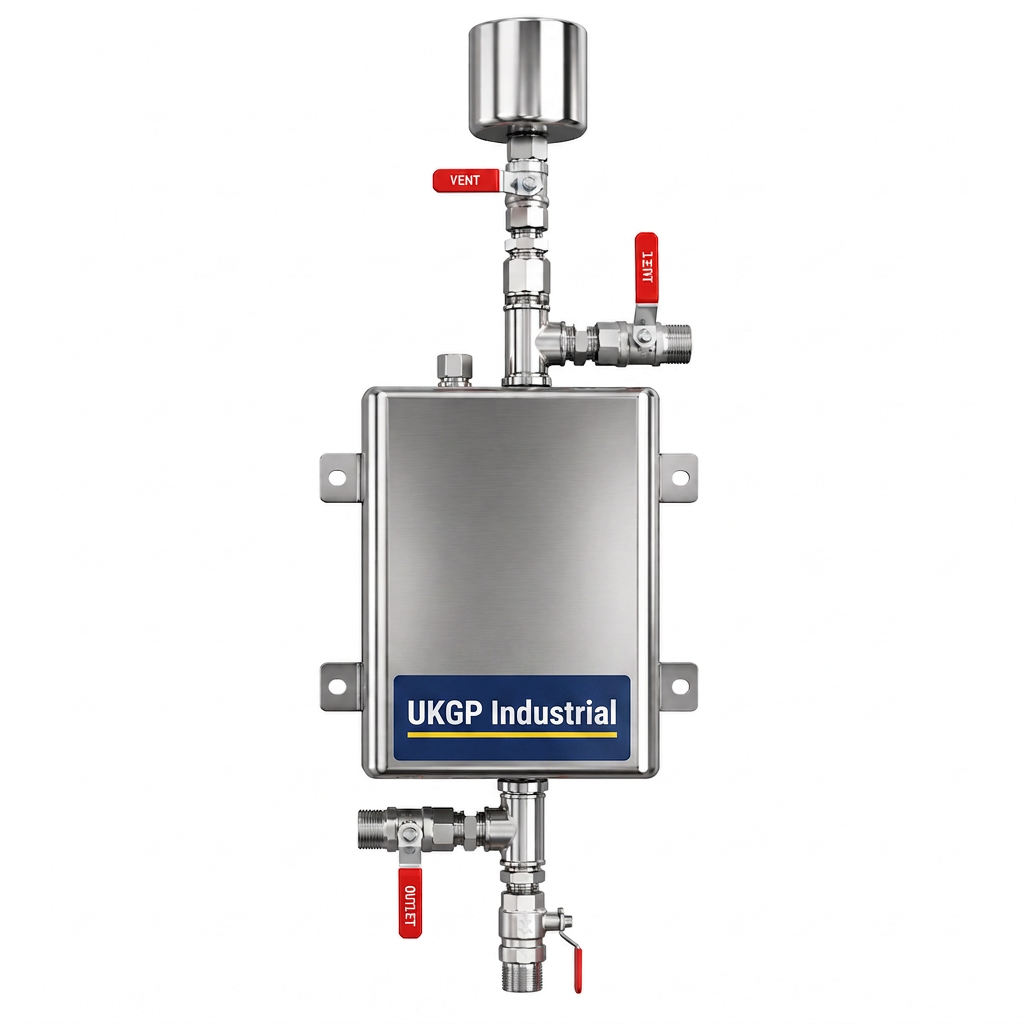
Included in any professional pre-commission cleaning equipment list must be a high-quality chemical dosing pot. These units are essential for the controlled introduction of cleaning chemicals, such as biocide washes and system cleaners, during the pre-commissioning phase. In line with BSRIA BG29, the dosing pot allows engineers to inject the necessary inhibitors and passivators once the system has been flushed to the required clarity. UKGP Industrial provides robust stainless steel dosing pots that are built to withstand the chemical pressures and temperatures found in standard LTHW and chilled water circuits. Using a dedicated dosing unit prevents the risks associated with manual chemical handling and ensures an even distribution of the cleaning agents throughout the entire pipework network.
The role of the dosing pot extends beyond the initial clean into the long-term health of the building. After the pre-commissioning phase is complete, the dosing pot remains a permanent fixture in the plant room, allowing for the easy addition of corrosion inhibitors as part of the BG50 maintenance regime. Our units are designed for ease of use, featuring clear labelling and secure isolation valves. For procurement leads looking to bundle their equipment, our dosing pots are often ordered alongside our filtration skids to ensure a unified approach to water treatment. By investing in UK-made hardware, you ensure that the materials used are compatible with the aggressive chemicals often required for stripping mill scale and construction residues from new steel pipework.
Proper installation of the dosing pot is crucial for effective chemical dispersion. It should be situated across the flow and return headers to utilize the pressure differential for non-powered chemical induction. This simple but effective mechanism is a staple of the UK building services sector. When compiling your pre-commission cleaning equipment list, specify UKGP dosing pots to ensure you are using equipment that has been tested for the specific pressures of UK commercial systems. We maintain stock of standard sizes to support fast-track projects, ensuring that your commissioning timeline is not hampered by equipment delays. Effective chemical dosing is the final step in ensuring the internal surfaces of the pipework are protected against the rapid onset of corrosion after the initial flush.
- Stainless steel construction for maximum chemical resistance
- Essential for the introduction of BG29 cleaning chemicals
- Available in various capacities to suit system volume
- Simple, reliable design for long-term plant room operation
High-Velocity Flushing Pumps and Hoses
To achieve the cleanliness levels specified in BSRIA BG29, the pre-commission cleaning equipment must be capable of generating high-velocity water movement. This velocity is required to suspend heavy debris and move it toward the filtration points. Most BG29 specifications require a flushing velocity of at least 10% above the design flow rate, or a minimum of 1.5 metres per second in the largest pipe size. To achieve this, specialized high-head flushing pumps are used. These are typically temporary mobile units that are connected into the system via heavy-duty reinforced hoses. The selection of the pump is critical; if the pump is undersized, the velocity will be insufficient to move larger particles of swarf or sand, leading to localized blockages and future corrosion issues.
The hoses used for connecting the flushing rig to the main loop must also be of industrial grade, capable of handling both the pressure and the chemical cleaners used during the process. In a professional pre-commission cleaning equipment list, specify cam-lock or flanged couplings to ensure secure, leak-free connections during the high-pressure flush. It is common practice for engineers to flush in sections—or 'zones'—to ensure that the maximum velocity is concentrated in specific areas of the building. This modular approach requires high-quality isolation valves and bypasses to be designed into the system from the outset. UKGP can provide advice on the optimal bypass arrangements to ensure that your flushing regime is as effective as possible while protecting sensitive terminal units like fan coils.
Monitoring the progress of the flush is just as important as the equipment itself. Technicians use flow meters and pressure gauges to verify that the required velocities are being achieved. Without this verification, there is no guarantee that the 'cleaning' is actually taking place as intended. The use of a clear 'sight glass' or a dedicated sampling point on the flushing rig allows for visual inspection of the water quality, though this must always be followed by laboratory analysis to BS 8552 standards. For UK contractors, having a reliable set of flushing pumps and monitoring tools in their pre-commission cleaning equipment list is the difference between a successful BSRIA sign-off and a protracted dispute over water quality at the end of a project.
- High-head pumps required to meet 1.5m/s velocity targets
- Reinforced suction and discharge hoses with secure couplings
- Flow meters and pressure gauges for real-time monitoring
- Bypass valves for protecting terminal equipment during flush
Air and Dirt Separators: The Defensive Line
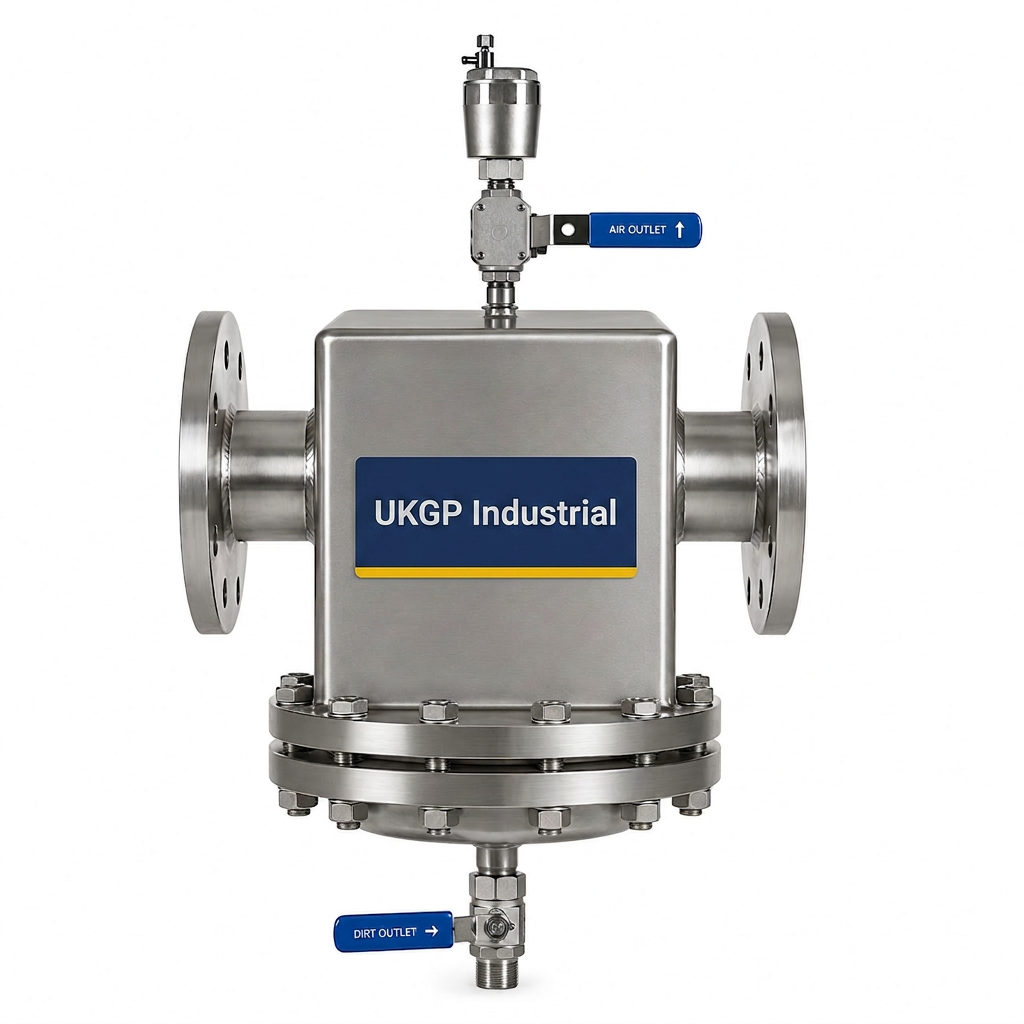
While the primary clean is a one-time event, the role of air and dirt separators in the pre-commission cleaning equipment list is to provide a continuous defensive line during the initial circulation phases. Micro-bubbles and fine dirt particles are often trapped in the system during the first fill. An air and dirt separator, ideally containing a high-flux magnetic element, is installed to capture these contaminants before they reach the main plant. For UK building services, these units are critical for protecting high-efficiency boiler heat exchangers and circulating pumps which have very tight tolerances. Even after a successful BG29 flush, a small amount of residual material can still migrate through the system; the separator ensures this does not cause damage.
The selection of an air and dirt separator should be based on the full system flow rate to ensure maximum efficiency. Unlike side stream filtration, these units are full-flow devices. When combined with a side stream skid, they offer a comprehensive solution for water quality management. Our UK-manufactured separators are available in flanged formats from DN50 to DN600, covering everything from small commercial units to large district heating hubs. By removing air, these units also prevent the oxygen-rich environment that leads to rapid aerobic corrosion immediately following the pre-commissioning flush. This is a vital step in maintaining the passivated layer created by the chemical inhibitors added through the dosing pot.
For M&E contractors, including a high-quality separator from UKGP Industrial in the plant room build ensures that the system is equipped for its entire lifecycle. Our range of separators is designed for low pressure drop, ensuring that the pump energy is utilized for heating and cooling rather than overcoming resistance in the pipework. In the context of a BG29 equipment list, these units provide the final 'polishing' of the water and serve as a diagnostic tool for FM teams; the amount of debris caught in the magnetic tray can indicate whether the initial pre-commissioning was successful or if further side stream filtration is required. All our units are produced to order with the same quality assurance and 2-year warranty as our premium filtration skids.
- Removes micro-bubbles to prevent oxygen-accelerated corrosion
- Magnetic inserts capture fine magnetite and metallic swarf
- Protects expensive boiler and chiller heat exchangers
- Low pressure-drop design for energy-efficient operation
Testing and Verification Tools for BS 8552
A pre-commission cleaning equipment list is incomplete without the tools required for verification. The success of a BG29 flush is determined by laboratory analysis of water samples taken in accordance with BS 8552. To facilitate this, engineers must have access to high-quality sampling points and on-site testing kits. These kits typically include meters for measuring pH, conductivity, and dissolved oxygen, as well as chemical reagents for checking inhibitor levels and iron content. While on-site testing provides immediate feedback during the cleaning process, it does not replace the need for UKAS-accredited laboratory testing, which is a mandatory requirement for final commissioning certification in most UK commercial contracts.
Having the right sampling valves installed at strategic locations—usually the furthest points of the system and at the main plant headers—is essential. These sampling points must be kept clean and free from stagnant water to ensure that the samples taken are representative of the entire system. During the pre-commissioning phase, samples are usually taken at several milestones: before the start of the clean, during the chemical circulation, and after the final flush and passivation. UK building services consultants will look for these records to ensure that the water chemistry has been transitioned correctly from a raw fill to a treated, stabilized state, minimizing the risk of microbiologically influenced corrosion (MIC).
Finally, the documentation of the equipment used and the results achieved forms the 'Commissioning Report'. This document is the legal and technical proof that the system was handed over in a clean and stable condition. Contractors who use high-specification equipment, like the side stream filtration skids and dosing pots from UKGP Industrial, find that their reports are much more likely to be accepted without question. Our team in Surrey can provide the technical data sheets required for your O&M manuals, ensuring that all equipment on your pre-commission cleaning equipment list is fully documented. Reliable equipment leads to reliable results, reducing the liability of the installer and ensuring the long-term efficiency of the building's HVAC infrastructure.
- In-situ sampling valves located as per BS 8552 requirements
- Digital meters for pH, conductivity, and TDS measurements
- UKAS-accredited lab analysis for final BSRIA sign-off
- Comprehensive O&M documentation for equipment and water chemistry
Frequently asked questions
What is the most critical item on a pre-commission cleaning equipment list?
- While all components are important, the side stream filtration skid is the most critical for physically removing debris. Without it, you are simply moving contaminants around the system rather than removing them.
How long does it take to get a side stream filtration skid in the UK?
- At UKGP Industrial, we manufacture our skids to order with a lead time of 6 to 8 weeks. This ensures the unit is specifically configured for your plant room requirements (DN50-DN100) and comes with a 2-year warranty.
Is side stream filtration required by BSRIA BG29?
- Yes, BSRIA BG29:2020 emphasizes the use of fine filtration to ensure that the system water meets the required suspended solids and iron levels before commissioning is complete.
What is the typical cost for pre-commission cleaning hardware?
- For a professional-grade side stream filtration skid, prices typically start from £6,800 + VAT for UK-manufactured units. This is a significant but necessary investment compared to the cost of cleaning a fouled chiller.
Can I use air and dirt separators instead of a flushing rig?
- No, they serve different purposes. A flushing rig with a side stream filter is used for the intensive pre-commissioning phase, while an air and dirt separator provides continuous protection once the system is in operation.