The Technical Vitality of UFH Power Flushing
A power flush underfloor heating commercial strategy is not merely a reactive fix for cold spots; it is a fundamental pillar of preventative maintenance for modern building services. Commercial underfloor heating (UFH) systems often feature intricate manifold arrangements and hundreds of meters of narrow-bore PEX or PERT pipework. Over time, despite initial commissioning to BSRIA BG29 standards, these loops become susceptible to the accumulation of magnetite, biofilm, and calcium scale. If left unaddressed, these contaminants significantly increase the pump head required to circulate fluid, leading to premature component failure and a noticeable drop in thermal output. For facilities managers, addressing these issues early prevents the costly replacement of manifold actuators and flow meters which are often the first victims of debris buildup.
When performing a power flush underfloor heating commercial procedure, engineers must consider the volume of the entire circuit compared to standard domestic setups. Commercial circuits often involve higher flow rates and larger overall water volumes which demand high-capacity flushing units capable of achieving the Reynolds numbers necessary for turbulent flow. This turbulence is essential for dislodging stubborn sludge that settles in the low-velocity bends of the floor loops. Without achieving this specific hydraulic state, the flush remains superficial, merely cleaning the headers while leaving the sub-surface pipework choked with metabolic by-products and corrosion solids. Ensuring the right velocity is key to restoring the system to its original designed KV values and ensuring even heat distribution across large open-plan office spaces or retail floors.
Complying with BSRIA BG50 is non-negotiable for commercial premises owners who wish to maintain their boiler or heat pump warranties. Poor water chemistry and the presence of suspended solids are primary reasons for warranty repudiation in the UK. By integrating a scheduled power flush underfloor heating commercial protocol, M&E contractors can ensure that the system remains within the tight tolerances required for modern high-efficiency condensing boilers and plate heat exchangers. Continuous monitoring of the water quality, as suggested by BS 8552, should follow any physical cleaning process to ensure that the chemical inhibitors added post-flush remain at effective concentrations. Taking a proactive stance on manifold hygiene reduces long-term operational expenditure and enhances the comfort levels for building occupants by eliminating thermal dead zones.
- Restoration of design flow rates across all UFH manifold ports.
- Reduction in circulating pump energy consumption and mechanical wear.
- Alignment with BSRIA BG50 Water Treatment for Closed Heating Systems.
- Extension of manifold component lifespan including pins and flow meters.
Integrating Side Stream Filtration for Long-Term Protection
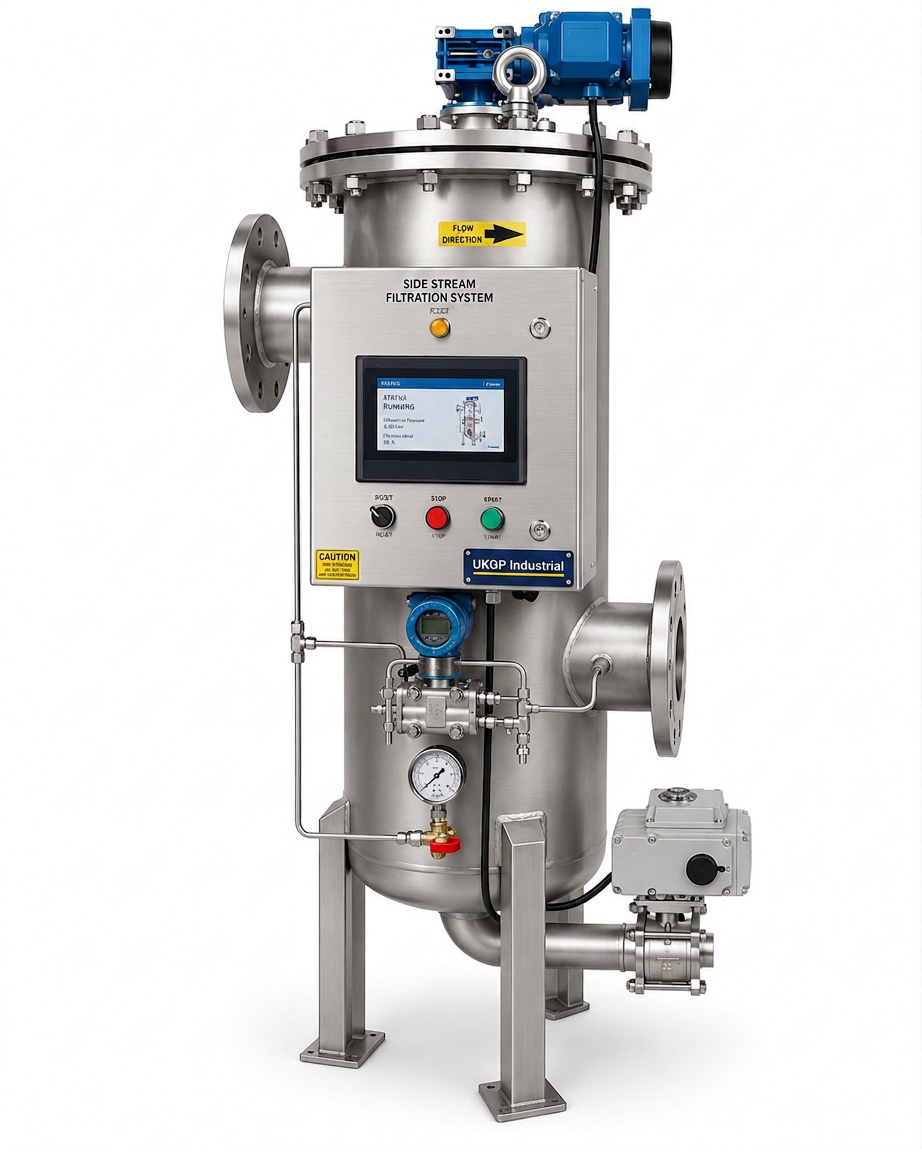
While a one-off power flush underfloor heating commercial intervention provides immediate relief, the long-term solution to maintaining clean UFH loops lies in continuous filtration. Side stream filtration acts as a secondary kidney for the heating system, constantly removing the microscopic magnetite particles that a standard flush might miss or that develop shortly after commissioning. UKGP Industrial offers specialist side stream filtration skids that are specifically designed to handle the debris loads common in commercial UFH networks. These units are made to order with a lead time of 6-8 weeks and are built to the highest UK engineering standards, ensuring that your plant room is equipped with the best possible defense against future blockages.
Our side stream filtration units are available in sizes ranging from DN50 to DN100, making them suitable for a wide variety of commercial plant room specifications. Starting from £6,800+VAT, these skids represent a savvy investment for procurement leads who want to move away from expensive emergency call-outs and toward a stable, predictable maintenance cycle. Each unit comes with a robust 2-year warranty, reflecting our confidence in the British manufacturing quality that UKGP Industrial is known for. By installing a skid that treats approximately 5% to 15% of the total system flow, you can ensure that the water reaching your underfloor heating manifolds is consistently free of the suspended solids that cause flow issues and localized cold spots.
Integrating a UKGP side stream filtration skid alongside your power flush underfloor heating commercial schedule ensures that the system water remains clear and the chemical balance stays stable. Unlike full-flow filters that can cause significant pressure drops if they become blocked, our side stream design allows for easy maintenance without interrupting the heating supply to the building. This is particularly critical in healthcare or data center environments where uptime is paramount. When you choose a UKGP skid, you are opting for a solution that is engineered to order for your specific site requirements, ensuring that the footprint and connection points align perfectly with your existing M&E infrastructure.
- Available in DN50 to DN100 configurations for varied system capacities.
- Standard pricing starts from £6,800+VAT for high-spec UK-made units.
- 2-year warranty and bespoke made-to-order service (6-8 week lead time).
- Continuous removal of magnetite and scale to protect UFH manifolds.
The Role of Dosing Pots in Water Chemistry Maintenance
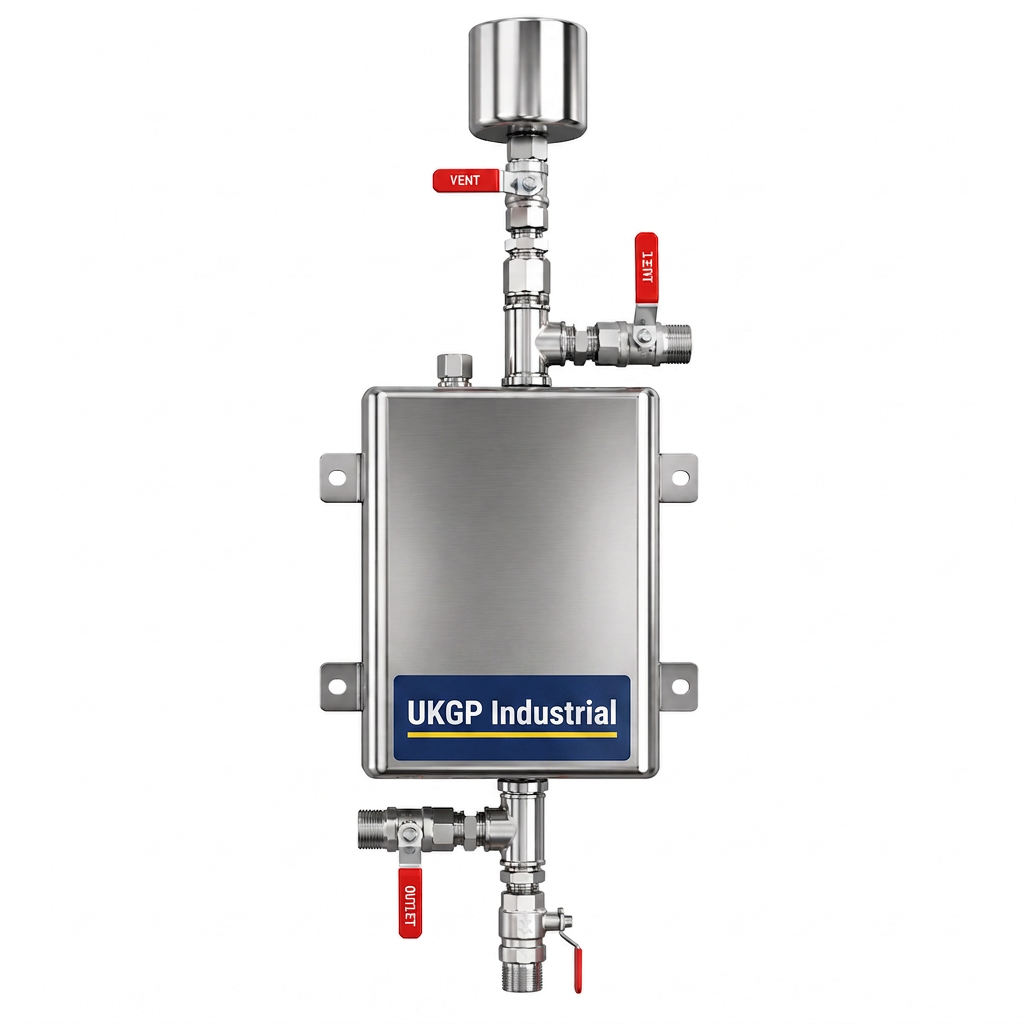
Following a comprehensive power flush underfloor heating commercial operation, the introduction of chemical inhibitors is the next critical step. This is where high-quality chemical dosing pots become indispensable in a commercial plant room. UKGP Industrial supplies robust dosing pots that allow for the safe and controlled introduction of corrosion inhibitors, biocide, and antifreeze into the sealed heating system. Without proper chemical treatment, even a perfectly flushed system will begin to degrade within months, as fresh oxygenated water introduced during the flush initiates new oxidative processes on any metallic components. Our dosing pots are engineered to withstand the pressures of commercial HVAC systems, providing a reliable point of entry for essential water treatment chemicals.
Correct dosing is essential for meeting the standards set out in BSRIA BG50. In commercial UFH systems, where low-temperature operation can sometimes encourage the growth of bacteria and biofilms, the use of a dosing pot to apply periodic biocidal shock treatments is a best-practice requirement. These biofilms are particularly problematic in UFH manifolds as they create a slime that can insulate the pipes and reduce heat transfer efficiency. By using a UKGP dosing pot, maintenance engineers can accurately manage the chemical levels within the system, ensuring that the benefits of the initial power flush are preserved for years rather than weeks. This proactive approach is a hallmark of professional building services management.
When specifying a plant room upgrade or a new build project, including a UKGP chemical dosing pot alongside your side stream filtration ensures a comprehensive approach to water quality. Our dosing pots are built to last, featuring stainless steel construction and high-quality valves that make the addition of chemicals a simple and safe task for site engineers. Whether you are dealing with a small office block or a sprawling industrial complex, having the correct infrastructure to manage your water chemistry is the only way to guarantee that your underfloor heating remains efficient. Invest in UKGP components to ensure your system meets the rigorous demands of UK commercial building regulations and CIBSE guidelines.
- Safe injection of inhibitors and biocides post-power flush.
- Available in multiple capacities to suit various system volumes.
- Stainless steel construction for durability in commercial plant rooms.
- Essential tool for compliance with BSRIA BG50 water treatment standards.
Identifying Sludge and Blockage Symptoms in Manifolds
The first indicator that a power flush underfloor heating commercial task is required is often a discrepancy in floor temperatures across different zones. If the flow meters on your manifold are showing zero or restricted movement despite the actuators being fully open, it is a clear sign that sludge has consolidated within the loop. In commercial settings, this often manifests as specific 'cold zones' in an office where the UFH pipework is furthest from the manifold. These blockages increase the differential pressure across the system, forcing pumps to work harder and wasting significant amounts of electricity. Identifying these symptoms early via thermal imaging or flow rate analysis can prevent a total system shutdown during the peak of winter.
Another tell-tale sign of the need for a power flush is discolored water when bleeding air from the system or checking the manifold drain valves. If the water appears black or contains granular particles, the magnetite levels have exceeded the system's natural tolerance. This debris often settles in the tight turns of the manifold where the flow slows down, eventually forming a hard 'plug' that is difficult to remove without high-velocity flushing equipment. For M&E contractors, conducting a water quality test according to BS 8552 provides the empirical evidence needed to justify a full system flush and the installation of secondary filtration to the client or procurement lead.
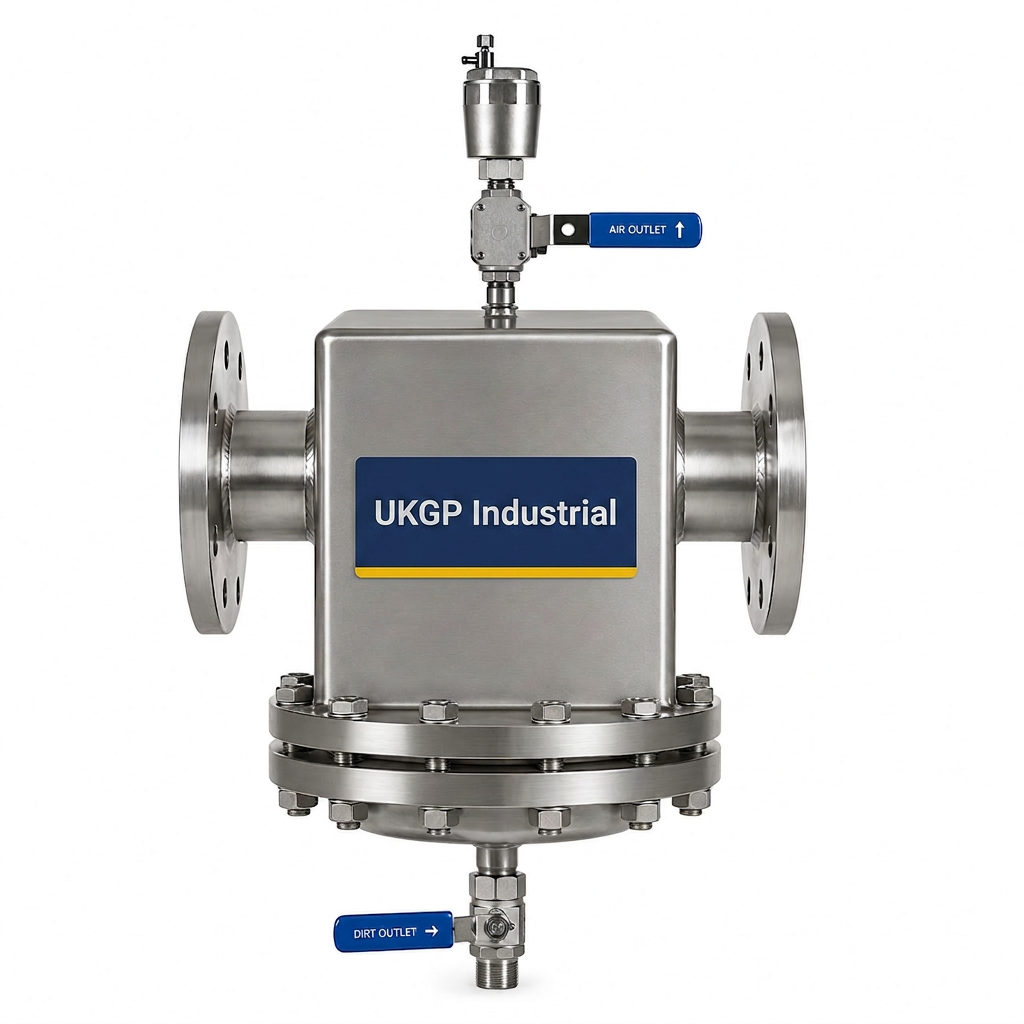
Commercial underfloor heating systems are also prone to air entrainment which, when combined with sludge, forms a highly corrosive environment. If you notice frequent air locking in the manifolds, it usually suggests that the water chemistry has failed, allowing gasses to be produced as a by-product of internal corrosion or bacterial activity. A power flush underfloor heating commercial service will remove these gasses and the sludge that traps them, but it must be followed by a review of the system's air and dirt separation strategy. Addressing these symptoms comprehensively ensures that the heating system operates at its peak COP (Coefficient of Performance), which is vital for sites utilizing heat pump technology as their primary heat source.
- Observation of black, magnetite-rich water in manifold sight glasses.
- Stuck manifold pins or unresponsive flow meters due to debris.
- Thermal discrepancies across zones indicating blocked pipework loops.
- Increased pump noise and differential pressure alarms in the plant room.
Methodology for a Successful Commercial Power Flush
The methodology for a power flush underfloor heating commercial application differs significantly from residential projects. The process must begin with a full isolation of the various manifolds and a detailed loop-by-loop flush. By focusing on one circuit at a time, the engineer can ensure that the full forceful flow of the flushing machine is directed into a single path, providing the shear force necessary to move heavy deposits. This systematic approach is the only way to guarantee that large-scale commercial floor areas are cleaned uniformly. It is also a requirement during this phase to verify that all actuators and balancing valves are functioning correctly, as mechanical failure often mimics the symptoms of a blockage.
During the flushing process, it is standard practice to use chemical cleaning agents specifically formulated for the multi-metal environments found in commercial HVAC systems. These chemicals help to break down the bond between the magnetite and the PEX pipe walls. Once the water runs clear, a neutralizing agent is often required before the final refill and the addition of long-term inhibitors. For building managers, ensuring that the contractor providing the service uses high-performance equipment is key. A standard domestic-grade power flushing machine will lack the flow rate needed to effectively clear a 100-meter commercial UFH loop, rendering the entire exercise largely ineffective for large floor plates.
Final verification of the power flush underfloor heating commercial result is achieved by checking the flow rates across all manifold ports against the original design specifications. Once the system is restored to its optimal state, installing a UKGP side stream filtration skid will ensure that any remaining fine particulates are captured before they can re-settle. Our skids, priced competitively from £6,800+VAT, provide the ongoing protection needed to justify the initial cost of the power flush. With a 2-year warranty and high-quality British build, these units are the perfect finishing touch to a professional maintenance overhaul, ensuring the system remains clean and compliant with BSRIA guidelines for the long term.
- Loop-by-loop flushing to maximize hydraulic shear and cleaning effect.
- Use of commercial-grade chemicals and high-capacity flushing pumps.
- Mandatory neutralisation and inhibition following the cleaning cycle.
- Verification of flow rates against design documentation (O&M manuals).
Economic Benefits of Maintaining UFH Manifold Hygiene
The financial case for a regular power flush underfloor heating commercial programme is compelling when viewed through the lens of total cost of ownership. Sludge-filled systems can see a reduction in heat transfer efficiency of up to 15-20%, leading to significantly higher energy bills as the heat source has to run longer to reach the desired ambient temperature. In a large commercial office or warehouse, this inefficiency can equate to thousands of pounds in wasted energy each year. By investing in a professional flush and a UKGP filtration solution, the ROI is often realized within the first two heating seasons through reduced utility costs and fewer emergency repair bills.
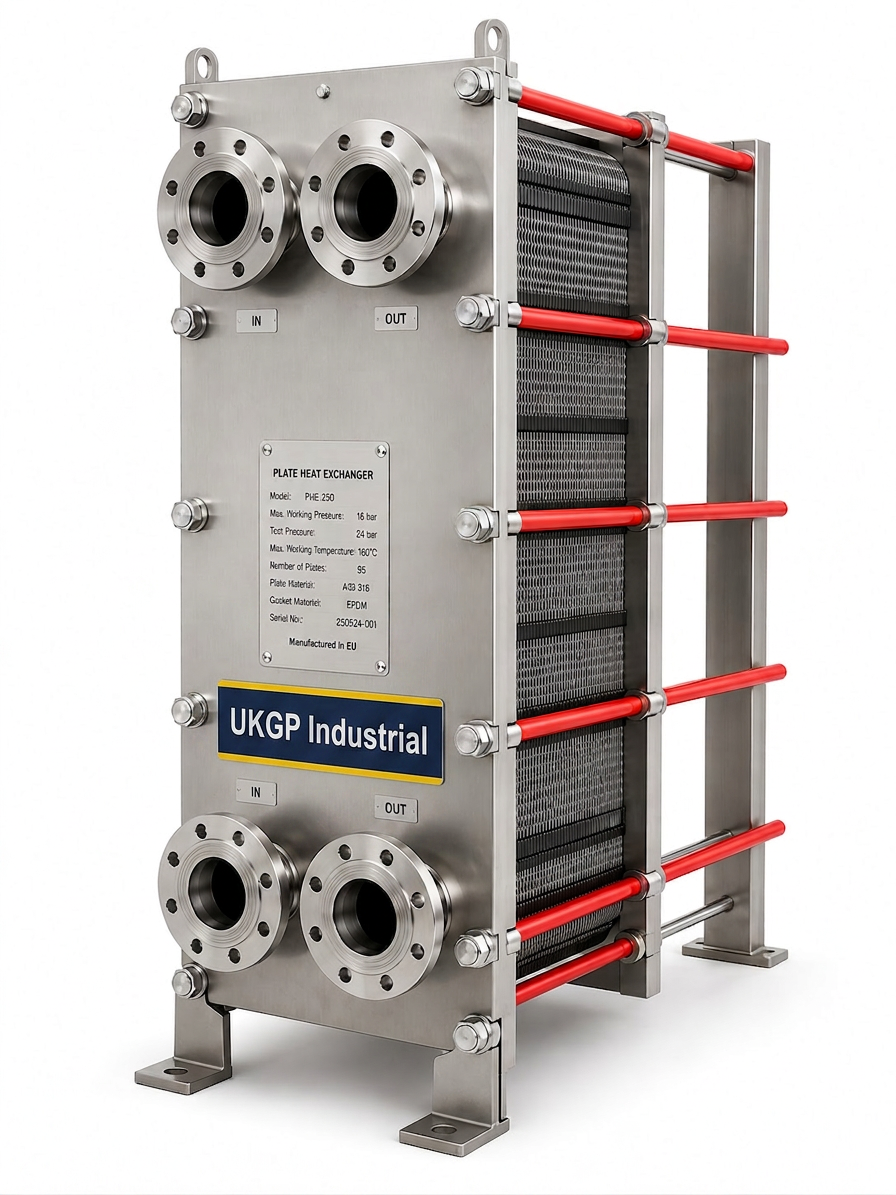
Beyond energy savings, the protection of expensive plant room assets is a major commercial benefit. High-efficiency plate heat exchangers and modern modulating pumps are particularly sensitive to particulates. A single 'slug' of magnetite or scale released from a dirty UFH manifold can bridge the narrow channels in a plate heat exchanger, causing a breakdown that could halt building operations. By choosing UKGP Industrial for your side stream filtration needs, you are opting for a made-to-order solution with a 2-year warranty that safeguards these critical assets. Our skids are designed to be a 'fit and forget' solution, requiring minimal maintenance while providing maximum protection against system fouling.
Finally, maintaining the hygiene of your heating network supports the overall property value and tenant satisfaction. For landlords of managed workspaces, ensuring that the underfloor heating is responsive and reliable is key to tenant retention. A cold office leads to complaints and potential rent abatement requests. Implementing a proactive power flush underfloor heating commercial strategy, backed by UKGP’s industry-leading filtration and dosing components, ensures that your building services remain an asset rather than a liability. Contact our Surrey-based technical team today to discuss how our DN50 to DN100 filtration skids can be integrated into your next maintenance cycle or facility upgrade project.
- Estimated 15-20% improvement in heat transfer efficiency post-flush.
- Significant reduction in unplanned maintenance and emergency call-outs.
- Protection of high-value assets like plate heat exchangers and pumps.
- Enhanced occupant comfort and compliance with UK building standards.
Frequently asked questions
How often should a commercial underfloor heating system be power flushed?
- According to BSRIA BG50, water quality should be monitored regularly. A full power flush is typically required every 5-7 years, or sooner if water testing shows high suspended solids or if flow rates at the manifold have dropped below design levels.
What is the cost of a side stream filtration skid for a commercial UFH system?
- UKGP Industrial side stream filtration skids start from £6,800+VAT. They are made to order in the UK with a 6-8 week lead time and are available in sizes from DN50 up to DN100.
Can a power flush fix an entirely blocked UFH loop?
- In many cases, yes. The high-velocity, low-pressure nature of a commercial power flush can often dislodge blockages that standard pump pressure cannot move. However, prevention via side stream filtration and dosing is always more cost-effective.
Is power flushing necessary if I have a new manifold installed?
- Yes, particularly if the new manifold is being connected to an existing older pipework network. BSRIA BG29 requires pre-commission cleaning for new installations to remove installation debris and flux residues.
Do UKGP Industrial products come with a warranty?
- Yes, our side stream filtration skids and other core plant room components come with a 2-year warranty, reflecting our commitment to high-quality UK manufacturing and engineering excellence.