The Economics of Choosing to Power Flush Large Heating Systems
In the UK commercial sector, specifically for M&E contractors and facility managers, the decision to power flush large heating systems is rarely a simple one. For systems exceeding 2,500 litres in capacity, a traditional high-pressure flush can be prohibitively expensive and logistically disruptive. When you calculate the downtime required to isolate zones and the sheer volume of chemically treated water that must be safely disposed of under local utility regulations, the 'worth' of the exercise becomes debatable. UKGP Industrial observes that many consultants are moving away from one-off high-impact flushes in favour of more sustainable, ongoing water quality management strategies that align with modern energy efficiency targets.
The primary driver for considering a flush is typically a significant drop in thermal efficiency or the presence of cold spots across heat emitters. However, in a commercial plant room, the physics of a power flush are different than in a domestic semi-detached home. Achieving the necessary Reynolds number for turbulent flow to dislodge stubborn magnetite in large-bore pipework is often impossible with standard pump equipment. This means that after spending several thousand pounds on labour and chemicals, the system often remains contaminated with settled sludge in low-velocity areas, which will quickly mobilise once the primary pumps are restarted, leading to immediate post-flush valve blockages.
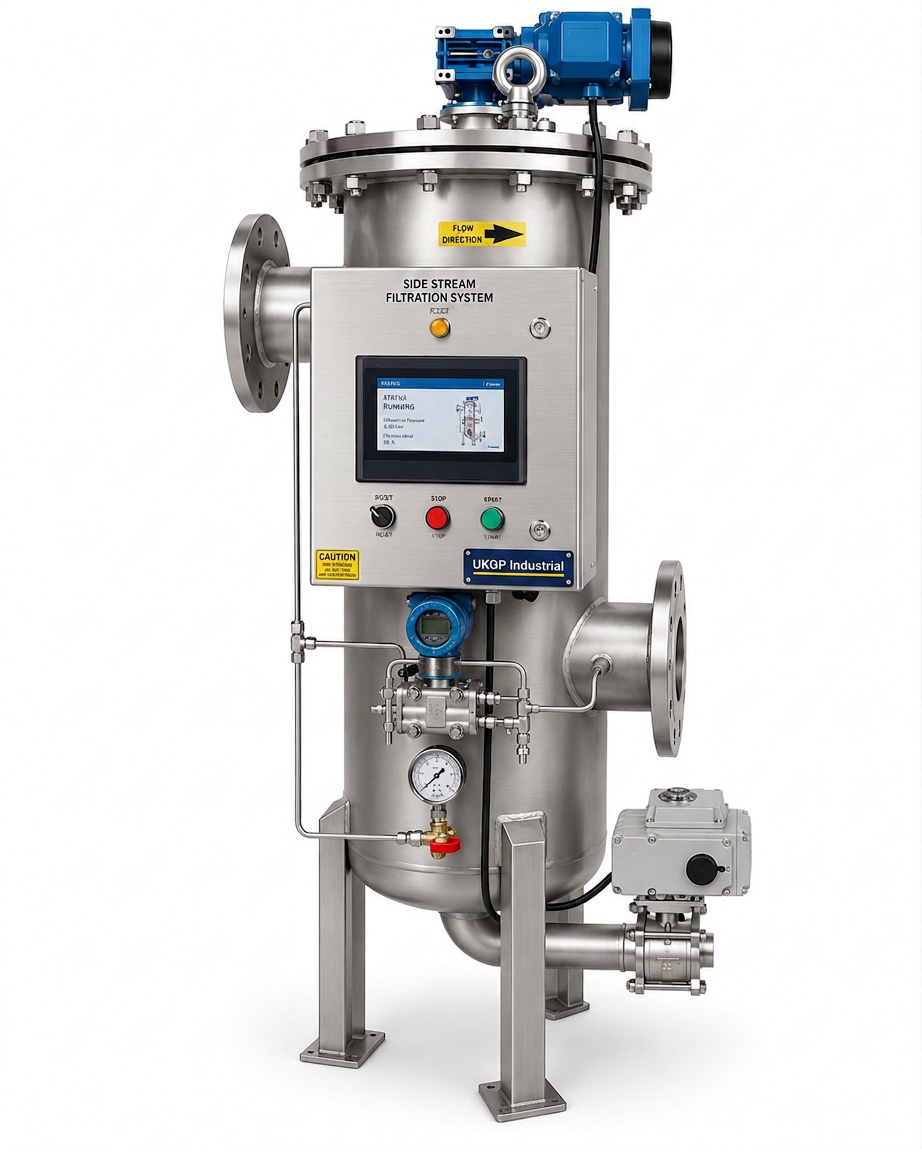
Instead of opting for a temporary fix, many UK engineers are now specifying permanent solutions that provide better value for money. For instance, our bespoke side stream filtration skids start from £6,800+VAT and offer a permanent proactive solution rather than a reactive one. When you factor in the 2-year warranty and the fact that these units are made to order in our UK facility with a 6-8 week lead time, the capital expenditure often matches or beats the cost of a one-off contractor-led power flush on a 500kW+ system. Investing in permanent plant-room equipment ensures that the system water remains within the strict parameters defined by BSRIA BG50 and CIBSE guidelines for years to come.
- High chemical disposal costs for large water volumes
- Risk of system leaks due to increased pressure during flushing
- Inability to achieve turbulent flow in oversized commercial pipework
- Significant plant downtime impacting building occupants
BSRIA BG50 and the Case for Sidestream Filtration
Compliance with BSRIA BG50 'Water Treatment for Closed Heating and Cooling Systems' is the benchmark for any professional UK facility manager. The guidance highlights that while initial cleaning (BSRIA BG29) is essential for new installations, the ongoing health of a system is best maintained through continuous filtration rather than periodic flushing. When you attempt to power flush large heating systems, you are essentially trying to reset a clock that should have been managed through better filtration from day one. High-velocity flushing can actually introduce fresh oxygenated water into the loop, which can accelerate aerobic corrosion if the system is not immediately and correctly inhibited with high-grade chemicals.
Sidestream filtration offers a non-invasive alternative that works while the system is live. Unlike a power flush, which requires a complete shutdown, a sidestream skid diverts approximately 5-15% of the total flow through a high-intensity magnetic core and a fine micron filter. This process effectively removes magnetite and non-magnetic debris without stressing the pipework or individual components. For a commercial building owner in London or Surrey, this means no loss of heating or hot water, no risk of catastrophic seal failure on older valves, and a measurable improvement in water clarity that can be verified through BS 8552 water sampling and laboratory analysis.
The technical benefits are clear: by maintaining a constant level of cleanliness, you protect expensive assets like plate heat exchangers and boiler heat cells from fouling. A UKGP Industrial sidestream skid, available in sizes ranging from DN50 to DN100, is specifically engineered to meet these rigorous standards. These units are built to order to suit your specific flow rates and pressure requirements. At a starting price of £6,800+VAT, they provide a much higher return on investment than a manual flush because they prevent the 'sludge cycle' from repeating. Requesting a quote for a skid ensures you are specifying a solution that stays in the plant room for the life of the building.
- Continuous removal of suspended solids down to 5 microns
- Zero system downtime during installation or maintenance
- Evidence-based compliance with BSRIA BG50 standards
- Reduces the frequency of required chemical dosing interventions
Protecting Critical Assets: Plate Heat Exchangers
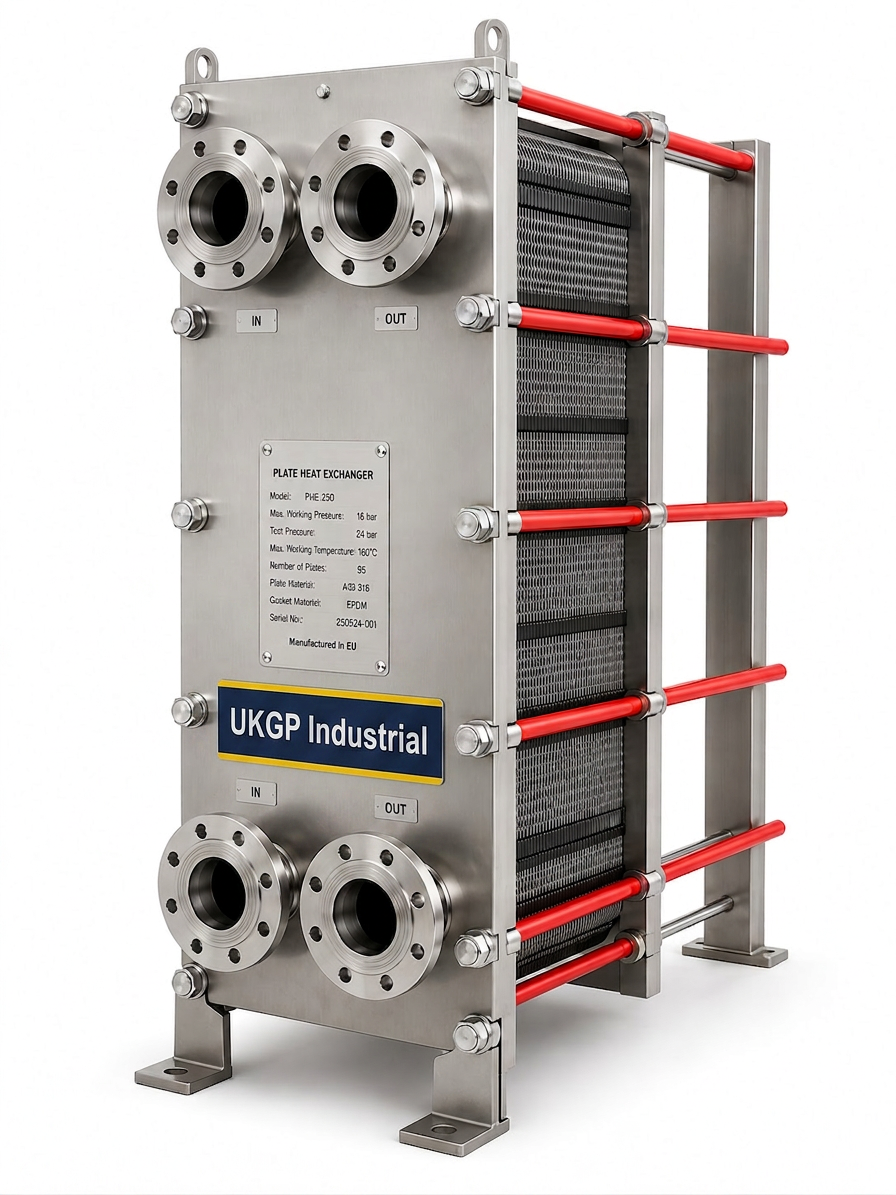
One of the biggest risks when you power flush large heating systems is the mobilisation of debris that then becomes lodged in the narrow channels of plate heat exchangers (PHEs). In many modern commercial systems, PHEs act as the hydraulic break between the primary boiler circuit and the secondary distribution. If a power flush is not executed with extreme care, the surge of loosened magnetite can settle directly into the PHE, causing an immediate drop in heat transfer efficiency and potentially causing a total blockage that is nearly impossible to clear without a full teardown and manual plate cleaning.
In many cases, we find that what was initially diagnosed as a need for a system-wide power flush was actually just a fouled heat exchanger. By integrating a UKGP Industrial plate heat exchanger with properly specified filtration, you create a robust thermal transfer solution. Our PHEs are designed for maximum efficiency and, when paired with our filtration skids, they resist the scaling and sludge accumulation that typically plagues high-heat areas. This modular approach to plant design allows engineers to isolate and clean specific components rather than subjecting the entire building to the trauma and expense of a high-pressure flush.
For procurement leads, the long-term cost benefits of protecting these assets are undeniable. Replacing a blocked PHE or paying for specialized chemical cleaning can cost thousands in emergency call-out fees. By contrast, ensuring the primary and secondary circuits are cleaned and then maintained by a sidestream unit avoids these outages entirely. Our technical team can help you size the correct PHE for your project, ensuring that your system design is resilient and easy to maintain according to the best practices laid out by CIBSE and the latest industry regulations regarding commercial energy performance.
- Prevention of thermal bypass and efficiency losses
- Reduction in maintenance costs for heat transfer surfaces
- Longer lifespan for boiler primary heat cells
- Easier commissioning and balancing of secondary circuits
The Role of Chemical Dosing in Large Systems
While mechanical cleaning is vital, the chemical aspect of water treatment cannot be ignored. When contractors power flush large heating systems, they rely heavily on aggressive cleaning chemicals to break down rust and scale. If these chemicals are not thoroughly neutralised and flushed out, they can continue to react with the system metals, leading to pinhole leaks in expansion bellows or accelerated corrosion in older steel pipework. This is why many commercial engineers prefer a 'feed and bleed' approach or controlled dosing via dedicated pots instead of the high-concentration chemicals used in rapid power flushing.
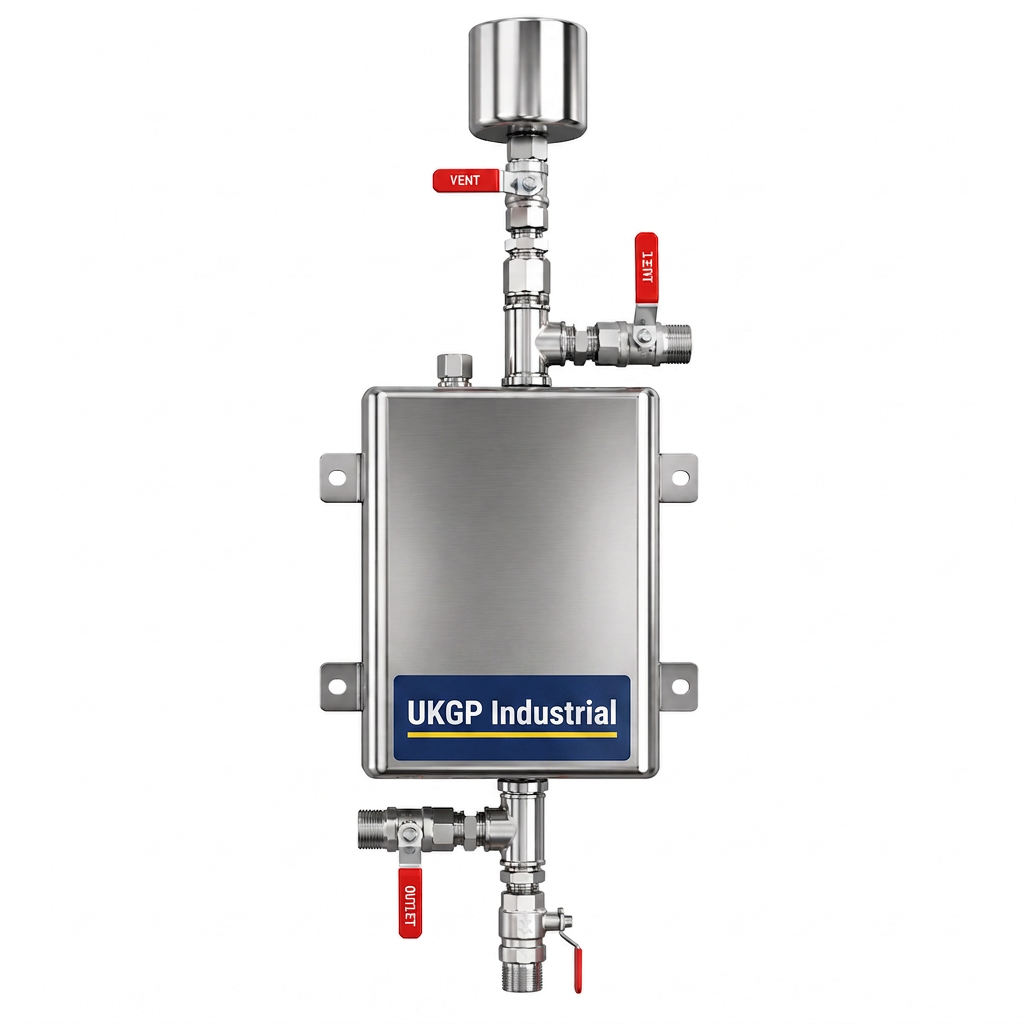
Using a high-quality stainless steel dosing pot from UKGP allows for the precise introduction of corrosion inhibitors and biocides into the system without the need for a full flush. This controlled maintenance strategy aligns perfectly with BS 8552, which focuses on the periodic sampling and testing of water. Rather than guessing the state of the system and performing a massive flush, engineers can monitor iron levels and dose accordingly. This proactive management keeps the system within the safe 'pass' range of laboratory tests and ensures that internal components stay protected year-round.
Our dosing pots are a staple in UK plant rooms, providing a robust and easy-to-use entry point for water treatment. When combined with a sidestream filtration unit, they form a comprehensive water quality management system. If you are currently debating whether a power flush is worth the investment for a large site, consider instead the cost of installing permanent dosing and filtration equipment. For roughly the same budget as a major flush, you can buy a UKGP skid and dosing set-up that effectively ends the need for future emergency flushes, as the water quality is managed in real-time.
- Safe application of corrosion inhibitors and biocides
- No need to depressurise the whole system for chemical entry
- Robust stainless steel construction for long-term reliability
- Essential for maintaining the chemical balance post-sidestream install
Addressing Air and Dirt for Maximum Efficiency
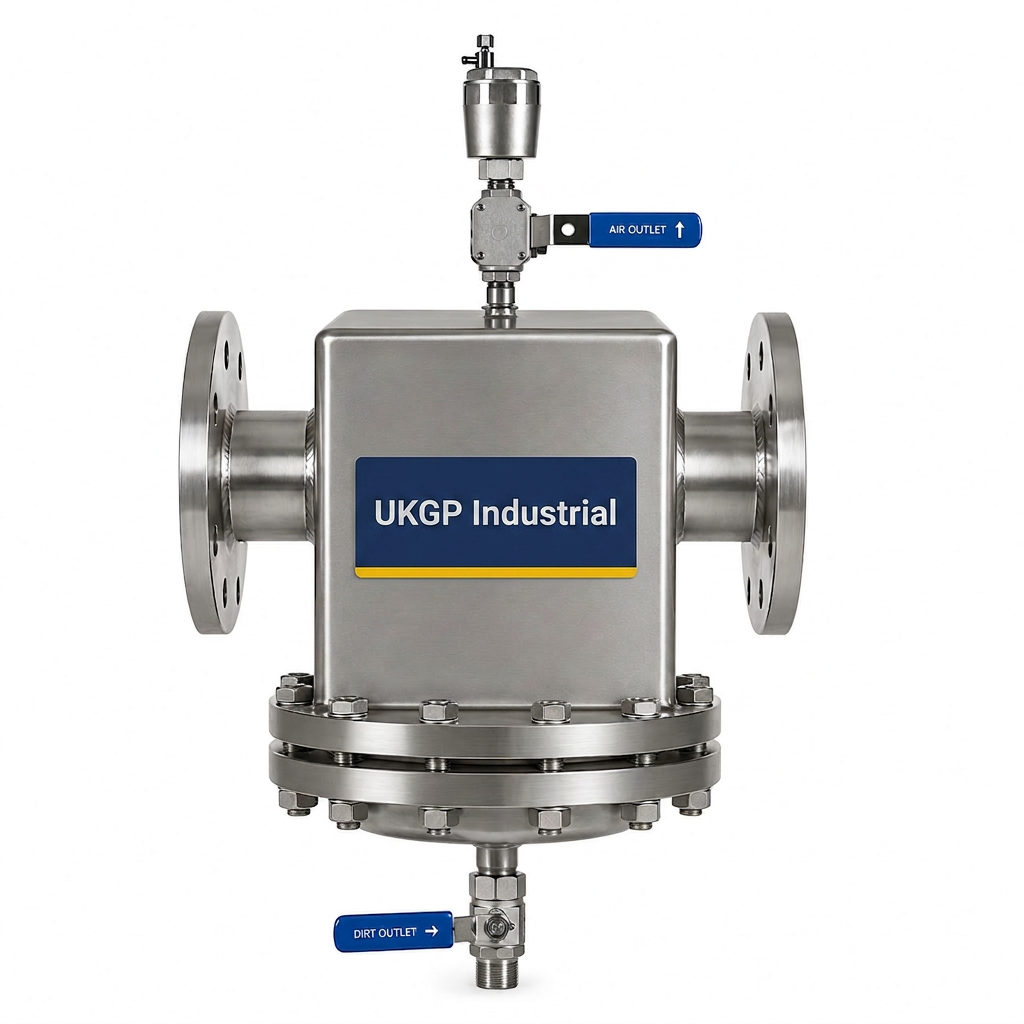
Air is the enemy of any large-scale heating circuit. It causes noise, accelerates the oxidation process that creates magnetite, and reduces the efficiency of heat transfer. Often, when building owners think they need to power flush large heating systems because of 'sludge,' the root cause is actually poor deaeration. Without a high-performance air and dirt separator, microbubbles remain in suspension, causing constant internal corrosion that requires frequent flushing. A power flush might remove the physical debris, but if the air ingress or retention isn't solved, the sludge will simply return within months.
Installing a dedicated air and dirt separator at the hottest part of the system (the flow from the boilers) is a far more effective long-term strategy than repeated flushes. By removing air and large particles before they reach the rest of the circuit, you significantly reduce the amount of sediment that can settle in the system. When this is coupled with a sidestream filtration unit at the lower end of the circuit, the system becomes 'self-cleaning' in a sense. This two-pronged mechanical approach is what separates a professional, BSRIA-compliant plant room from one that is merely reactive and prone to expensive failures.
At UKGP Industrial, we provide the full stack of high-quality components needed to avoid the costs of emergency flushing. From our DN50-DN100 sidestream skids (starting at £6,800+VAT) to our advanced separators, we provide the hardware that consultants trust. All our products are made to order, ensuring they fit the specific pressure and temperature profiles of your project. If you are an M&E contractor looking to deliver a high-value project that won't result in clogging and site visits during the 12-month defects period, investing in permanent air and dirt management is a significantly smarter move than a one-off power flush.
- Elimination of microbubbles that lead to 'slugging'
- Protection for expansion bellows and pump seals from grit
- Reduction in system noise and cavitation issues
- Lower oxygen levels mean slower magnetite formation
When is a Power Flush Actually Recommended?
Despite the advantages of sidestream filtration, there are specific scenarios where you might still need to power flush large heating systems. The most common case is during a full boiler plant room refurbishment where the secondary pipework has been left stagnant for a long period. In such instances, the accumulation of sludge can be so severe that physical blockages are present. Even then, the 'flush' is usually a sectional exercise, targeting specific branches rather than the entire building at once. This is often followed by a period of intensive sidestream filtration to capture any remaining debris released during the initial restart.
Another scenario is when a system has been contaminated with non-standard fluids or high levels of oil/glycol that have degraded. In these cases, a full system dump and chemical flush are required to restore the base chemistry. However, once the system is refilled, it is crucial to move immediately to a permanent filtration strategy. Relying on a flush alone essentially leaves the system vulnerable until the next major contamination event. By installing a UKGP sidestream skid during the refurbishment, you ensure that the water remains at the high standard achieved by the initial clean, protecting your new boiler investment.
Ultimately, the goal for any UK facility manager is 'steady-state' water chemistry. A power flush is a violent, high-cost perturbation of that state. If your system is currently suffering from poor circulation, we recommend a technical consultation to explore whether our bespoke filtration skids are a better fit. With our 2-year warranty and UK-made quality, you are buying more than just a filter; you are buying the peace of mind that your system won't require a £10k power flush three years down the line. Contact UKGP today to discuss how we can assist with your project specifications and provide a detailed quote within 24 hours.
- Essential for systems with physical sludge blockages
- Recommended after major pipework replacements or extensions
- Follow up immediately with BG50 compliant filtration skids
- Check expansion bellows and valves for debris post-flush
Frequently asked questions
How much does it cost to power flush a large commercial heating system?
- For large systems, costs can range from £2,500 to over £15,000 depending on the volume of water, chemical requirements, and labour. Often, our sidestream filtration skids (from £6,800+VAT) provide a more cost-effective permanent solution.
Is power flushing large heating systems compatible with BSRIA BG50?
- BSRIA BG50 focuses on 'Life-cycle Water Treatment' and prioritises continuous filtration and chemical management. While flushing is used in commissioning (BG29), BG50 generally suggests sidestream filtration for operational systems.
What is the lead time for a UKGP sidestream filtration skid?
- Our skids are made to order in our UK warehouse with a standard lead time of 6-8 weeks, ensuring each unit is perfectly suited to your plant room's specific DN50 to DN100 requirements.
What warranty comes with UKGP Industrial filtration products?
- We provide a comprehensive 2-year warranty on our side stream filtration skids, offering consultants and FMs long-term security in their equipment specification.
Do I need to shut down the heating to install a filtration unit?
- No. One of the primary benefits of sidestream filtration over a power flush is that the unit can be valved into the existing system while it remains fully operational, avoiding heat loss for the building.