The Impact of Magnetite Fouling Plate Exchanger Efficiency
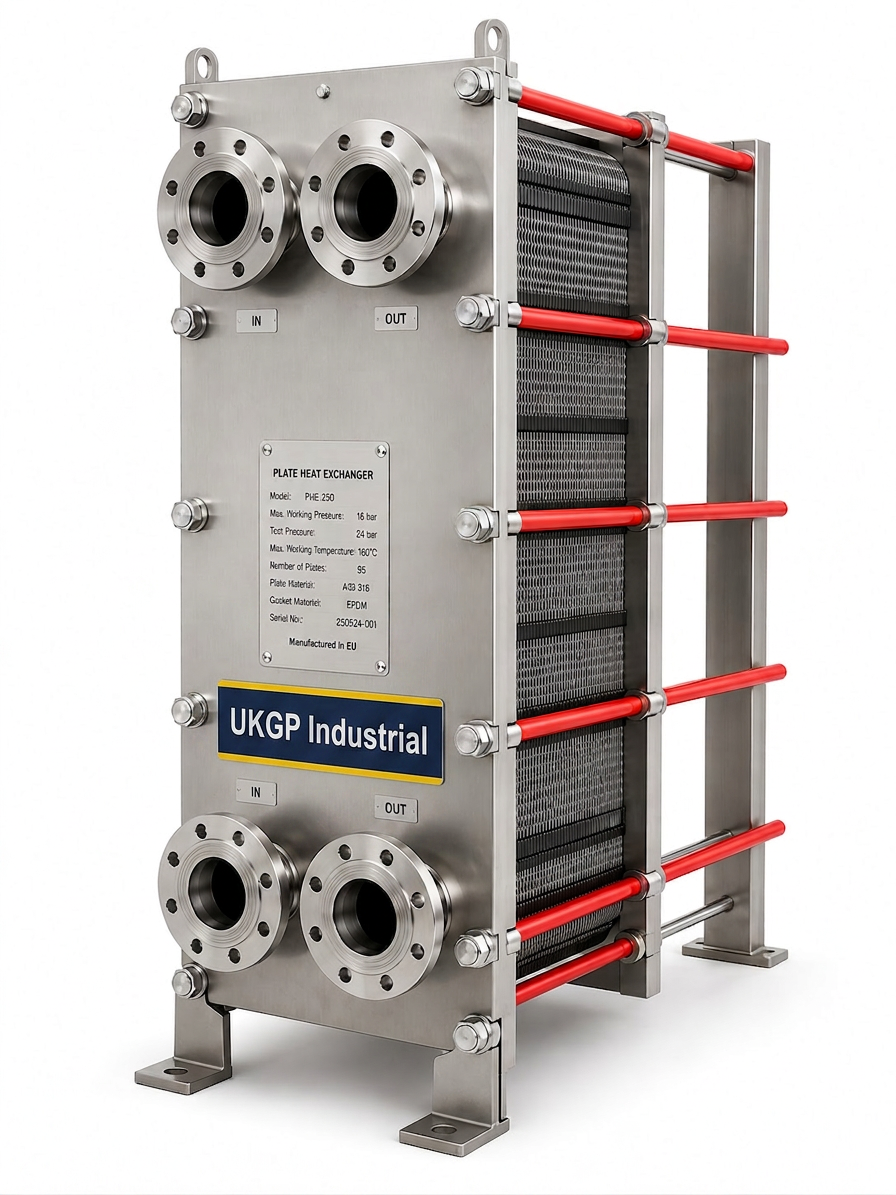
Magnetite is a common byproduct of internal corrosion within closed-loop hydronic systems, typically forming when oxygen reacts with mild steel components over time. When these microscopic particles circulate through the network, they naturally gravitate toward the narrow channels and high-surface-area plates of a heat exchanger. Because magnetite is highly dense and possesses slight magnetic properties, it adheres to the stainless steel plates, creating a stubborn film that acts as an unintended thermal insulator. This layer significantly increases the heat transfer resistance, meaning even a thin coating of black sludge can drop system efficiency by up to 30%, leading to significant commercial losses and increased carbon footprints for UK building operators.
Beyond the immediate drop in thermal performance, magnetite fouling plate exchanger surfaces also causes a substantial increase in differential pressure. As the narrow ports and chevron patterns of the internal plates become choked with debris, the circulation pumps must consume more electricity to maintain the design flow rates. This hydraulic stress often leads to pump seal failures and inconsistent heating across the building's zones. For M&E contractors, identifying this issue early is critical; symptoms often include cold spots in the secondary loop or a noticeable delta-T discrepancy when compared to the original commissioning data provided in the O&M manuals. Without intervention, the pressure drop can eventually lead to a total blockage of the unit.
To mitigate these risks, UK engineering teams must move beyond reactive maintenance. Understanding the chemical trajectory of the system water is the first step toward long-term reliability. Monitoring iron levels and conductivity allows facility managers to predict when a clean-in-place or manual strip-down will be required. Using a UK-based supplier like UKGP Industrial ensures you have access to technical expertise and high-specification equipment designed to handle the rigours of commercial heating and chilled water applications. Our team regularly assists consultants in specifying the correct ancillary equipment to prevent these issues from recurring, keeping your operational costs low and your plant room running at peak performance year-round.
- Reduced thermal conductivity through heat exchange plates
- Increased electrical consumption via higher pump head requirements
- Accelerated wear on pump seals and control valves
- Potential for localised microbial growth under sludge deposits
Manual Disassembly and Chemical Cleaning Methods
When a plate heat exchanger has reached a critical level of magnetite fouling, a manual strip-down is often the most effective way to restore design performance. This process involves isolating the unit, draining the primary and secondary fluids, and carefully loosening the compression bolts. Each plate must be removed and inspected for signs of pitting or erosion. For magnetite specifically, a combination of high-pressure water jetting and a mild phosphoric or citric acid wash is typically recommended. Technicians must be careful to use soft brushes rather than wire wool to avoid scratching the plate surface, as surface damage can become a nucleation point for future mineral scaling and even faster magnetite accumulation.
For larger gasketed plate heat exchangers, the Clean-In-Place (CIP) method is a viable alternative that avoids the risks associated with replacing old gaskets. This involves circulating a targeted chemical descaler through the exchanger ports to dissolve the iron oxide matrix. It is essential that the chemical chosen is compatible with the gasket materials (typically EPDM or Nitrile) and the plate metallurgy. Following the chemical circulation, the system must be thoroughly flushed with clean water until the pH is neutralised. In the UK, this work should ideally be carried out by water treatment specialists who can issue a certificate of cleanliness in accordance with the standards outlined in BS 8552 and CIBSE guidance.
Post-cleaning, the reassembly of the plate pack requires precision. The 'A-dimension'—the specific length between the two frame heads—must be checked with callipers to ensure the gaskets are properly compressed without being crushed. Failure to reach the correct compression can lead to leaks, while over-tightening can deform the plates. Once the unit is back online, it is the perfect time to evaluate the wider system's health. If you are regularly facing magnetite fouling plate exchanger issues, it is a clear indicator that your current filtration or chemical dosing regime is insufficient for the system's size and complexity, necessitating a more robust technical solution to protect your capital equipment.
- Physical removal of plates for visual inspection and manual jetting
- Chemical CIP cleaning using acid-based descalers for iron oxide
- Gasket inspection and replacement using EPDM or Nitrile materials
- Verification of plate pack compression to manufacturer 'A-dimension' specs
- Neutralisation and flushing to prevent residual chemical corrosion
Preventing Magnetite Accumulation with Side Stream Filtration
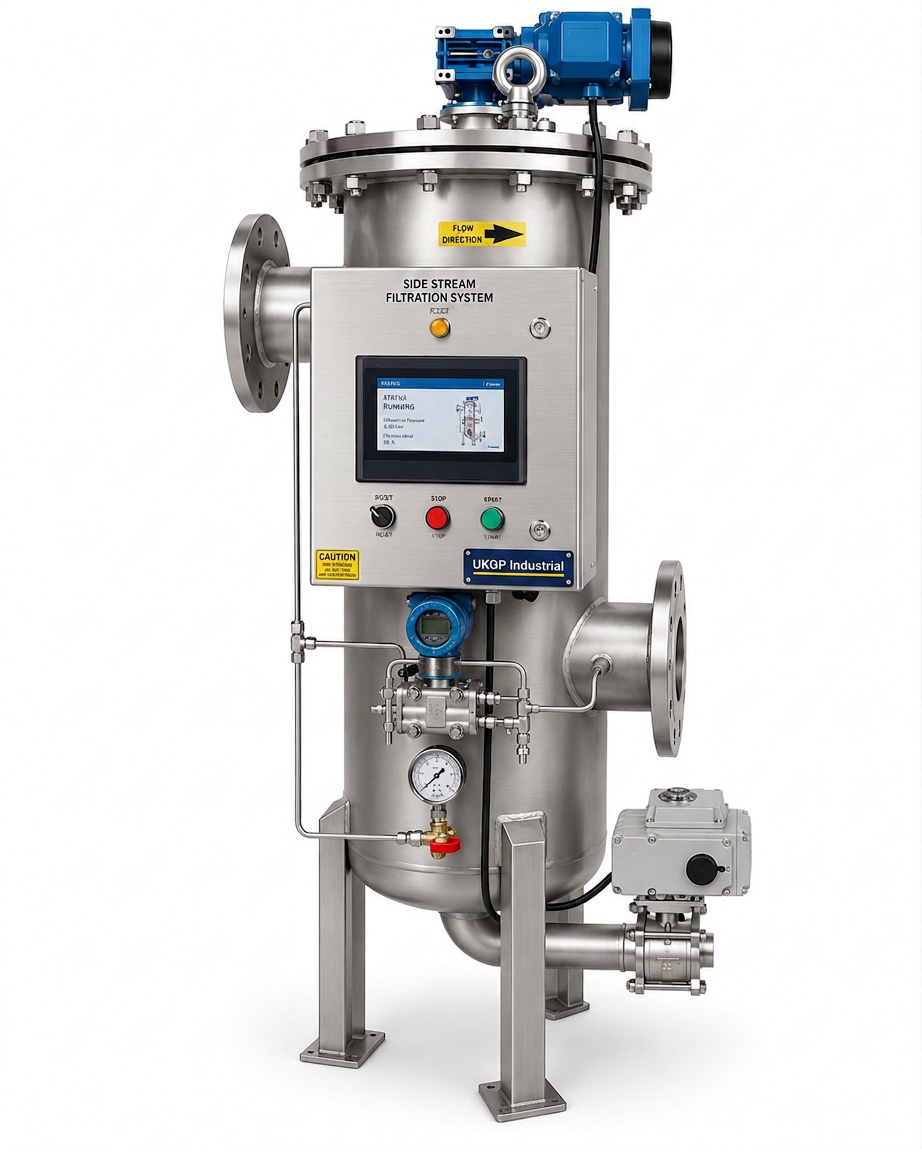
The most effective way to ensure a magnetite fouling plate exchanger scenario does not occur is the installation of high-performance side stream filtration. Standard in-line strainers are often too coarse to capture the sub-micron magnetite particles that do the most damage to heat exchangers. A dedicated side stream skid, such as those manufactured by UKGP Industrial in Surrey, uses a combination of stainless steel mesh filters and high-intensity magnetic rods to strip debris from the loop. By constantly cleaning a portion of the circulating volume (typically 5-15% of the total flow rate), these units maintain the water quality to BSRIA BG29 and BG50 standards, preventing the sludge from ever reaching the exchanger plates.
Our side stream filtration skids are specifically designed for the UK B2B market, featuring robust DN50 to DN100 connections to suit various plant sizes. Pricing for these essential protection units starts from £6,800 +VAT, representing a cost-effective insurance policy against the thousands of pounds lost in energy efficiency and emergency repair bills. These units are made to order with a standard lead time of 6 to 8 weeks and come with a comprehensive 2-year warranty for peace of mind. By integrating a magnetic separator into the filtration loop, you can target the specific iron oxide particles that characterize magnetite fouling, ensuring your plant room remains resilient against the long-term effects of metallic corrosion.
Specifying the right skid involves calculating the total system volume and the desired turnover rate. At UKGP Industrial, we work closely with building services consultants to provide bespoke filtration solutions that fit within constrained plant room footprints. Each skid is delivered pre-assembled and pressure tested, ready for rapid integration by M&E contractors. When you consider the labour costs and downtime associated with cleaning a fouled heat exchanger, the ROI on a UKGP side stream filtration unit is often achieved within the first 18-24 months of operation. Contact our Surrey office today to request a quote or to discuss the technical requirements for your next commercial heating or cooling refurbishment project.
- Removes particles down to 5 microns to prevent plate clogging
- Integrated magnetic rods specifically target black iron oxide (magnetite)
- Complies with BSRIA BG50 requirements for system cleanliness
- Made to order in the UK with a 6-8 week lead time
- Models from DN50 to DN100 available from £6,800 +VAT
The Role of Chemical Dosing in Magnetite Management
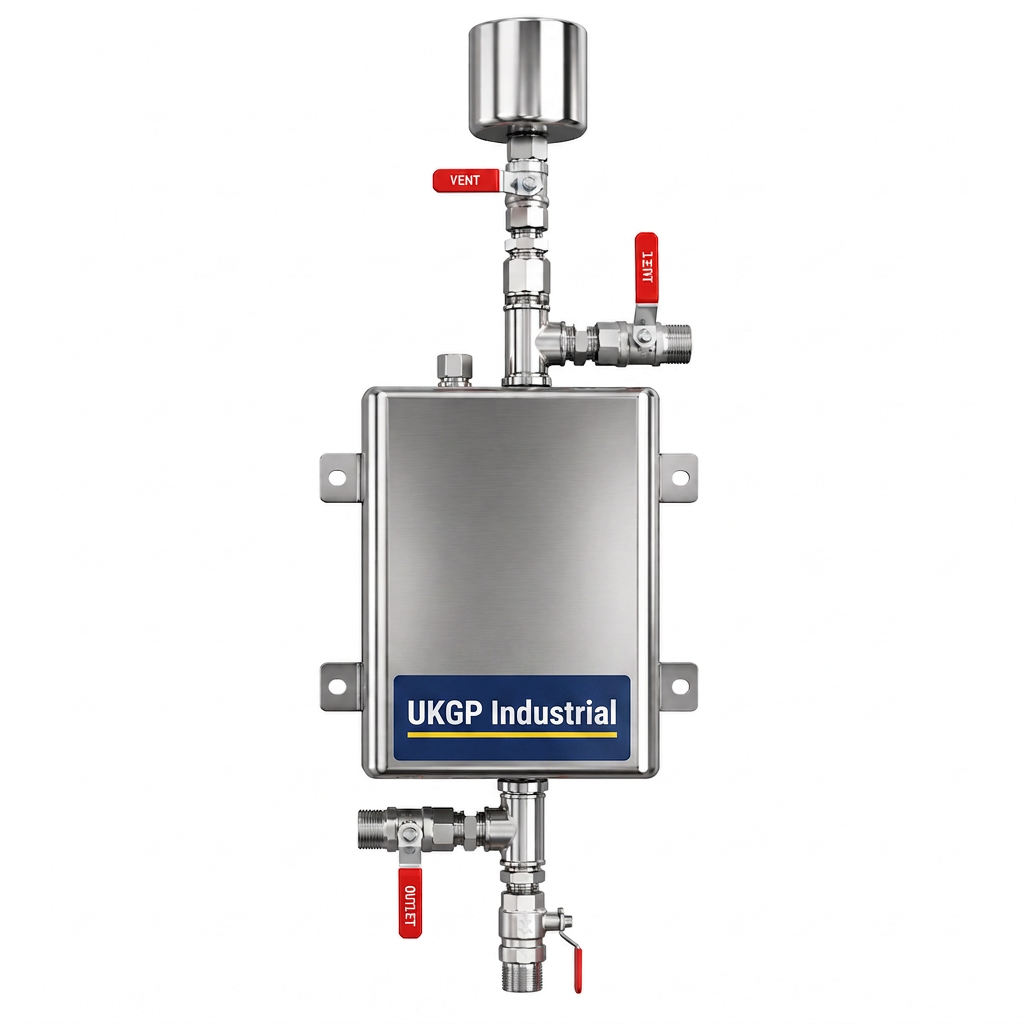
While mechanical filtration is vital, the chemical environment of the system water dictates the rate at which magnetite is produced. Using a high-quality chemical dosing pot allows for the easy introduction of corrosion inhibitors and biocides. These chemicals work by creating a passivating film on the internal surfaces of mild steel pipes, effectively ‘starving’ the corrosion process of oxygen and preventing the release of new magnetite into the water stream. Without proper chemical treatment, even the best filtration system will eventually be overwhelmed by a continuous supply of corrosion byproducts, leading to the reappearance of magnetite fouling plate exchanger issues in a relatively short timeframe.
Our range of chemical dosing pots is designed for ease of use by facility managers and maintenance staff. These units allow for the safe introduction of chemicals without shutting down the entire system or risking air ingress. In the context of plate heat exchangers, using a dual-action inhibitor that also includes a dispersant can be highly beneficial. The dispersant keeps any existing magnetite in suspension, preventing it from settling on the heat exchanger plates and allowing it to be effectively captured by your side stream filtration unit. This synergy between chemical and mechanical cleaning is the cornerstone of modern UK water treatment strategies.
It is important to conduct regular water analysis in accordance with BS 8552 to ensure that chemical concentrations remain at the appropriate levels. Over-dosing can lead to seal degradation, while under-dosing leaves the system vulnerable to rapid magnetite formation. When sourcing dosing pots and inhibitors, choosing a UK-based supplier like UKGP Industrial ensures you receive products that meet British manufacturing standards and are compatible with standard UK plumbing configurations. We offer rapid delivery on our standard dosing pot range, ensuring your maintenance team has the tools they need to protect the system’s most sensitive thermal components.
- Enables controlled introduction of corrosion inhibitors and biocides
- Prevents air ingress and system pressure drops during dosing
- Works in tandem with dispersants to clean fouled surfaces
- Essential for meeting BSRIA BG50 water quality compliance
- Assists in maintaining the passivation layer on mild steel pipework
Understanding BSRIA BG50 and CIBSE Maintenance Standards
Compliance with industry standards like BSRIA BG50 (Water Treatment for Closed Heating and Cooling Systems) and CIBSE Guide W is not just a best practice—it is often a requirement for insurance and equipment warranties. These documents provide the framework for managing suspended solids, including magnetite. They emphasize the need for a documented water management plan that includes filtration, chemical treatment, and regular testing. If a heat exchanger fails due to magnetite fouling, the first thing a manufacturer or insurer will ask for is the water quality records. If levels of iron exceed the recommended thresholds, the fault is often attributed to poor maintenance rather than mechanical failure.
Magnetite is particularly difficult to manage because it can exist as both large flakes and extremely fine dust. BSRIA guidelines suggest that total suspended solids (TSS) should be kept below 30mg/L for optimal system health. When levels exceed this, the risk of a magnetite fouling plate exchanger blockage increases exponentially. By adhering to these standards, UK firms can ensure their systems are running efficiently and that they are protected against costly unplanned downtime. This is why we manufacture our filtration and dosing equipment to satisfy even the most stringent consultant specifications across London and the wider UK commercial market.
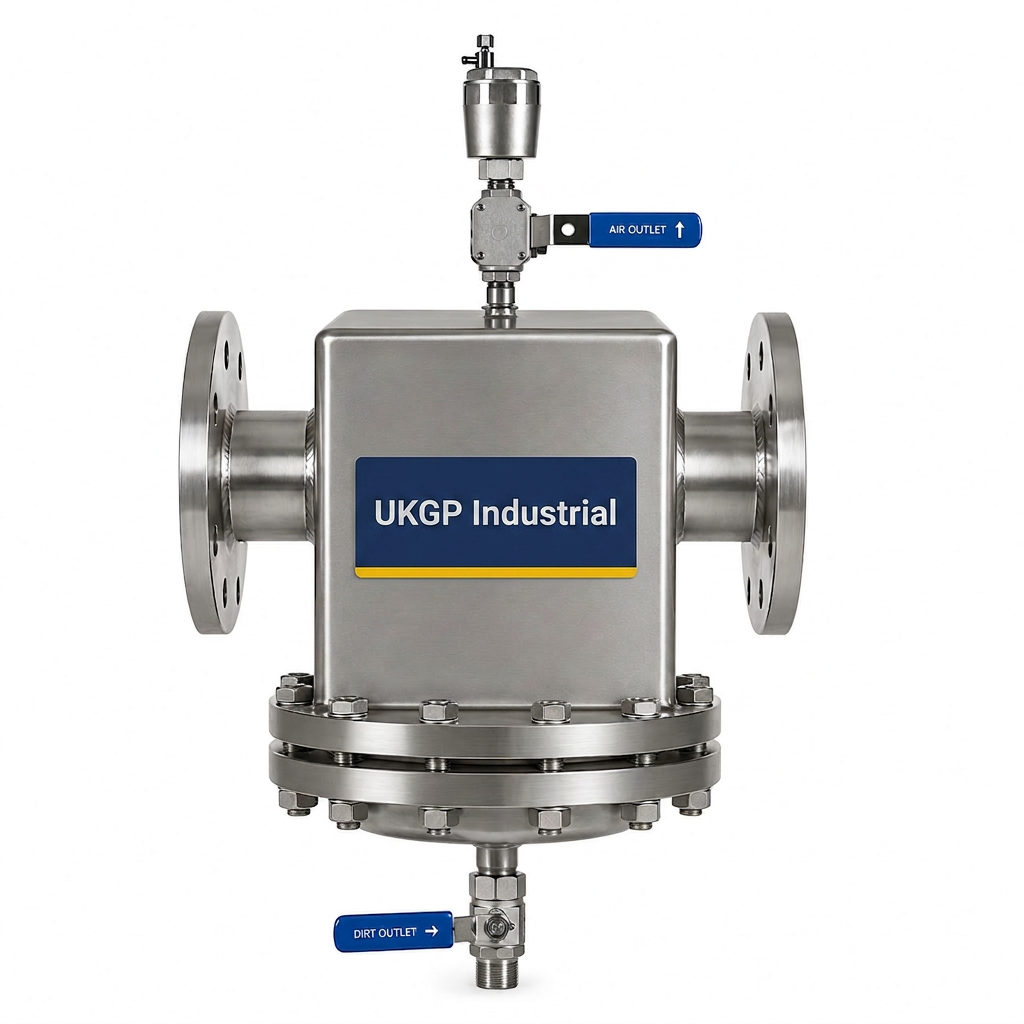
Consultants specifying new systems or retrofits should prioritize the inclusion of air and dirt separators alongside side stream filtration. While a side stream filter handles the bulk of the particulate load over time, an air and dirt separator provides a first line of defense at the point of lowest velocity. Together, these components create a robust defense-in-depth strategy. UKGP Industrial specializes in providing this full suite of ancillary equipment, fabricated right here in Surrey to the highest standards. Staying compliant with BSRIA and CIBSE doesn’t just protect the equipment; it provides a verifiable metric of performance that adds value to the facility’s operational history.
- Ensures total suspended solids (TSS) stay within safe limits
- Provides a documented trail for insurance and warranty claims
- Recommended iron levels typically <1mg/L to prevent fouling
- Standardises water quality testing across commercial portfolios
- Supports the longevity of high-efficiency modulating boilers
Strategic Retrofitting for Long-Term Thermal Reliability
In many older UK commercial buildings, the plate heat exchangers were installed without adequate protection. Retrofitting side stream filtration is often the most cost-effective way to salvage these systems and end the cycle of magnetite fouling plate exchanger incidents. A retrofit project begins with a baseline water test and a survey of the available plant room space. Because our UKGP side stream skids are compact and available with various connection sizes between DN50 and DN100, they can typically be integrated into existing bypass loops with minimal disruption to the building's occupants. This upgrade immediately begins to strip away years of accumulated debris.
Investing in a high-quality filtration skid from UKGP Industrial (starting from £6,800 +VAT) is a strategic move for any FM looking to reduce their reactive maintenance budget. The made-to-order nature of our equipment means we can tailor the orientation and features of the skid to match your site-specific requirements. With a 2-year warranty and a typical lead time of 6 to 8 weeks, you can plan your maintenance window with confidence, knowing that the equipment will arrive ready for install. This proactive approach not only clears current fouling but also prevents the abrasive magnetite particles from damaging future replacements of plate exchangers or circulation pumps.
To start the process of protecting your system, we recommend reaching out for a technical consultation. Our engineering team can help you select the most appropriate filtration and dosing solutions based on your specific system volume and current magnetite levels. Whether you are managing a single plant room or a district heating network, the principles remains the same: stop the corrosion at the source and remove the existing debris before it compromises your heat transfer efficiency. Secure your asset's future today by contacting UKGP Industrial for a quote on our Surrey-manufactured filtration solutions, and ensure your building meets the highest standards of modern engineering excellence.
- Easily integrated into existing bypass loops in older plant rooms
- Immediate reduction in circulating magnetite and suspended solids
- Reduces the frequency of expensive manual heat exchanger cleans
- Manufactured in Surrey to order within a 6-8 week timeframe
- Provides 2 years of warranty coverage on all UKGP filtration skids
Frequently asked questions
How can I tell if my plate heat exchanger is fouled with magnetite?
- Common signs include a significant increase in differential pressure across the exchanger, a drop in secondary loop temperatures despite high primary heat, and the presence of 'black water' or sludge when bleeding air or taking system samples. If thermal efficiency has dropped noticeably without a change in load, magnetite is the likely culprit.
Is side stream filtration better than a standard strainer for magnetite?
- Yes. Standard strainers usually only capture particles down to 500-1000 microns. Magnetite particles are often much smaller, frequently under 10 microns. A UKGP side stream filtration skid uses fine mesh bags and magnetic rods to capture these microscopic particles that strainers miss, providing far superior protection for the internal ports of a plate exchanger.
What is the typical cost and lead time for a UKGP filtration skid?
- Our side stream filtration skids typically start from £6,800 +VAT for standard DN50/DN65 models. As they are made to order in our Surrey facility to ensure high quality and specific configuration, the current lead time is approximately 6 to 8 weeks. Each unit is backed by a 2-year manufacturer's warranty.
Does BSRIA BG50 require side stream filtration?
- BSRIA BG50 strongly recommends the use of side stream filtration as part of a comprehensive water treatment strategy for closed-loop systems. It is considered the industry standard for maintaining water quality and preventing the accumulation of suspended solids like magnetite that cause fouling and corrosion.
What chemicals should be used to prevent magnetite fouling?
- A high-quality molybdate or polymer-based corrosion inhibitor is recommended to passivate the metal surfaces. Additionally, a dispersant can help keep existing magnetite particles in suspension so that they can be effectively removed by a side stream filter rather than settling on the heat exchanger plates.