Technical Comparison: Chemical Flush vs Power Flush
When evaluating a chemical flush vs power flush for commercial applications, engineers must first consider the system volume and the nature of the contaminants present. A power flush involves using a high-flow pumping unit to physically force water through the pipework at high velocity, which is often effective for smaller circuits or domestic-scale installs. However, in major commercial plant rooms, a power flush alone rarely addresses the deep-seated magnetite and scale adhered to internal surfaces. In contrast, a chemical flush utilises specific cleaning agents—such as organic acids or neutral pH cleaners—to chemically break down these deposits before they are flushed out. For UKGP Industrial clients, the choice typically depends on the age of the system and the level of existing corrosion documented during water sampling.
The commercial reality is that power flushing can be risky in older systems where high pressure might exacerbate thinning pipe walls or blow out vintage gaskets. A chemical flush is generally more controlled, allowing the cleaning agent to circulate at normal operating pressures to mobilise sludge without the mechanical stress associated with high-velocity pumping. This is why many UK building services consultants specify chemical cleaning as part of a pre-commissioning regime under BSRIA BG29. By using chemicals to suspend particles, the system can then be effectively purged and treated with inhibitors to prevent future oxygen ingress and galvanic corrosion. This process ensures that the fundamental thermodynamics of the heat exchange surfaces remain optimal for the building's lifecycle.
Transitioning from a reactive to a proactive cleaning strategy involves more than just a one-off flush. While the chemical flush vs power flush debate often focuses on the immediate removal of black iron oxide, the long-term protection of the system usually requires the installation of high-quality maintenance hardware. Our UK-based engineering team at UKGP Industrial recommends that once a flush is completed, engineers install robust filtration and dosing equipment to maintain the water quality achieved. Without these permanent measures, the benefits of the flush will dissipate within months as fresh oxygen enter the system via micro-leaks or expansion vessels, leading to a rapid return of magnetite and reduced flow rates in critical heating and cooling branches.
- Power flushing relies on high-velocity mechanical force to move debris.
- Chemical flushing uses targeted agents to dissolve and suspend stubborn scale.
- Compliance with BSRIA BG50 often mandates a chemical approach for large systems.
- Chemical methods are safer for older pipework with potential structural thinning.
- Pre-commissioning cleaning for new builds always requires chemical treatment.
Maintaining BSRIA BG29 and BG50 Standards
In the UK, the gold standard for water quality in closed-loop systems is defined by BSRIA guides BG29 for pre-commissioning and BG50 for ongoing maintenance. When considering a chemical flush vs power flush, consultants must ensure the chosen method aligns with these industry-recognised frameworks. BG29 specifically details the process of cleaning new pipework to remove oils, grease, and mill scale that could foster microbial growth or cause localized corrosion. A simple power flush often fails to reach the required level of cleanliness for modern high-efficiency boilers and chillers. Consequently, the chemical cleaning process, followed by thorough flushing and the application of passivating films, is the preferred route for professional M&E contractors seeking to provide a long-term warranty on their installations.
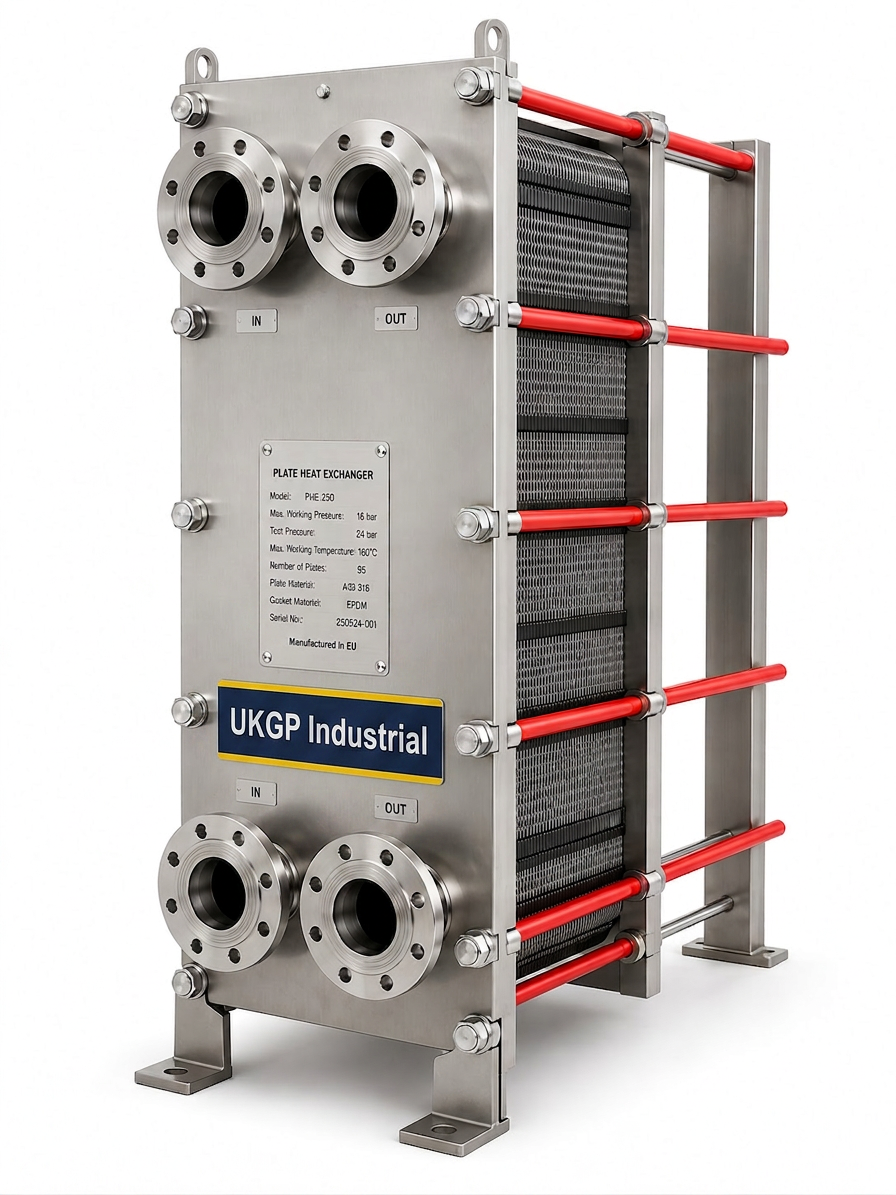
Adhering to BS 8552 for water sampling is also essential during the flushing process. Contractors must take samples at key points to verify that suspended solids and iron levels have fallen within the acceptable range. If the chemical flush vs power flush analysis indicates that the system is heavily fouled with magnetite, a multi-stage chemical clean is often the only way to restore the plant to its design intent. This is particularly important for systems incorporating plate heat exchangers, where narrow channels can easily become blocked by even small amounts of debris. By following the BSRIA protocols, FM teams can avoid the catastrophic costs associated with premature pump failure, control valve blockages, and the loss of heat transfer efficiency in the primary circuit.
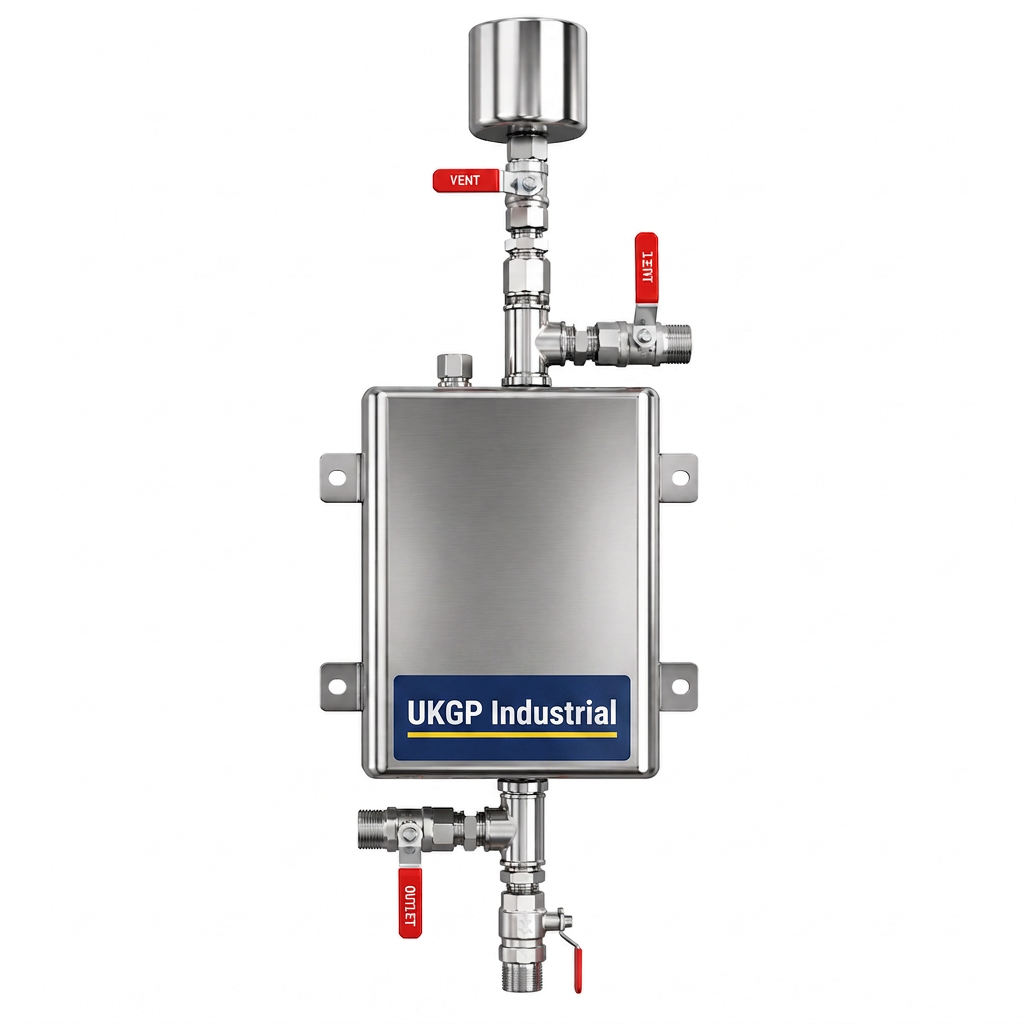
Effective water treatment is not a 'fit and forget' task; it is an ongoing engineering requirement for any modern building. The installation of a dosing pot provides the essential gateway for introducing the necessary chemicals after a flush has been performed. This ensures that the system water remains within the neutral pH range and that inhibitor levels are sufficient to stop new corrosion from taking hold. At UKGP Industrial, we supply high-specification dosing pots to UK contractors, ensuring that they have the reliable tools needed to maintain compliance with BG50 and protect the delicate metallurgy of modern plant room components and sensors which are highly sensitive to particulate matter.
- BG29 governs the cleaning of new-build commercial HVAC pipework.
- BG50 provides the framework for maintaining existing closed-loop water systems.
- BS 8552 provides the methodology for accurate water sampling and testing.
- Dosing pots allow for the precise introduction of corrosion inhibitors.
- Failure to follow BSRIA standards can void manufacturer warranties on plant equipment.
The Role of Side Stream Filtration After Flushing
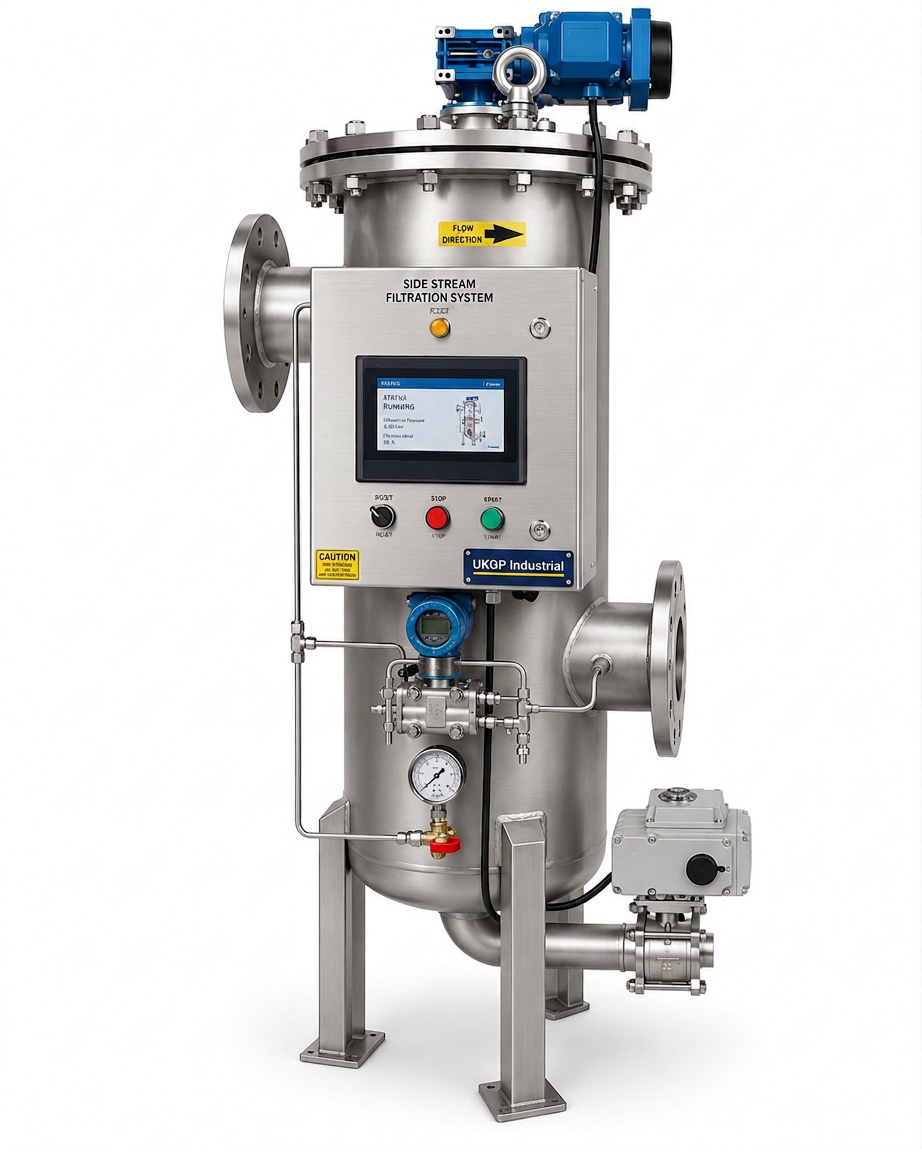
Even the most thorough chemical flush vs power flush procedure cannot remove 100% of particles, especially as new corrosion starts the moment the flush ends. This is where side stream filtration becomes the critical 'safety net' for commercial HVAC systems. By continuously filtering a portion of the system volume (typically around 5% to 15% of the total flow rate), these units remove fine magnetite and suspended solids that settle out during normal operation. A side stream filtration skid is designed to capture particles down to sub-micron sizes, which are often the primary cause of erosion in high-velocity areas of the pipework and the main culprit behind the fouling of sensitive control valves.
UKGP Industrial manufactures a range of high-performance side stream filtration skids specifically for the UK market. These units are essential for maintaining the clarity achieved during a chemical flush. Our skids are made to order with a lead time of 6-8 weeks and are available in various sizes from DN50 to DN100 to suit different system volumes and flow requirements. Pricing for our bespoke side stream filtration solutions starts from £6,800+VAT, representing a cost-effective investment when compared to the price of replacing a commercial chiller or large boiler. Each unit comes with a 2-year warranty and is engineered in Surrey to meet the rigorous demands of British plant room environments, providing peace of mind to both contractors and end-users.
By integrating side stream filtration into your system design, you significantly reduce the frequency and intensity of required future flushes. Instead of facing the heavy disruption and expense of a full system chemical flush vs power flush every few years, maintenance teams can simply replace filter bags or cartridges and monitor the differential pressure across the unit. This proactive approach not only extends the life of the plant but also significantly improves energy efficiency by ensuring that heat exchange surfaces remain clean and un-fouled. For procurement leads and FMs looking to lower their Total Cost of Ownership (TCO), adding a side stream filtration unit is one of the most effective upgrades available for a commercial HVAC circuit.
- Continuous filtration prevents the re-accumulation of magnetite after a flush.
- Units handle high-volume flow in commercial circuits without pressure drops.
- UKGP skids are available from DN50 to DN100 with a 2-year warranty.
- Typical pricing starts from £6,800+VAT with a 6-8 week lead time.
- BSRIA BG50 recommends side stream filtration for all large closed-loop systems.
Physical Protection: Separators and Deaerators
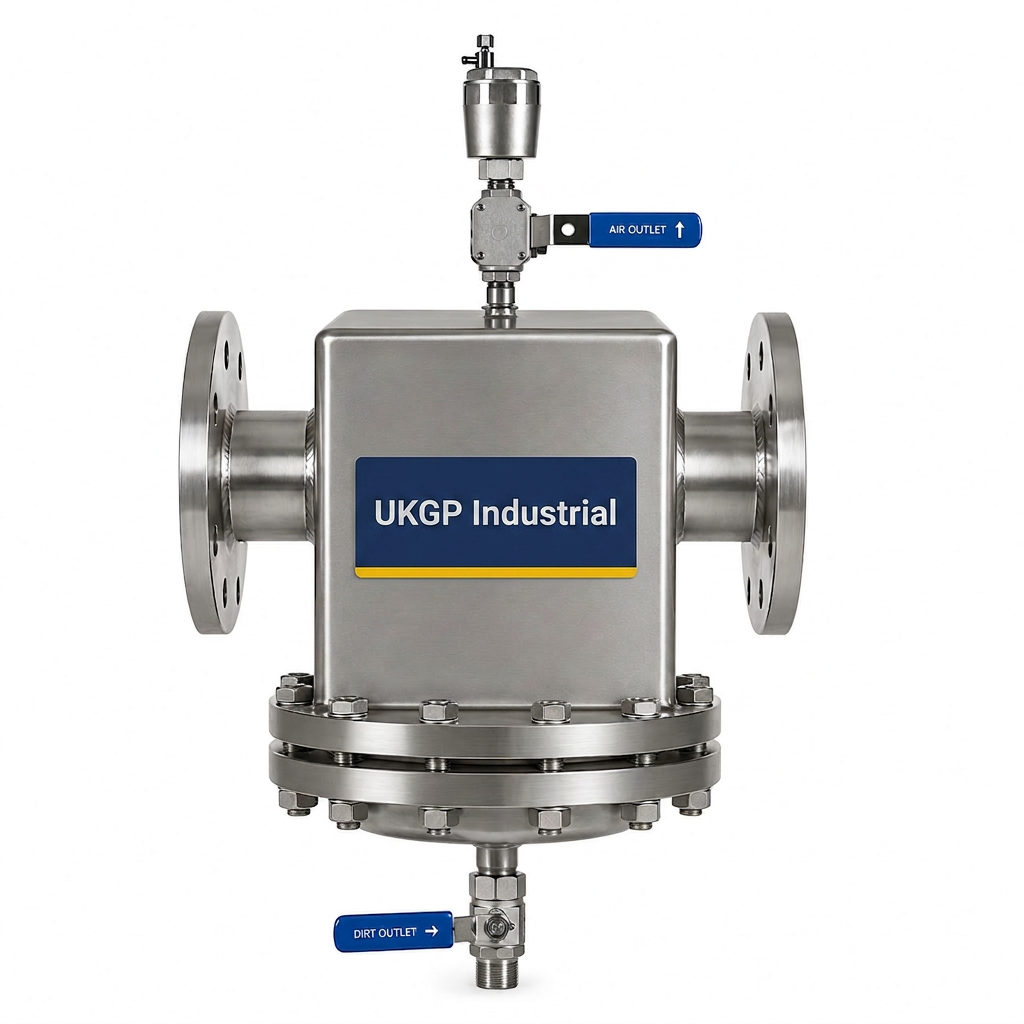
While the debate between chemical flush vs power flush focuses on the fluid, the physical infrastructure of the plant room must also be equipped to handle air and dirt. Air and dirt separators are vital components that work alongside your flushing regime to remove microbubbles and heavy debris. Microbubbles are a leading cause of internal corrosion, as they introduce oxygen into the water which reacts with the iron in the pipework to create magnetite. By stripping air out of the system at the highest temperature point (where it is least soluble), an air separator prevents the corrosive cycle from restarting immediately after a chemical clean is completed.
Dirt separators utilize internal baffles or magnetic inserts to slow down the water flow, allowing heavy particles to fall out of suspension into a collection chamber for easy removal. This is a passive but highly effective method of protecting pumps and heat exchangers from the coarse grit that a power flush might leave behind in dead-legs or low-velocity areas. When UKGP specifies air and dirt separators for a project, we look at the system's pipe diameter and flow rates to ensure optimal separation efficiency. These units are often installed in tandem with side stream filtration to provide a comprehensive dual-layer of protection against particulate contamination and dissolved oxygen ingress.
Integrating these components into the primary pipework ensures that the benefits of your initial chemical flush are preserved for years. Without proper deaeration and dirt separation, the oxygen level in the water will remain high, and the chemical inhibitors added during the flush will be consumed much faster. This leads to a 'yo-yo' effect where system performance constantly fluctuates, and maintenance costs spiralling. For commercial facilities, the goal is a stable, non-corrosive environment where the water chemistry remains balanced and the particulate load is kept to an absolute minimum, ensuring the highest possible COP for heat pumps and chillers in a decarbonising UK landscape.
- Air separators remove microbubbles to prevent ongoing oxygen-based corrosion.
- Dirt separators capture heavy particles that can damage pump impellers.
- Combination units offer both air and dirt removal in a single compact vessel.
- Effective separation reduces the workload and maintenance frequency of filters.
- Passive filtration is crucial for the reliability of high-efficiency commercial boilers.
Impact of Flushing on Heat Transfer Efficiency
The primary objective of deciding between a chemical flush vs power flush is to restore the thermal efficiency of the building's heat transfer equipment. Scale and sludge act as powerful insulators; even a thin layer of magnetite on a heat exchange surface can reduce efficiency by 10% or more. In large-scale UK commercial buildings, this translates to thousands of pounds in wasted energy costs every month. A chemical flush is particularly effective at targeting the plate heat exchangers that often sit at the heart of system separation, ensuring that the primary and secondary circuits can exchange heat as designed without the resistance caused by fouling.
When a system is properly flushed and maintained, the pump energy required to move water through the circuit is also reduced. Blocked pipes and fouled exchangers increase the system's hydraulic resistance, forcing pumps to run at higher speeds and consume more electricity. By opting for a professional chemical flush vs power flush and then maintaining the system with the right hardware, facilities managers can demonstrate significant carbon savings. This is becoming increasingly important as UK businesses face stricter reporting requirements under ESOS and other environmental frameworks. Efficiency is not just about the fuel used by the boiler; it is about how effectively that heat is transported to the occupied spaces.
At UKGP Industrial, we understand the commercial pressures faced by M&E contractors. When a system is not performing, the pressure to 'just flush it' is high. However, selecting the right chemical agents and ensuring they are thoroughly rinsed out is vital to avoid long-term damage. Following a flush, we recommend a full chemical analysis of the water to ensure all cleaning agents have been removed and the correct level of inhibitor has been reached. This scientific approach to water quality management is the only way to guarantee the long-term integrity of the pipework and the high-value plant assets connected to it, ensuring a robust return on investment for the building owners.
- Magnetite buildup is a leading cause of energy waste in commercial HVAC.
- Fouled heat exchangers require more primary energy to meet secondary loads.
- Clean systems lower the hydraulic resistance and reduce pump power usage.
- Water chemistry analysis is required post-flush to confirm system stability.
- Efficient heat transfer is key to meeting UK carbon reduction targets.
Costs, Lead Times, and Specification Logistics
The commercial decision regarding a chemical flush vs power flush often comes down to the budget and project timeline. A power flush might seem cheaper on the surface due to the lack of expensive chemical agents, but the labor time required to effectively clean a large commercial circuit using only mechanical force can quickly exceed the initial savings. Furthermore, if a power flush fails to achieve the required BSRIA cleanliness levels, the cost of re-cleaning and the potential for plant downtime represents a significant financial risk. A targeted chemical flush, while requiring an investment in professional chemicals, is more likely to be successful the first time, especially in complex systems with numerous branches.
For those specifying replacement or remedial works, the logistics of sourcing the right filtration and dosing equipment are paramount. UKGP Industrial pride ourselves on our transparency regarding pricing and availability. Our side stream filtration units, starting at £6,800+VAT, are designed for the UK market and offer a robust alternative to off-the-shelf domestic products that often fail under commercial pressures. With a standard lead time of 6-8 weeks, our made-to-order skids fit perfectly into planned maintenance windows or mid-scale refurbishment projects, allowing contractors to plan their site activities with confidence. We also provide full technical supporting documentation to assist with the procurement process.
Finally, consider the warranty and long-term support. UKGP offers a 2-year warranty on our filtration and separation equipment, providing a level of security that is essential for public sector and high-end commercial projects. Whether you are dealing with a new build requiring BSRIA BG29 compliance or an aged system needing the BSRIA BG50 maintenance protocol, having the right equipment in place is just as important as the flush itself. Our Surrey-based team is always available to discuss technical specifications from DN50 up to DN100 and beyond, ensuring that your commercial pipework remains clean, efficient, and fully operational for its intended lifespan.
- Chemical flushes offer a higher 'first-time' success rate in commercial projects.
- Labour costs for power flushing large buildings can offset chemical savings.
- Correct equipment specification is vital for maintaining post-flush cleanliness.
- UKGP provides 2-year warranties on all manufactured filtration skids.
- Clear lead times of 6-8 weeks assist in scheduling maintenance shutdowns.
Frequently asked questions
When should I choose a chemical flush vs power flush for my office building?
- For most commercial office buildings, a chemical flush is the superior choice. It is safer for large systems with old gaskets and effectively dissolves magnetite that high-velocity power flushing might miss. It also ensures compliance with BSRIA BG50 guidelines.
How long does a commercial chemical flush typically take?
- Depending on the system volume and the degree of fouling, a commercial flush can take anywhere from 48 hours to a full week. This includes the circulation of cleaning chemicals, thorough rinsing, and the final addition of inhibitors.
Do I need side stream filtration if I have already flushed the system?
- Yes. Even after a perfect flush, new corrosion starts immediately as air enters the system or chemicals deplete. Side stream filtration continuously removes these new particles, preventing the system from returning to a fouled state.
What is the typical cost of a UKGP side stream filtration skid?
- Our range of made-to-order side stream filtration skids starts at £6,800 + VAT. These are high-performance units designed for UK commercial plant rooms, available in sizes from DN50 to DN100 with a 6-8 week lead time.
Does power flushing damage commercial boilers?
- It can. Modern high-efficiency boilers have very thin heat exchange walls. The high pressure and turbulence of a power flush can potentially cause mechanical stress or dislodge large chunks of scale that then block the narrow waterways within the boiler itself.