Understanding the Fundamentals of BSRIA BG50 Water Treatment
BSRIA BG50 water treatment guidelines serve as the definitive framework for the maintenance and chemistry control of closed-loop water systems in the UK. Unlike its predecessor BG29, which focuses on pre-commission cleaning, BG50 is designed to provide ongoing operational stability for established HVAC systems. For building services consultants and mechanical engineers, following these guidelines is not merely a box-ticking exercise; it is a fundamental strategy to prevent the accumulation of magnetite and biofilm. Neglecting these standards often leads to increased energy consumption, localized pitting, and eventually, the premature failure of expensive heat exchangers and boiler components. By integrating rigorous monitoring and the correct filtration hardware, plant operators can ensure their systems remain efficient and fully compliant with current UK industry expectations and insurance requirements.
The commercial impact of failing to meet BSRIA BG50 water treatment standards can be devastating for site management. Poorly maintained water chemistry allows for the growth of aerobic and anaerobic bacteria, which can lead to rapid Microbiologically Influenced Corrosion (MIC). This process is particularly aggressive in modern systems where varied metallurgy, such as aluminium heat exchangers and steel pipework, coexist. When corrosion by-products are allowed to circulate, they settle in low-flow areas, effectively insulating heat transfer surfaces and forcing pumps to work harder to maintain pressure. For UK-based facility managers, the cost of corrective action often dwarfs the initial investment in high-quality side stream filtration and dosing systems. Therefore, understanding the proactive nature of BG50 is essential for procurement leads looking to protect their long-term infrastructure investments.
At UKGP Industrial, we recognise that BSRIA BG50 water treatment is a multifaceted discipline requiring both chemical and mechanical interventions. Achieving compliance requires a robust sampling regime overseen by competent professionals, alongside the installation of physical barriers to contamination. Common requirements include the control of dissolved oxygen levels, the maintenance of precise inhibitor concentrations, and the continuous removal of suspended solids. By implementing a system that adheres to these standards, engineers can expect a significant reduction in reactive maintenance call-outs and a more predictable operational budget. Our UK-manufactured equipment is specifically designed to meet the rigorous demands of these British standards, ensuring that your plant room operates at peak performance throughout its intended lifecycle without the risk of non-compliance issues.
- Detailed framework for ongoing maintenance of heating and chilled water systems.
- Focuses on preventing corrosion, scale, and microbiological fouling in closed loops.
- Acts as the primary reference for UK insurance providers and building audits.
- Requires consistent monitoring of water chemistry parameters like pH and iron levels.
The Role of Side Stream Filtration in BG50 Compliance
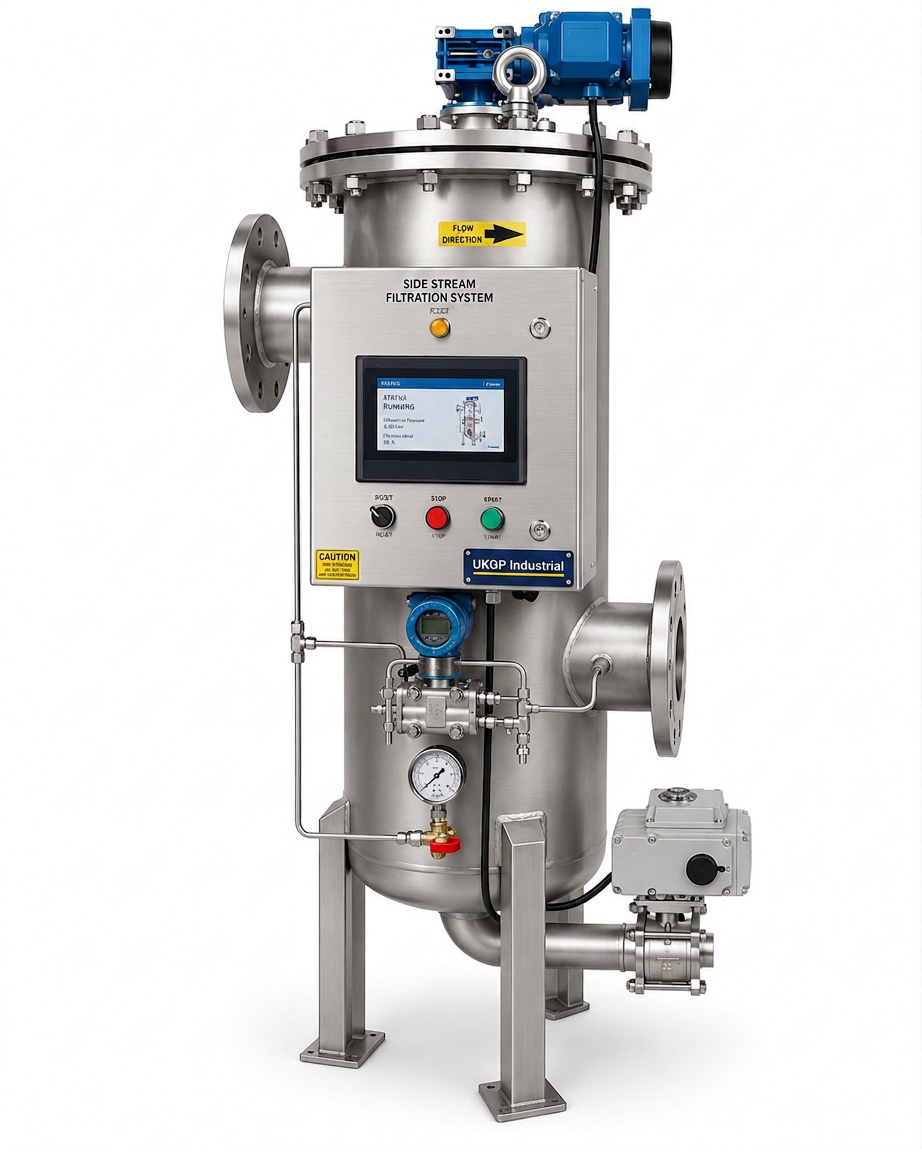
A central pillar of BSRIA BG50 water treatment is the effective management of suspended solids, which is best achieved through high-efficiency side stream filtration. In any closed-loop system, fine particles of iron oxide and other debris inevitably enter the flow, posing a threat to sensitive control valves and heat transfer efficiency. Side stream filtration works by diverting a fixed percentage of the system flow—typically between 5% and 15%—through a dedicated filter housing. This continuous process ensures that even the smallest particles are captured before they can settle or cause abrasive wear on pump seals. For UKGP Industrial clients, our side stream filtration skids are engineered to provide this exact layer of protection, ensuring the system remains clean enough to meet the stringent water quality audits specified under BG50 and CIBSE guidelines.
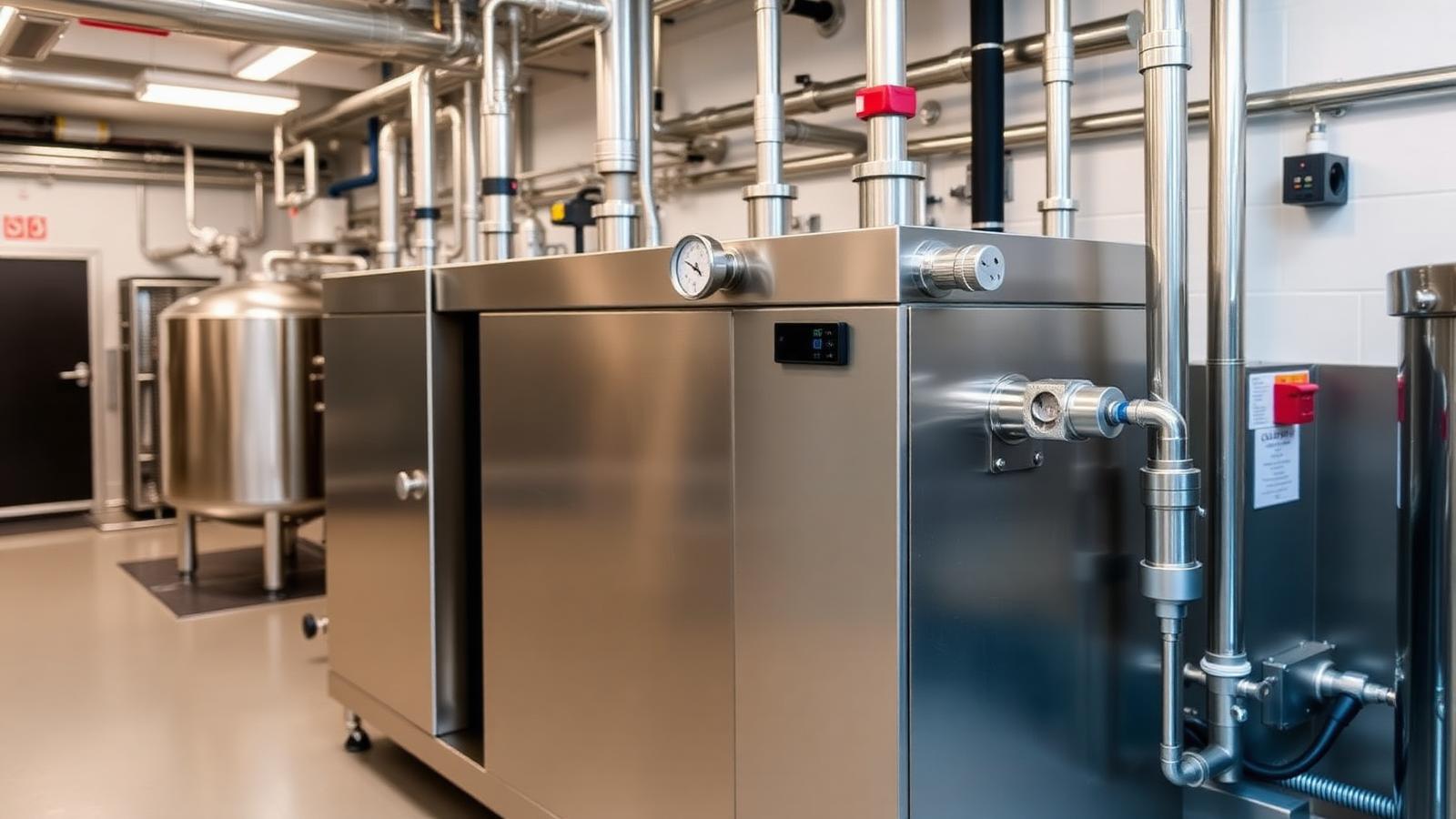
When specifying a side stream filtration unit for UK commercial buildings, it is vital to select a skid that is robust, easy to maintain, and correctly sized for the system volume. UKGP Industrial offers made-to-order filtration skids from DN50 up to DN100 sizes, starting from approximately £6,800 + VAT. These units are manufactured in the UK with a lead time of 6 to 8 weeks and carry a comprehensive 2-year warranty for peace of mind. By choosing a UK-made solution, mechanical and electrical contractors can ensure they are supplying equipment that adheres to British manufacturing standards while supporting local lead times. These skids are designed for direct integration into plant room manifolds, providing a professional, skid-mounted finish that simplifies both the installation process and the subsequent 12-monthly maintenance checks required for compliance.
Maintaining a filtration skid is remarkably straightforward, which is essential for ensuring long-term adherence to BSRIA BG50 water treatment protocols within a busy facility. Our units feature pressure gauges that clearly indicate when a filter change is required, allowing facility managers to schedule maintenance without disrupting the entire system. Because our skids are designed with the engineer in mind, the filter media can be replaced in minutes without significant water loss. Investing in this level of mechanical filtration significantly reduces the chemical burden on the system, as inhibitors can work more effectively when they are not fighting against a high sludge load. Request a bespoke quote today for a UKGP side stream filtration skid to ensure your project meets the highest industry qualifications for water purity and mechanical reliability.
- Continuous removal of magnetite and suspended solids to 5-10 microns.
- Reduces reliance on excessive chemical flushing and water replacement.
- UKGP skids available DN50 to DN100, starting from £6,800 + VAT.
- Made to order in the UK with a 6-8 week lead time and 2-year warranty.
Chemical Dosing and Microbiological Control
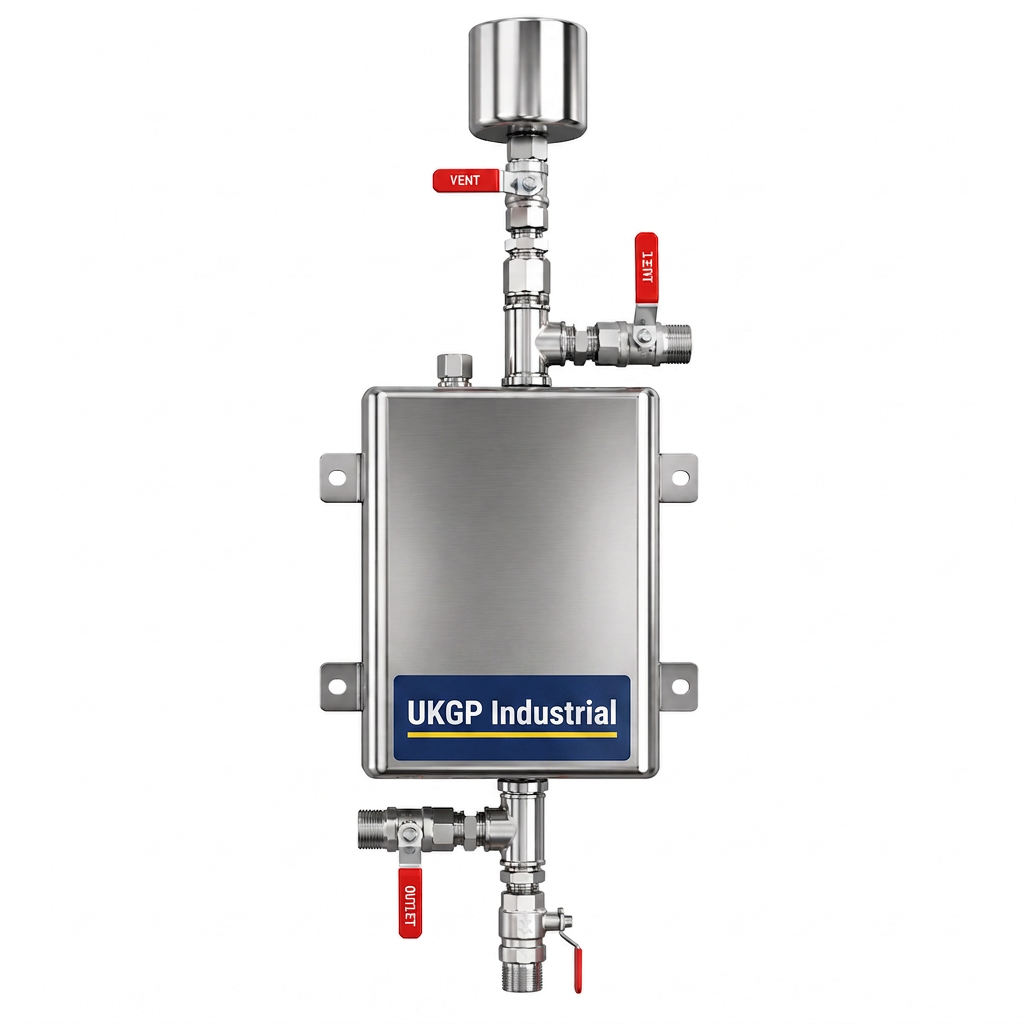
In addition to mechanical filtration, BSRIA BG50 water treatment necessitates the precise administration of chemical inhibitors and biocides. Chemical dosing pots are the industry-standard method for introducing these treatments into a closed loop without introducing oxygen. At UKGP Industrial, we supply a range of stainless steel and carbon steel dosing pots designed to withstand the pressures found in large-scale commercial heating systems. Correct dosing is not a one-time event but a continuous requirement to maintain the protective film on metal surfaces and to suppress the growth of bacterial colonies. Without a dedicated dosing point, engineers often struggle to maintain the chemistries required for compliance, leading to the rapid degradation of internal pipework and increased susceptibility to thermal inefficiency.
The selection of chemicals must be informed by the initial water analysis and the specific metals present in the system. BG50 highlights the importance of regular testing to ensure that inhibitor levels have not depleted over time. If levels fall below the manufacturer's recommended concentration, the system becomes vulnerable to galvanic corrosion. By using UKGP dosing pots, plant room attendants can safely inject the necessary chemicals to rectify these imbalances. Our dosing pots are built to high specifications, ensuring they integrate seamlessly into any plant room layout while providing a durable solution for years to come. This proactive approach to chemical management, when combined with mechanical filtration, forms a twin-track strategy that is widely regarded as the gold standard for UK building services water management.
Microbiological control is perhaps the most challenging aspect of BSRIA BG50 water treatment. Biofilm creates a protective barrier for bacteria, making them resistant to standard chemical treatments if allowed to establish. BG50 stresses the importance of biocide dosing, particularly in systems that operate at lower temperatures, such as chilled water loops or renewable heating circuits using heat pumps. Maintaining a biocide regime prevents the formation of these biofilms, which are notorious for causing blockages and reducing heat transfer. Commercial procurement leads should ensure that their maintenance contractors are utilizing high-quality dosing equipment and following the biocide rotation strategies recommended by BG50. Our UK-manufactured chemical dosing pots provide the reliable infrastructure needed to execute these critical chemical interventions safely and effectively.
- Essential for introducing corrosion inhibitors and biocides safely.
- Prevents the ingress of oxygen during the chemical introduction process.
- High-quality UKGP dosing pots ensure long-term durability in commercial plant rooms.
- Facilitates the precise chemistry control required for BG50 and BS 8552 compliance.
Monitoring and Sampling Requirements under BS 8552
Effective BSRIA BG50 water treatment is underpinned by a rigorous sampling and analysis regime, often following the methodologies laid out in BS 8552. This British standard provides guidance on how to collect representative water samples from a closed-loop system to ensure the data accurately reflects the system's condition. For UK building services experts, quarterly or bi-annual sampling is the baseline for demonstrating compliance. The lab results from these tests provide the 'health check' needed to determine if the filtration and dosing equipment are performing as expected. Without high-quality data, facility managers are essentially operating in the dark, unable to identify a corrosion event until it manifests as a leak or a major component failure.
The parameters typically monitored include pH, conductivity, dissolved oxygen, iron, copper, and various bacterial counts such as TVCs (Total Viable Counts) and SRBs (Sulphate-Reducing Bacteria). BG50 sets out clear action levels for these parameters, indicating when intervention is required. If iron levels are rising despite the presence of an inhibitor, it may indicate that the side stream filtration system needs its media replaced or that flow rates through the filter are inadequate. This data-driven approach allows for targeted maintenance rather than costly, unweighted guesswork. UKGP Industrial supports this process by providing the reliable mechanical hardware—such as our filtration skids and dosing pots—that allows operators to act swiftly once laboratory results highlight a potential water quality issue.
Proper sampling points are also a requirement that is often overlooked in older plant rooms. To meet BSRIA BG50 water treatment standards, samples should be taken from points that represent the circulating water, not stagnant dead-legs. Incorporating dedicated sampling valves near our filtration skids or heat exchangers ensures that the water being analyzed is the same water providing heat transfer to the building. For procurement leads and M&E contractors, ensuring that these points are included in the initial plant room design or retrofit is a key step in future-proofing the building's infrastructure. By adhering to the sampling frequencies and methods specified in BS 8552 and BG50, stakeholders can maintain a robust 'audit trail' that proves their commitment to asset protection and operational excellence.
- Quarterly lab analysis is recommended for most commercial closed-loop systems.
- Monitoring iron and copper levels identifies active corrosion before it causes leaks.
- Microbiological testing prevents the silent spread of MIC and biofilm.
- Clear documentation provides a legal and insurance-compliant history of system care.
Protecting Assets: Plate Heat Exchangers and Beyond
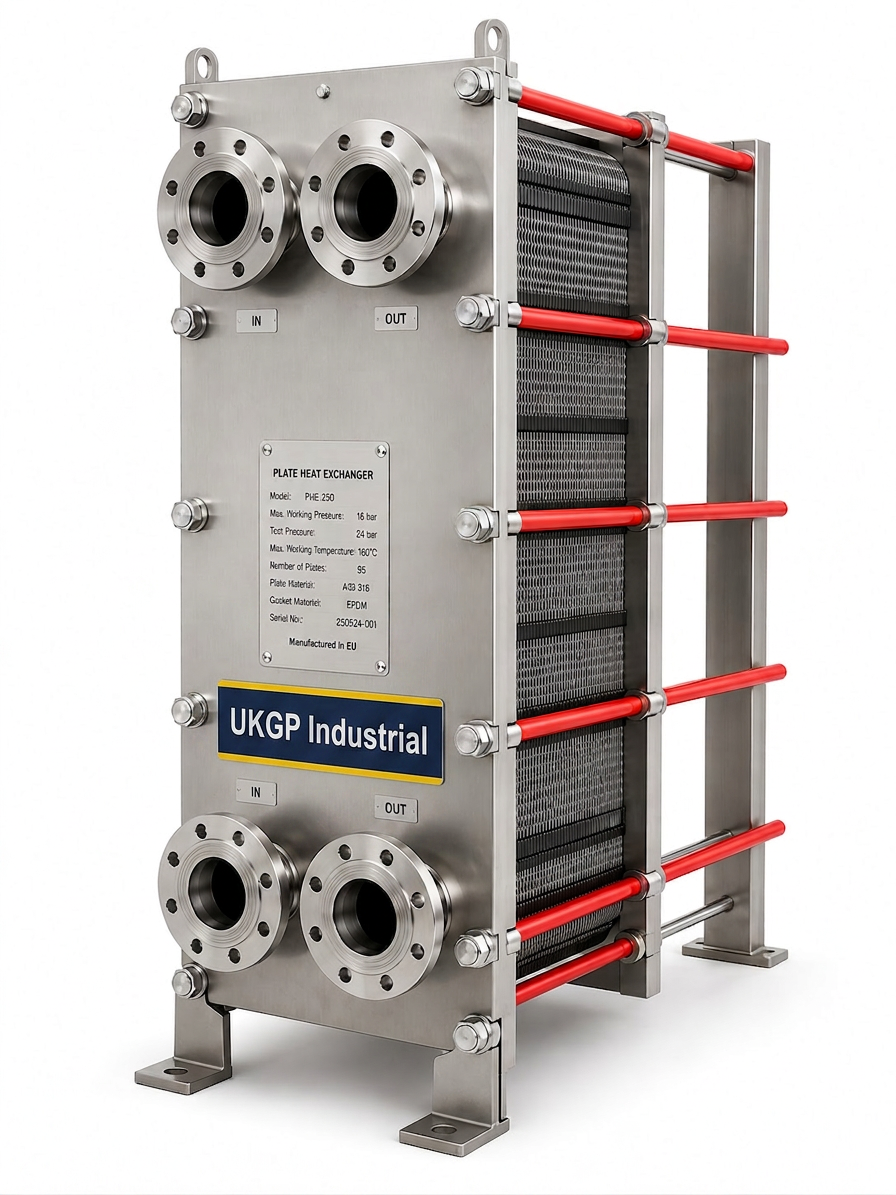
One of the primary beneficiaries of a BSRIA BG50 water treatment programme is the plate heat exchanger. These components are ubiquitous in modern UK plant rooms for hydraulic separation and DHW production. However, due to their tight plate gaps and large surface areas, they are highly susceptible to fouling and scaling if water quality is not strictly controlled. Magnetite particles, if not captured by side stream filtration, will quickly settle on the plates, significantly reducing thermal efficiency. This leads to increased return temperatures and can prevent boilers from operating in condensing mode, directly hitting the building's EPC rating and operational costs. By adhering to BG50, you ensure that these critical and expensive assets remain free of debris and operate exactly as specified by the manufacturer.
Beyond thermal efficiency, poor water quality can lead to physical damage in the form of crevice corrosion or erosion within the heat exchanger. When solids are allowed to circulate at high velocities, they can act like an abrasive, thinning the plates over time until a cross-contamination event occurs. This necessitates a full replacement of the plate pack or the entire unit, which is a significant unbudgeted expense for any facility manager. A UKGP side stream filtration skid prevents this scenario by effectively scrubbing the water of these abrasive particles. When you consider that a high-quality filtration skid costs from £6,800 + VAT, the return on investment is clear when compared to the price and disruption of replacing a large-capacity plate heat exchanger and the associated downtime.
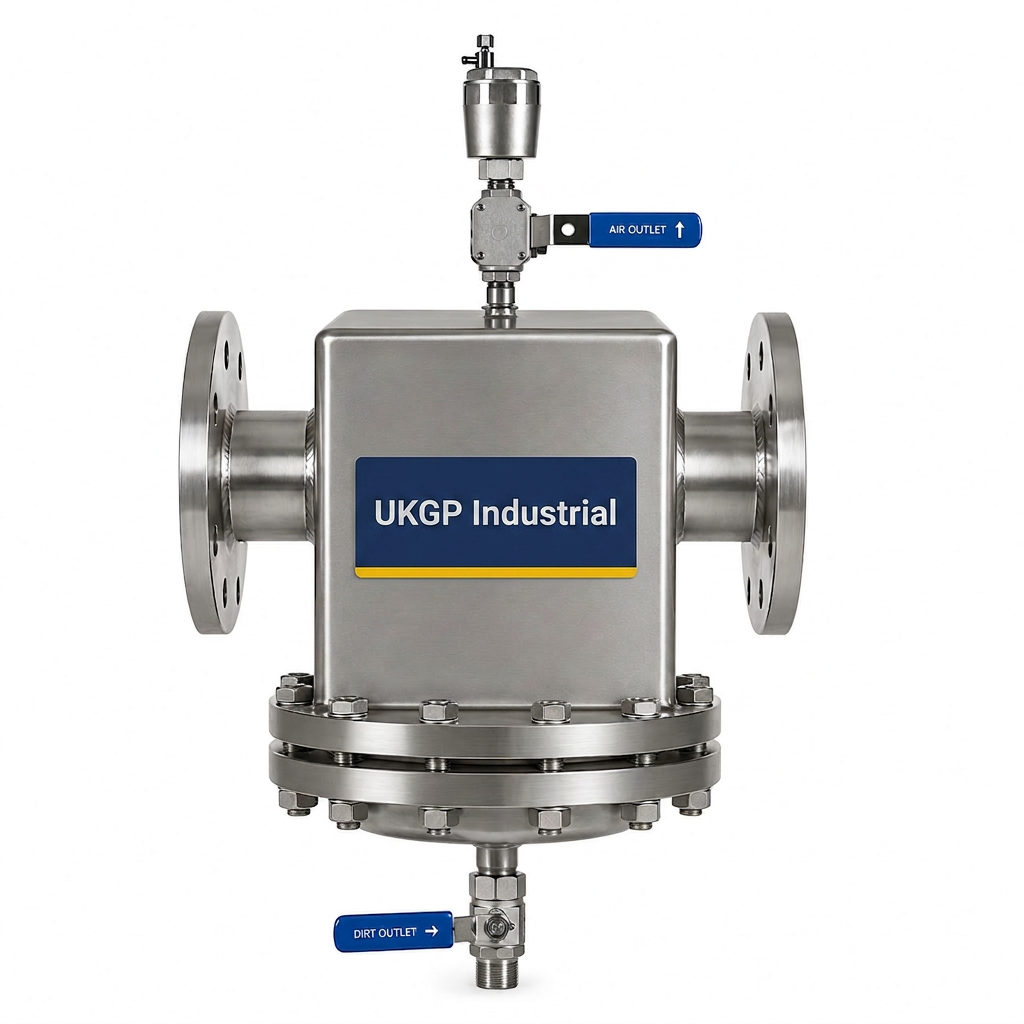
Integrated systems that include expansion bellows and air & dirt separators also require the protection offered by BG50-compliant water. Air pockets are a major driver of corrosion; thus, ensuring that deaeration is working in tandem with chemical inhibitors is essential. The BSRIA BG50 water treatment guidance emphasizes the need for a holistic approach where every component of the plant room is considered. From the large-diameter headers to the smallest radiator valve, every part of the system is preserved when the water chemistry is balanced and the physical debris is removed. UKGP Industrial's range of plant room equipment is designed to work as a unified system, ensuring that your building's HVAC infrastructure is robust, efficient, and compliant with all relevant British standards for the duration of its life.
- Protects tight-tolerance components like plate heat exchangers from fouling.
- Ensures boilers and chillers maintain their designed thermal efficiency.
- Reduces the risk of abrasive wear on internal system components.
- Extends the service life of expansion vessels and mechanical seals.
The Commercial Case for Professional BG50 Hardware
For UK building owners and facility managers, the commercial case for investing in BSRIA BG50 water treatment hardware is compelling. The initial capital expenditure for a high-quality, made-to-order UKGP filtration skid or a stainless steel dosing pot is small compared to the potential savings in energy and repair costs. By maintaining clean water, systems operate with lower pressure drops, requiring less electrical energy for pumping. Furthermore, the likelihood of an emergency shutdown due to a burst pipe or a blocked boiler is significantly reduced. In the competitive UK commercial property market, building owners who can demonstrate a history of BG50 compliance also find it easier to secure favourable insurance terms and maintain the value of their property assets.
Specifying UK-made equipment from UKGP Industrial also offers distinct logistical advantages. Our 6-8 week lead times for side stream filtration skids allow for better project planning for M&E contractors, avoiding the delays often associated with imported goods. Each unit comes with a 2-year warranty and the support of an expert Surrey-based team that understands the specific challenges of the UK climate and engineering landscape. Whether you are dealing with a DN50 system for a commercial office or a DN100 requirement for a large hospital or university campus, our equipment is built to a standard that makes BG50 compliance simpler to achieve and even easier to maintain for the on-site engineering team.
Ultimately, BSRIA BG50 water treatment is about risk management. It transforms water treatment from a reactive 'fire-fighting' task into a proactive, manageable component of building operations. By following the buyer's guide and selecting hardware that is fit for purpose, engineers can take pride in a plant room that is clean, efficient, and fully compliant. If you are currently managing a system that is showing signs of high iron levels or reduced thermal performance, now is the time to upgrade your filtration and dosing infrastructure. Contact the UKGP Industrial team for a technical consultation and a tailored quotation for the filtration skids and dosing pots you need to bring your system up to BSRIA BG50 standards and beyond.
- Minimises long-term operational expenditure (OPEX) through energy savings.
- Improves HVAC reliability and reduces unplanned system downtime.
- Supports UK manufacturing and avoids international shipping delays.
- Provides a 2-year warranty for assured hardware performance.
Frequently asked questions
What is the primary difference between BSRIA BG29 and BG50?
- BSRIA BG29 focuses on the pre-commission cleaning of new systems to prepare them for use, whereas BSRIA BG50 water treatment is the guide for the ongoing maintenance and water quality management of systems after they have been commissioned.
How often should side stream filtration be serviced?
- Under BG50 guidelines, side stream filtration should be monitored regularly via pressure differential gauges. Typically, filter media should be checked monthly and replaced as needed, with a full service performed annually as part of the plant room's preventative maintenance schedule.
What is the typical lead time for a UKGP filtration skid?
- Our side stream filtration skids are made to order in our UK facility with a standard lead time of 6 to 8 weeks. This ensures that you receive a high-quality, bespoke unit that is perfectly suited to your specific project requirements.
Does BG50 compliance require chemical dosing?
- Yes, BG50 emphasizes that mechanical filtration alone is usually insufficient. Chemical dosing of inhibitors and biocides is essential to prevent corrosion and microbiological growth, making dosing pots a critical component for compliance.
What pipe sizes are available for UKGP filtration skids?
- We manufacture side stream filtration skids in sizes ranging from DN50 up to DN100. This allows us to cater to a wide range of system volumes, from medium-sized commercial buildings to large industrial district heating networks.