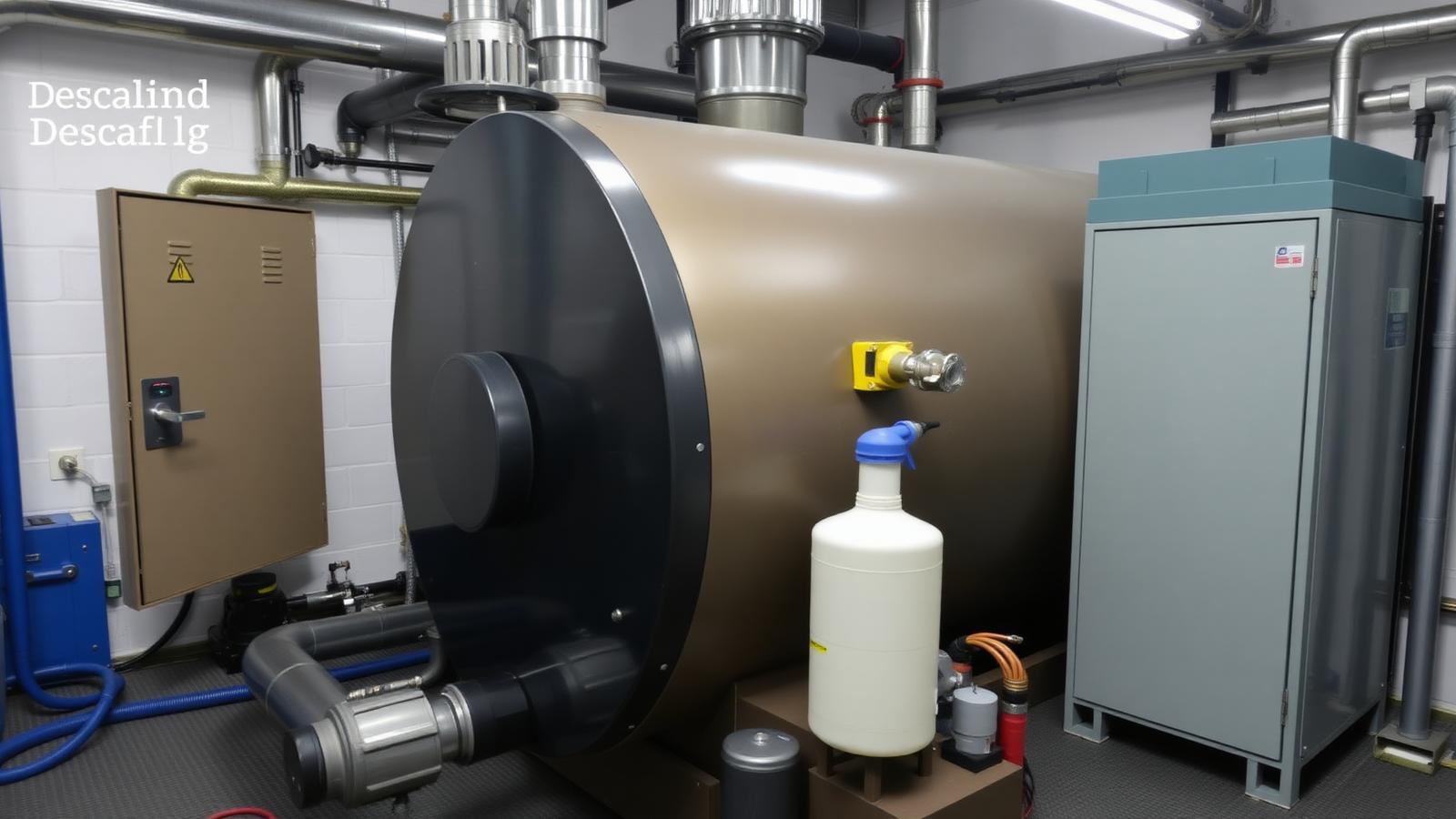
The Thermodynamics of Boiler Scale Efficiency Loss
In the UK building services sector, the hard reality of water chemistry is often overlooked until utility bills spike. Boiler scale efficiency loss is not merely an aesthetic concern within the pipework; it is a thermal barrier that significantly increases the fuel consumption required to achieve set-point temperatures. Scale, primarily composed of calcium and magnesium salts, has a thermal conductivity approximately 20 to 30 times lower than the mild steel or stainless steel used in modern plate heat exchangers and boiler tubes. When this insulating layer forms, heat cannot be transferred effectively from the burner to the system water, forcing the plant to work harder for the same output. This thermal stress doesn't just waste energy; it creates hotspots that can cause metal fatigue and catastrophic failure of the heat exchanger surfaces.
According to industry benchmarks, a mere 1.5mm of scale can result in a boiler scale efficiency loss of approximately 10% to 15%. In a high-capacity commercial plant room, this represents thousands of pounds in wasted gas or electricity annually. For M&E contractors and consultants, ensuring that a system is designed to combat this deposition is not just a best-practice measure but a financial imperative. The relationship between scale thickness and energy waste is almost linear in its initial stages, meaning that even a 'light' coating of scale, which might be dismissed during a cursory inspection, is already actively eroding the building's operational budget and increasing its carbon footprint in line with CIBSE sustainability targets.
To mitigate these risks, UKGP recommends a proactive approach to water quality management that goes beyond basic softening. While primary water treatment is essential, the closed-loop environment must be managed to prevent the precipitation of dissolved solids. Our technical team frequently advises on the integration of high-performance filtration and separation equipment to maintain optimal heat transfer. By addressing the root cause of scale formation through proper secondary treatment and monitoring, engineers can protect the capital investment of the boiler plant and ensure the system operates at the high-efficiency levels promised by manufacturers and required by current UK building regulations and Part L compliance.
- Scale thermal conductivity is significantly lower than heat exchanger metals.
- 1mm of scale can increase energy consumption by up to 10% or more.
- Higher stack temperatures are a primary indicator of internal scale fouling.
- Thermal stress on boiler tubes leads to localised overheating and eventual cracking.
Managing Secondary Heat Transfer with Plate Heat Exchangers
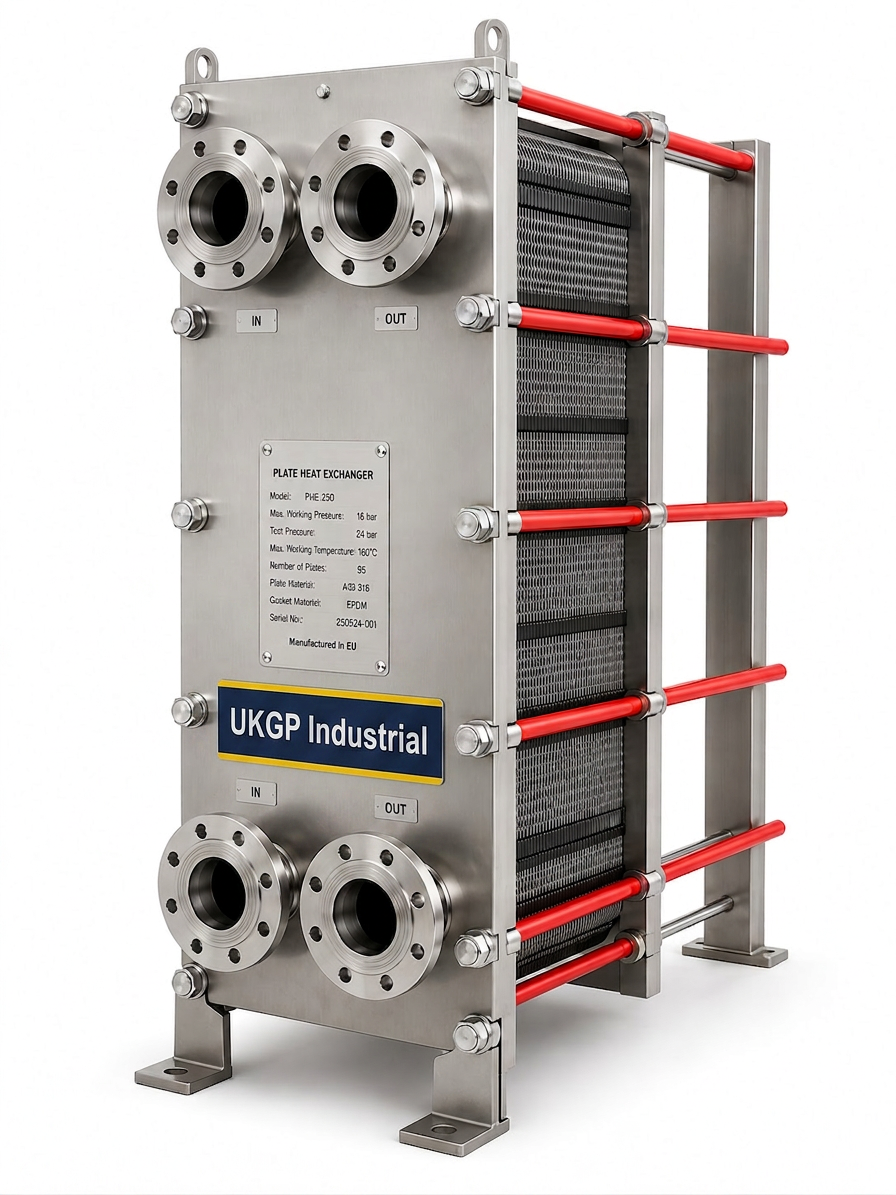
When boiler scale efficiency loss occurs within a primary loop, the secondary heat transfer surfaces, such as those found in plate heat exchangers, are equally at risk. These components rely on narrow channels and turbulent flow to maximise heat exchange between the primary and secondary circuits. Even a minor baseline of scale or magnetite buildup can restrict flow and disrupt this turbulence, leading to a massive drop in Delta T. For facility managers, this often manifests as a struggle to maintain hot water temperatures in domestic loops or failing to reach thermal comfort levels in space heating circuits. Protecting these assets is vital for long-term operational stability and ensuring the design intent of the HVAC system is met over its full life cycle.
UKGP provides a comprehensive range of stainless steel plate heat exchangers designed specifically for the demanding environments of UK commercial heating and cooling. By selecting the right plate configuration and ensuring high-quality water throughput, you can significantly reduce the potential for fouling. However, hardware alone is not a panacea; the system must be supported by adequate separation and dosing protocols. If you are noticing a drop in secondary performance or an increase in primary return temperatures, it is highly likely that scale or debris is present within the plate packs. Replacing or cleaning these components is a reactive expense that could be avoided with a combined strategy of chemical dosing and mechanical filtration throughout the life of the plant.
For those currently specifying or refurbishing plant rooms, UKGP offers tailored advice on heat exchanger selection to minimise the impact of scale. Integrating our plates into a system that features robust dirt and air separation ensures that the internal surfaces remain clean for longer. This approach directly combats the problem of boiler scale efficiency loss by maintaining the highest possible transfer rates. Our teams are available to discuss specific project requirements, helping you select the most resilient materials for your local water conditions—whether you are dealing with the aggressive hard water typically found in London and the Southeast or softer, more corrosive water in northern regions.
- Plate heat exchangers are highly sensitive to narrow-channel fouling.
- Reduced turbulence within plates directly correlates to lower heat transfer.
- System Delta T is a critical metric for monitoring exchanger health.
- Choosing UKGP plates helps ensure consistent performance in hard water areas.
Compliance with BSRIA BG29 and BG50 Standards
Maintaining system integrity and avoiding boiler scale efficiency loss requires strict adherence to industry standards, most notably BSRIA BG29 (Pre-commission Cleaning) and BG50 (Water Treatment for Closed Heating and Cooling Systems). These guidelines provide a framework for engineers to ensure that system water is treated and filtered to a standard that prevents the formation of scale and the onset of corrosion. BG50, in particular, emphasizes the need for continuous monitoring and the removal of both dissolved and suspended solids. Failure to follow these protocols often results in a voiding of manufacturer warranties and a steady decline in system efficiency that can go unnoticed until critical components fail during peak demand in the winter months.
The financial implications of non-compliance are severe. Beyond the direct energy costs associated with boiler scale efficiency loss, there is the cost of chemical cleaning, system flushing, and the replacement of fouled sensors and valves. A system that is maintained according to BS 8552 and BG50 will typically have a life expectancy 50% longer than a poorly managed one. For procurement leads, this makes a compelling case for investing in high-quality filtration hardware at the outset. Rather than viewing water treatment as a line-item expense to be cut, it should be seen as an insurance policy against the escalating costs of energy and emergency repairs in a volatile UK market where plant uptime is non-negotiable.
At UKGP, we manufacture the specific equipment required to meet and exceed these BSRIA standards. Our dosing pots and filtration skids are engineered to facilitate the precise delivery of inhibitors and the continuous removal of harmful particulates. By providing the tools necessary for easy maintenance, we empower plant-room engineers to uphold high water-quality standards without excessive manual labor. This proactive stance ensures that the boiler scale efficiency loss is kept to an absolute minimum, allowing the heating plant to operate at its peak seasonal efficiency (SEDBUK). Investing in UK-made, high-specification plant-room equipment is the most effective way to ensure long-term compliance and thermal performance for commercial properties.
- BSRIA BG29 is essential for new-build system cleanliness and longevity.
- BG50 provides the ongoing roadmap for water quality and efficiency.
- BS 8552 offers guidance on the sampling and testing of system water.
- Non-compliance significantly increases the risk of boiler scale efficiency loss.
The Role of Side Stream Filtration in Protecting Boilers
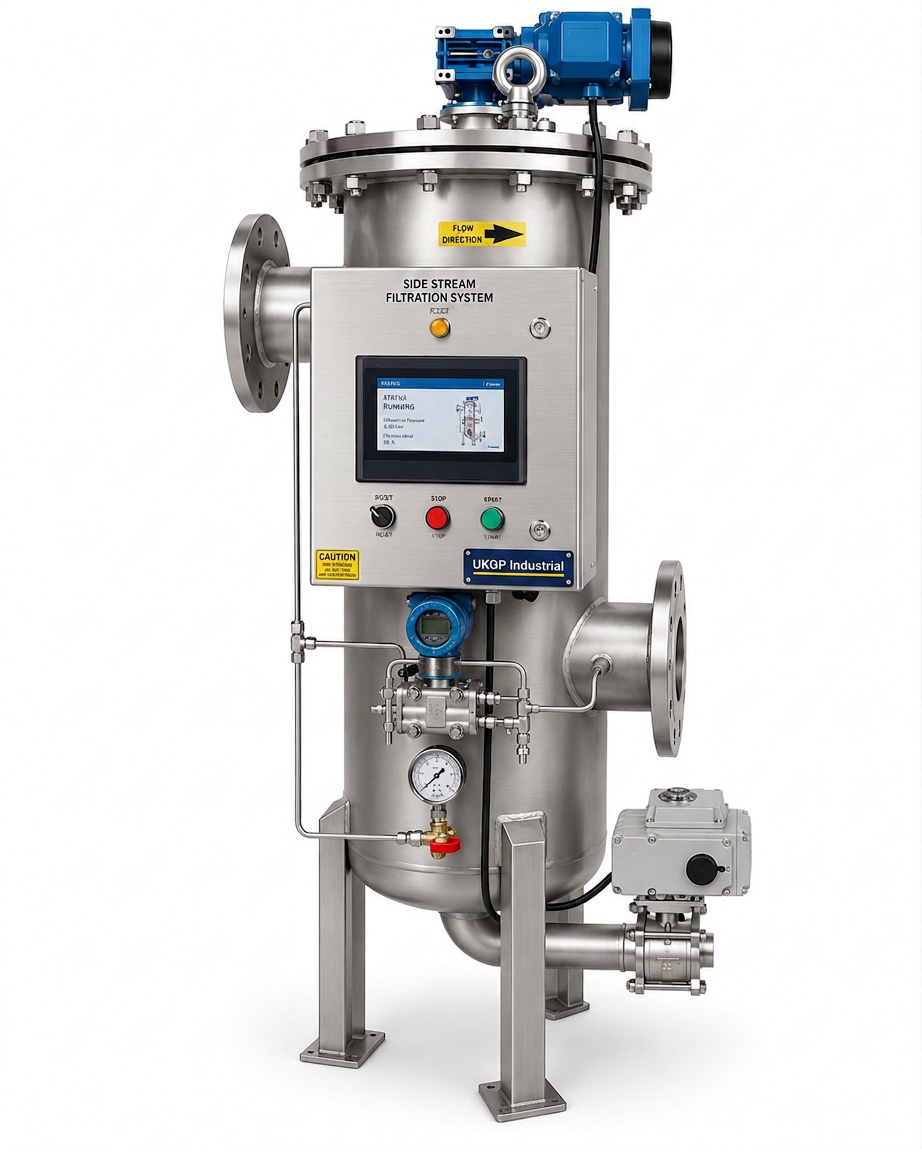
One of the most effective mechanical interventions against boiler scale efficiency loss and sludge accumulation is the installation of a side stream filtration skid. Unlike full-flow filters which can cause significant pressure drops, a side stream system continuously treats a percentage of the circulating water (typically 5-15% of the total flow rate). This process removes suspended solids, magnetite, and precipitated scale before they have the chance to settle in the low-velocity areas of the boiler or heat exchanger. For UK plant rooms, this is often the missing link in a robust maintenance strategy, bridging the gap between chemical treatment and total system cleanliness. By keeping the main flow free of debris, the heat transfer surfaces remain pristine, maintaining design efficiency.
UKGP manufactures bespoke side stream filtration skids in Surrey, specifically designed for the UK market. Our units range from DN50 to DN100 and are made to order with a typical lead time of 6 to 8 weeks. Starting from £6,800 + VAT, these skids represent a high-value investment for any FM or contractor concerned with boiler scale efficiency loss. Constructed with premium components and featuring a 2-year warranty, our skids are designed for ease of use, with clear instrumentation and accessible filter housings. This allows for quick maintenance during routine plant inspections, ensuring the system remains protected year-round without requiring extensive downtime or specialist contractor intervention for every filter change.
When specifying a filtration solution, it is important to consider the total cost of ownership. A UKGP side stream filtration skid not only prevents the physical buildup of scale but also optimises the effectiveness of chemical inhibitors by removing the sludge that can 'mask' metal surfaces. This dual approach is the gold standard for modern plant-room design. If you are managing a site where boiler scale efficiency loss is suspected, or if you are looking to protect a new install, request a quote for our made-to-order skids. Our technical team can help size the unit correctly for your system volume and flow requirements, ensuring that your heating plant remains as efficient on day 1,000 as it was on day 1.
- UKGP skids are made to order in Surrey, DN50 to DN100 sizes.
- Typical UK pricing starts from £6,800 + VAT with a 2-year warranty.
- Side stream filtration prevents scale settling in low-velocity hotspots.
- Lead times are approximately 6-8 weeks for these high-spec industrial units.
Quantifying the Financial Impact of Scale Fouling
To truly understand the urgency of addressing boiler scale efficiency loss, one must look at the commercial numbers. In a 500kW boiler system operating for 3,000 hours per year, a 10% loss in efficiency due to scale can lead to several thousand pounds in excess gas costs at current UK commercial tariffs. This waste is compounded when you factor in the UK's Climate Change Levy (CCL) and the potential for carbon penalties for larger organisations. The ROI on protective equipment, such as side stream filters or air and dirt separators, is often achieved in less than 24 months through energy savings alone, before even considering the extension of the boiler's lifespan and the reduction in breakdown call-outs.
Maintenance costs also escalate exponentially in a fouled system. When scale accumulation leads to boiler scale efficiency loss, the increased thermal stress often causes secondary failures in gaskets, pumps, and control valves. These components are forced to cycle more frequently and operate at higher temperatures than intended. A reactive maintenance strategy in the UK can cost double or triple a planned preventative maintenance (PPM) schedule due to emergency labour rates and the long lead times for replacement parts. By installing UKGP equipment, you are implementing a long-term solution that stabilises operational costs and provides predictable performance for the building occupants, whether they are in healthcare, education, or commercial offices.
Finally, there is the matter of capital expenditure (CAPEX) versus operational expenditure (OPEX). While the initial cost of a high-quality UKGP side stream filtration skid (from £6,800 + VAT) may seem like an additional burden on a project budget, it significantly de-risks the primary investment. A boiler that fails at 7 years instead of its 15-year design life represents a massive financial failure and a waste of embodied carbon. Professionals who prioritise the mitigation of boiler scale efficiency loss are essentially future-proofing their assets against rising energy prices and stricter environmental governance. Contact our sales office today to see how our bespoke solutions can align with your project’s budget and technical performance requirements.
- ROI for filtration equipment is often less than 2 years in UK plant rooms.
- Scale increases the carbon footprint and risks Climate Change Levy penalties.
- Reactive repairs can be 3x more expensive than proactive maintenance.
- Long-term CAPEX is protected by reducing operational thermal stress.
Best Practices for Monitoring and Prevention
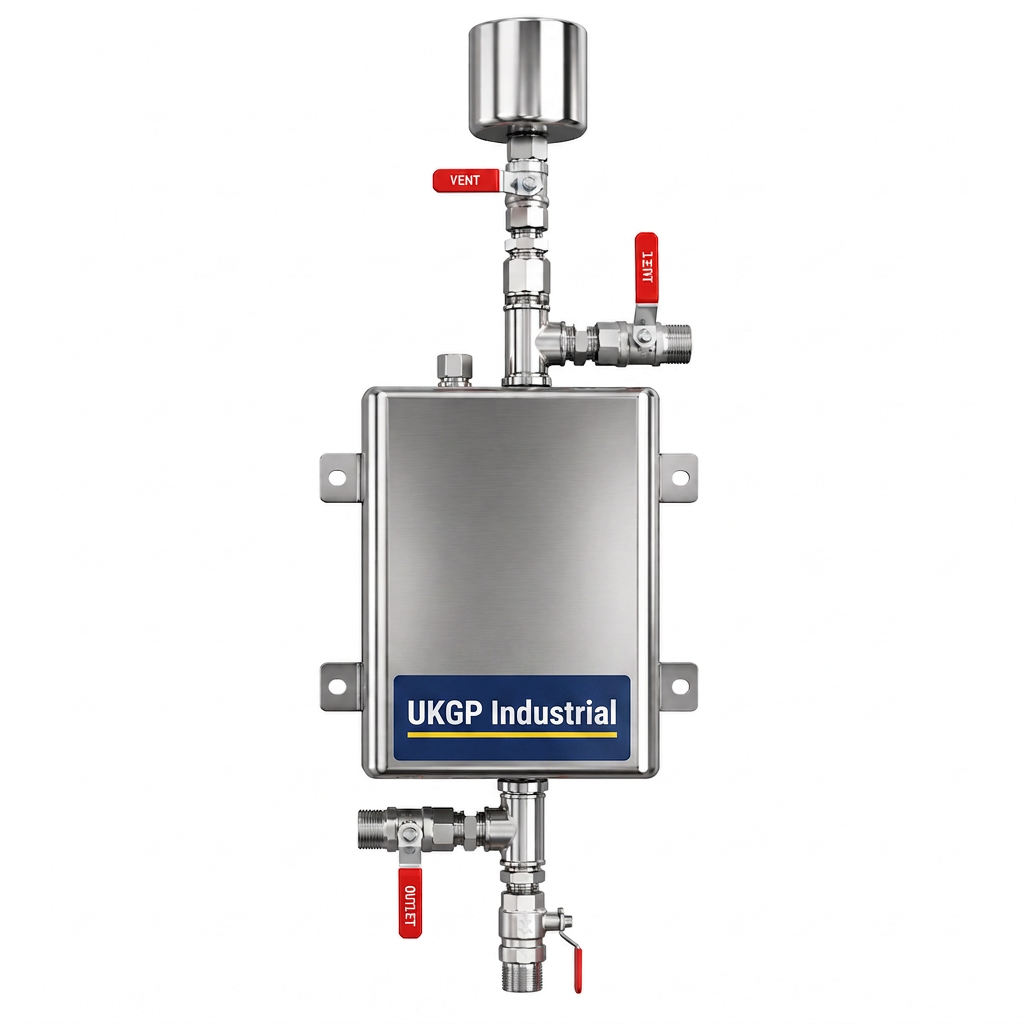
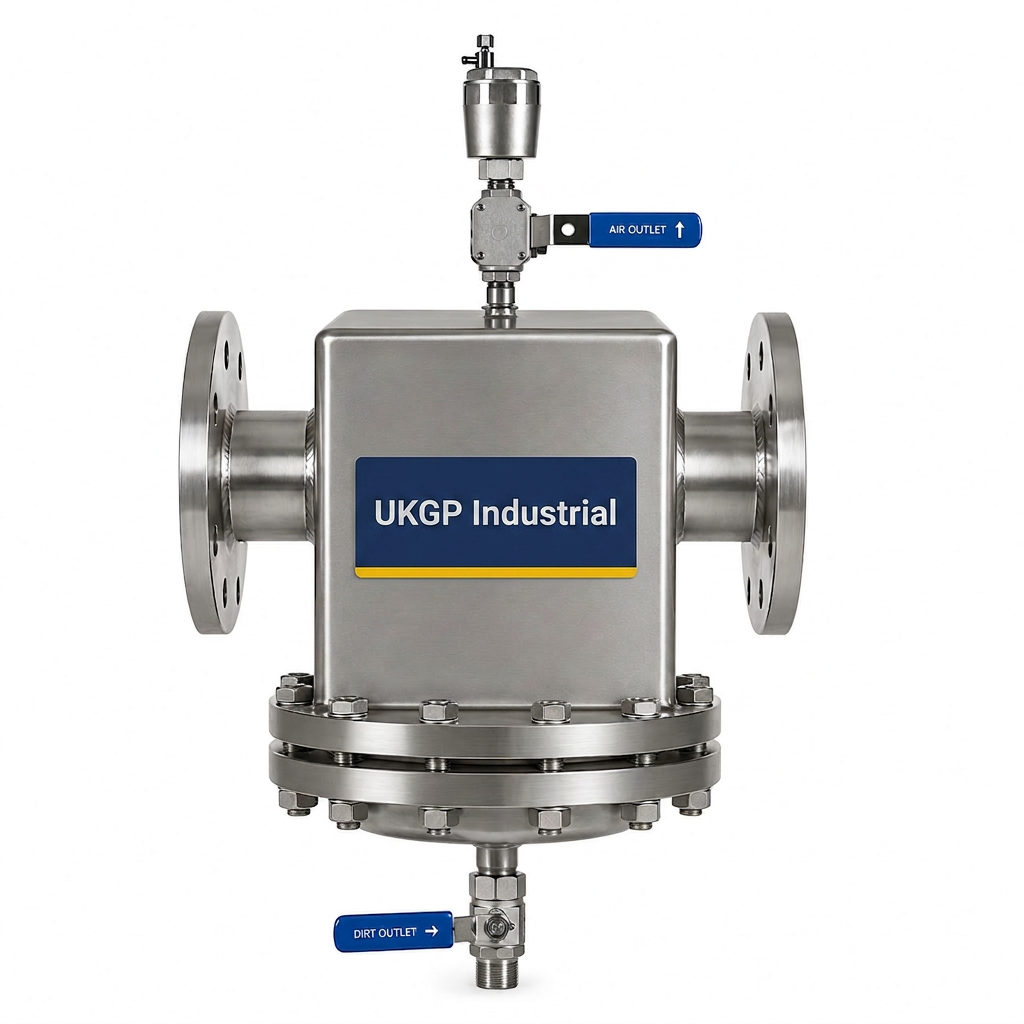
Preventing boiler scale efficiency loss requires a multi-faceted approach that combines mechanical filtration, chemical treatment, and regular monitoring. The first step for any plant-room engineer should be a comprehensive water analysis to determine the scaling potential of the system water. This should be followed by the installation of a dosing pot to introduce high-quality inhibitors into the system. Combined with an air and dirt separator, this creates a clean environment where scale crystals remain in suspension and are easily captured by the side stream filter rather than adhering to the boiler's internal surfaces. This 'defensive' engineering is the best way to ensure consistent thermal performance.
Monitoring is equally critical. Routine checks of fuel consumption, stack temperatures, and system pressure drops can provide early warnings of fouling. If fuel consumption is rising without an increase in heating demand, boiler scale efficiency loss is the most likely culprit. Regularly logging these metrics allows FMs to justify expenditure on improvements and cleaning before the system reaches a point of failure. At UKGP, we advocate for the inclusion of premium instrumentation on all our skids and separators, allowing for easy data collection and informed decision-making by the maintenance team on-site.
For those designing or managing UK plant rooms, the combination of side stream filtration, plate heat exchangers, and dosing pots from UKGP provides a robust shield against the inefficiencies of hard water. Our products are engineered for the realities of the UK's ageing infrastructure and its diverse water chemistry. Whether you need a made-to-order filtration skid with a 2-year warranty or a standard dosing pot for a local project, we provide the technical expertise and high-spec hardware required to keep your systems running at peak efficiency. Request a technical consultation or a quote today to eliminate the hidden costs of scale in your building.
- Regular water analysis is the foundation of scale prevention.
- Dosing pots allow for the controlled introduction of necessary inhibitors.
- Monitoring stack temperatures can reveal internal boiler tube fouling early.
- UKGP technical support helps identify the right prevention strategy for your site.
Frequently asked questions
How does scale specifically cause boiler scale efficiency loss?
- Scale acts as an insulator on heat transfer surfaces. Because minerals like calcium carbonate have very low thermal conductivity, heat from the burner cannot pass efficiently into the system water. This waste of energy manifests as higher fuel consumption and increased exhaust temperatures, as more heat escapes through the flue instead of being utilised.
What is the cost of a UKGP side stream filtration skid?
- Our industrial side stream filtration skids are made to order in our Surrey facility. Prices typically start from £6,800 + VAT for a standard DN50 unit. These are robust, high-specification systems designed for UK plant rooms, featuring a 2-year warranty and a standard lead time of approximately 6 to 8 weeks.
Can boiler scale efficiency loss be reversed?
- Yes, but it is far more expensive than prevention. Reversing scale buildup usually requires chemical descaling or mechanical cleaning of heat exchangers, which involves plant downtime and potential material damage. Modern BSRIA BG50 guidelines focus on preventing scale from forming in the first place through continuous side stream filtration and correct chemical dosing.
Are UKGP filtration skids compliant with BSRIA guidelines?
- Absolutely. Our equipment is specifically designed to help UK engineers and facility managers comply with BSRIA BG29 and BG50 standards. By removing the suspended solids and precipitated hard water minerals that cause boiler scale efficiency loss, our skids play a critical role in maintaining water quality and system longevity.
What sizes are available for your filtration systems?
- We offer side stream filtration skids in sizes ranging from DN50 to DN100 to suit a diverse range of system volumes and flow rates. Each unit is built to industrial standards to ensure it can handle the rigours of commercial and industrial heating and cooling environments.