Understanding Biofilm in Commercial HVAC Systems
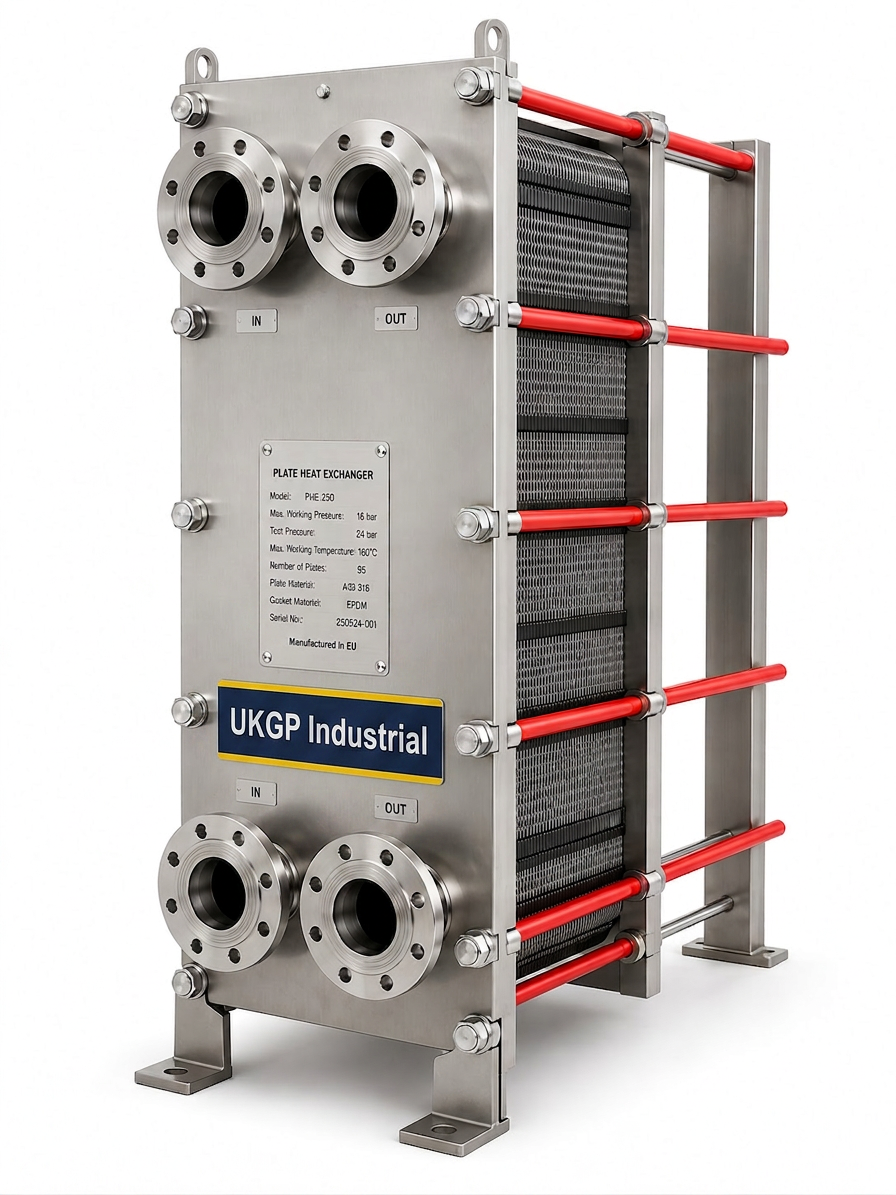
Biofilm is a complex, resilient layer of microorganisms that adheres to the internal surfaces of pipework and plate heat exchangers, often protected by an extracellular polymeric substance matrix. In the context of UK building services, these biological films act as an insulating barrier, significantly more detrimental to heat transfer than mineral scale alone. Even a microscopic layer of biofilm can reduce the thermal efficiency of a plate heat exchanger by as much as thirty percent, forcing primary boilers to fire harder and longer to achieve setpoint temperatures. For systems governed by BSRIA BG29 and BG50, managing these biological loads is not just about efficiency; it is a critical operational safety requirement to prevent the premature degradation of high-value plant equipment.
The formation of biofilm often begins during the initial pre-commissioning cleaning phase or during periods of low flow and stagnation within the system. Once established, the bacteria within the biofilm are shielded from many standard biocide treatments, making subsequent biofilm heat exchanger cleaning much more difficult than a standard chemical flush. M&E contractors must recognize that traditional corrosion inhibitors do not address biological growth; instead, a dedicated strategy involving oxidising or non-oxidising biocides is required. UKGP Industrial emphasises that maintaining high turbulent flow and consistent system temperature is the first line of defence, but when these fail, specialist intervention through chemical dosing and filtration is the only viable path to restoration.
From an engineering perspective, the impact of biofilm extends beyond thermal resistance; it also facilitates microbiologically influenced corrosion, often referred to as MIC. This process can lead to pinhole leaks in stainless steel plates within months of an untreated outbreak. For facilities managers responsible for UK plant rooms, understanding the lifecycle of these bacteria is vital. Monitoring must include regular sampling as per BS 8552, ensuring that the water chemistry remains within aerobic and anaerobic bacterial limits defined by industry best practice. Failure to act on early indicators often results in costly emergency shutdowns and the eventual total replacement of the heat exchanger plates, a scenario that can be avoided through disciplined water treatment regimes.
- Complex biological matrices acting as thermal insulators
- Significantly higher thermal resistance compared to calcium carbonate scale
- Risk of Microbiologically Influenced Corrosion (MIC) on plate surfaces
- Compliancy requirements under BSRIA BG50 and CIBSE guidelines
- Economic impact through increased carbon emissions and energy waste
The Role of Biofilm Heat Exchanger Cleaning in Maintenance
When the thermal delta-T across a heat exchanger begins to narrow, or when pressure drops across the plates exceed design specifications, biofilm heat exchanger cleaning becomes an urgent priority. This process typically involves a multi-stage chemical intervention designed to strip the protective layers of the biofilm away and sanitise the internal metal surfaces. UKGP Industrial recommends that these cleans are undertaken by specialist water treatment contractors who understand the metallurgy of 316-grade stainless steel or titanium plates, ensuring that the chosen cleaning agents do not cause brittle failure or stress corrosion cracking while targeting the organic layers.
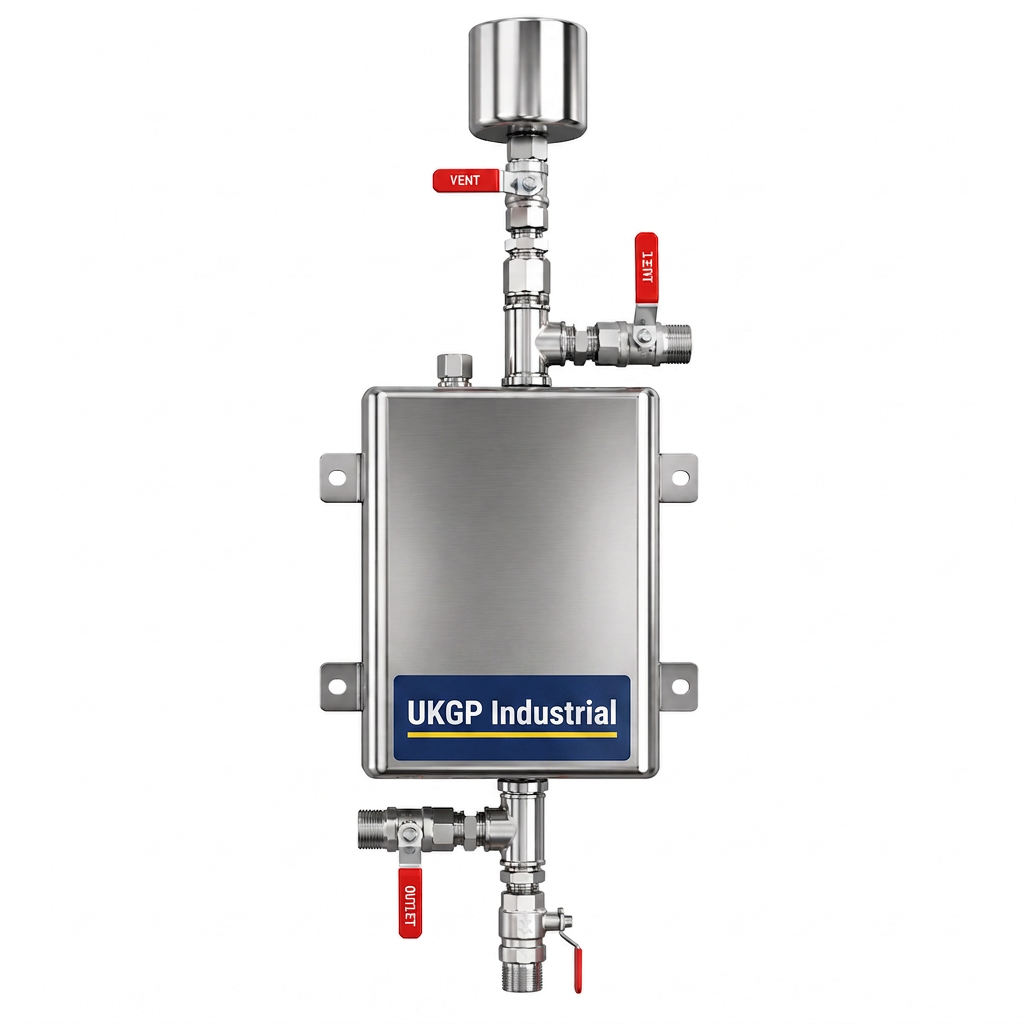
Chemical dosage must be precise and monitored safely using professional equipment. Utilizing UKGP Industrial chemical dosing pots—available from 3.5 to 25-litre capacities—allows for the controlled introduction of non-oxidising biocides and biodispersants into the system. These dispersants are crucial as they break down the sticky polysaccharide 'glue' that holds the biofilm together, allowing the mechanical force of the circulating water to flush the debris away. Without a high-quality dispersant, the core of the biofilm often remains intact, leading to rapid re-colonisation once the cleaning cycle is complete and the system returns to normal operating parameters.
Post-cleaning analysis is a vital part of the engineering lifecycle. Once a biofilm heat exchanger cleaning has been performed, the system should be re-tested for Total Viable Counts (TVC) and sulphate-reducing bacteria. Building managers should also evaluate their filtration strategy. A clean system will only remain so if suspended solids and organic fragments are continuously removed. This is why we advise UK clients to integrate high-efficiency side stream filtration as part of their long-term maintenance strategy, ensuring that liberated biofilm particles do not simply settle in other low-flow areas of the building's pipework, such as air handling units or fan coil units.
- Requirement for biodispersants to penetrate organic matrices
- Importance of precise chemical dosing via high-quality pots
- Risk of rapid re-colonisation if cleaning is incomplete
- Validation of cleaning success through BS 8552 water sampling
- Protection of sensitive system components from harsh chemicals
Integrating Side Stream Filtration for Biofilm Control
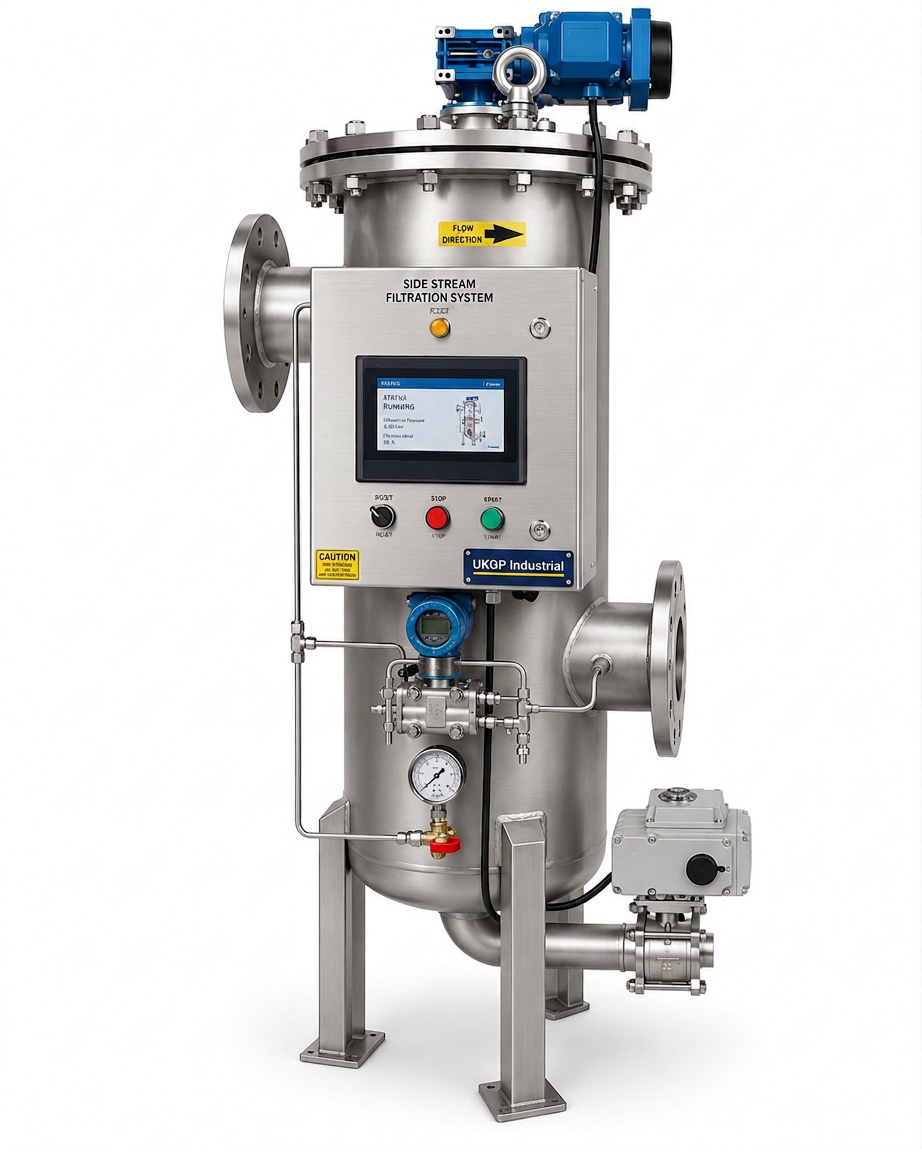
While chemical cleaning is a reactive solution, the most effective way to prevent the need for frequent biofilm heat exchanger cleaning is through the installation of a dedicated side stream filtration skid. In modern UK plant rooms, side stream filtration is no longer optional; it is a BSRIA recommendation for closed-loop heating and chilled water systems. These skids continuously process a percentage of the circulating water, typically between 5% and 15% of the total flow, removing the suspended nutrients and debris that bacteria need to flourish. By starving the bacteria of their environmental niche, the rate of biofilm formation is drastically slowed, preserving the efficiency of the heat exchangers for years rather than months.
UKGP Industrial manufactures bespoke side stream filtration skids specifically for these demanding applications. Our skids are made to order with a standard lead time of 6 to 8 weeks, ensuring they are perfectly sized for the specific requirements of your DN50 to DN100 pipework. Starting from £6,800 + VAT and backed by a comprehensive 2-year warranty, these units provide an exceptional return on investment by reducing the frequency of chemical flushes and plate plate inspections. Each unit is British-built in our Surrey facility and is designed for easy maintenance, allowing plant room engineers to replace filter cartridges without de-pressurising the entire building circuit.
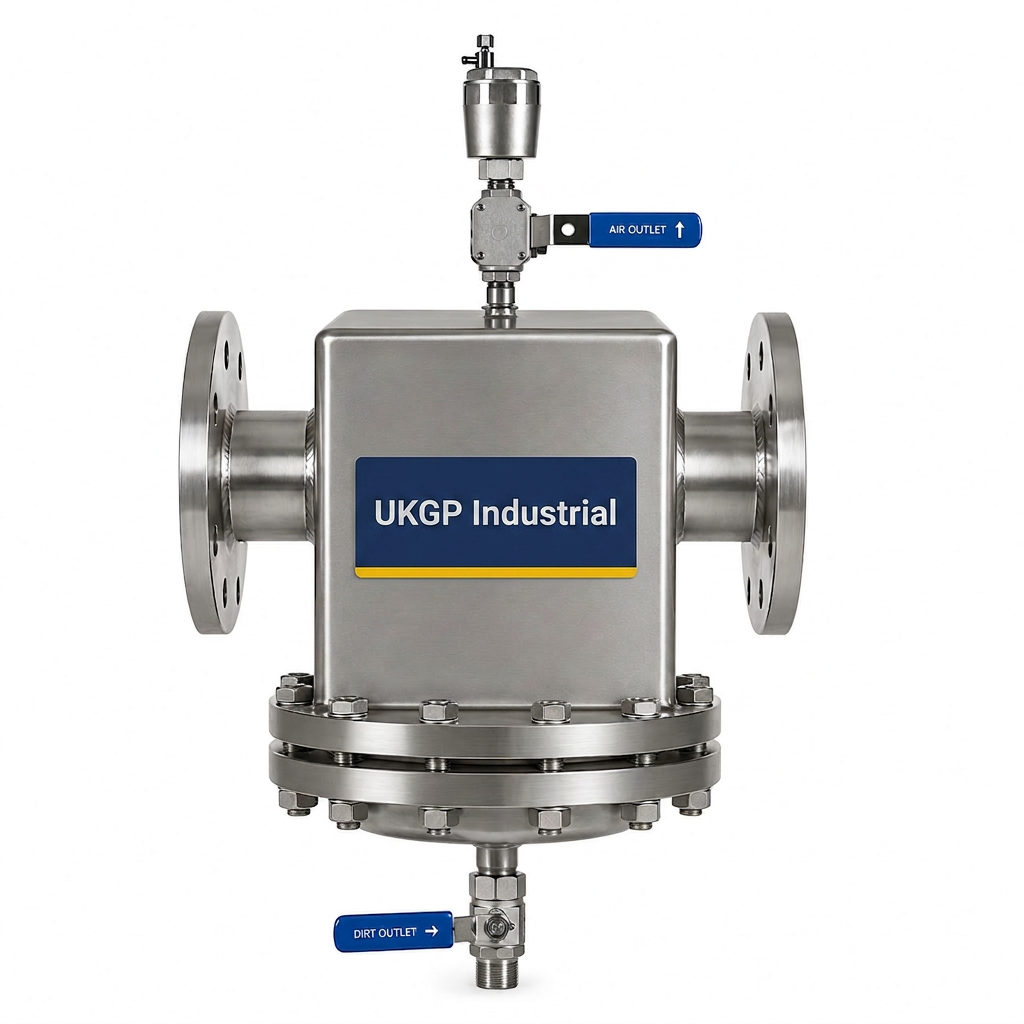
The secondary benefit of side stream filtration is its ability to capture the large amounts of organic 'sludge' liberated during a chemical cleaning event. Without robust filtration, a biofilm heat exchanger cleaning could potentially clog other sensitive downstream components such as control valves and balancing valves. By routing the system water through an 8-bag or cartridge filtration system, you can ensure that the organic matter stripped from the heat exchanger plates is permanently removed from the loop. This proactive approach significantly lowers the total cost of ownership for commercial HVAC systems and aligns perfectly with the sustainability goals of modern FM providers across the UK.
- Continuous removal of biological nutrients and suspended solids
- Prevents clogging of high-value heat exchanger plates and valves
- BSRIA BG50 compliant protection for closed-loop HVAC systems
- UK-manufactured skids with 6-8 week lead times for projects
- Reduces long-term chemical consumption and maintenance costs
Maintaining Efficiency in Plate Heat Exchangers
Maintaining a plate heat exchanger requires a dual focus on both chemical balance and mechanical filtration. When biofilm is allowed to settle, it creates an anaerobic environment where bacteria can produce acidic byproducts, leading to localised pitting. This form of corrosion is particularly dangerous because it occurs under the deposit where it cannot be detected by visual inspection of the outer pipework. Regular biofilm heat exchanger cleaning schedules, combined with high-flow filtration, ensure that the stainless steel plates remain passivated and free from the contaminants that breach the protective chromium oxide layer. This extends the service life of the equipment and prevents expensive leaks in the plant room floor.
For UK contractors and consultants, specifying the correct filtration and dosing equipment at the design stage is paramount. A system designed without a clear strategy for biological control is destined for poor performance. This is why we focus on high-flow rates and ease of use in our filtration designs. When engineers can easily monitor pressure gauges to see when a filter needs changing, they are more likely to maintain the system correctly. Providing the tools for proactive management, such as UKGP Industrial filtration skids and dosing pots, empowers the on-site FM team to stay ahead of the bacterial growth curves that otherwise lead to thermal failure.
If you are currently facing issues with thermal drop-off or are planning a new-build project that requires BSRIA-compliant water treatment, UKGP Industrial can assist. We offer expert guidance on sizing side stream filtration units and can provide technical drawings for your DN50 to DN100 installations. Our products are designed for the rigours of the UK commercial market, offering robust build quality that stands up to the constant cycling of modern variable-speed pumping systems. Investing in the right protection today prevents the heavy operational costs of a biofilm outbreak tomorrow, ensuring your building remains efficient and your carbon footprint is kept to an absolute minimum.
- Prevents sub-deposit corrosion through regular cleaning cycles
- Ensures long-term passivation of stainless steel plate surfaces
- Facilitates easier FM maintenance with visual pressure indicators
- Sized correctly for DN50 to DN100 UK pipework standards
- Supports ESG goals by maintaining peak thermal efficiency
Technical Specifications and Procurement Details
When procuring water treatment equipment for biofilm heat exchanger cleaning maintenance, it is essential to look for quality British manufacturing. UKGP Industrial units are designed with the site engineer in mind, featuring intuitive layouts and industrial-grade components. Our side stream filtration skids, starting from £6,800 + VAT, are a cost-effective alternative to frequent chemical dosing. They are tailored to meet the specific demands of UK building services, with a 2-year warranty that reflects our confidence in the build quality. Whether you are dealing with a retrograde fit in an older plant room or a high-spec new installation, our lead times of 6 to 8 weeks ensure that your project remains on schedule.
The selection of the filtration media is as important as the skid itself. For effective biofilm management, we recommend utilizing fine-micron bags which can capture the microscopic organic clusters associated with biological growth. These bags can be swapped out quickly during a biofilm heat exchanger cleaning process to keep the system running efficiently. Our DN50 to DN100 skids are built to handle high flow rates without significant pressure drops, ensuring that your primary pumps are not overworked. This balanced approach to filtration and fluid dynamics is exactly what CIBSE and BSRIA guidelines aim for in modern plant room design and operation.
Finally, always consider the logistics of the plant room when ordering equipment. Our units are compact and designed to be integrated into existing spaces with minimal disruption. By working with a Surrey-based supplier like UKGP Industrial, you benefit from local expertise and a supply chain that understands the specific pressures of the UK construction and FM industry. From initial quote to final delivery, we provide the technical documentation required to satisfy even the most rigorous M&E procurement standards. Contact us today to discuss how our side stream filtration and chemical dosing solutions can protect your heat exchangers from the costly impact of biofilm accumulation.
- Prices for filtration skids starting from £6,800 + VAT
- Short 6-8 week leads for made-to-order UK manufacturing
- Includes a full 2-year warranty for peace of mind
- Support for standard UK pipe sizes from DN50 to DN100
- Compliant with BSRIA BG29 and BG50 water treatment standards
Environmental and Operational Impact of Clean Systems
The environmental impact of neglected heat exchangers is substantial. As biofilm accumulates, the increased pump power required to maintain flow and the extra boiler energy needed to overcome thermal resistance lead to a direct increase in a building's carbon emissions. Implementing a robust biofilm heat exchanger cleaning protocol is therefore a crucial part of any Net Zero strategy for commercial property. By ensuring heat exchangers remain clean and efficient, facilities managers can significantly lower their annual utility bills and demonstrate a clear commitment to sustainable building operation, reflecting well on both the property owner and the management team.
Operational uptime is the other side of the equation. In critical environments such as hospitals, data centres, or large-scale residential developments, an unexpected failure of a plate heat exchanger due to biological fouling can have catastrophic consequences. By integrating side stream filtration and regular chemical monitoring, you provide a redundant layer of protection that ensures continuous service. The modest investment in a UKGP side stream filtration skid is easily justified when compared to the costs of emergency plant hire or the financial penalties associated with service outages in commercial contracts. It is about moving from reactive crisis management to proactive asset protection.
In conclusion, the fight against biofilm in HVAC systems is won through a combination of the right chemicals, the right dosing procedures, and the right filtration hardware. By following BSRIA BG50 recommendations and partnering with a specialist UK manufacturer like UKGP Industrial, building services professionals can maintain peak efficiency and protect their critical infrastructure. Our range of dosing pots and filtration skids are the industry standard for reliability and performance. Reach out to our Surrey-based technical team for a detailed quote on a DN50 to DN100 side stream filtration skid today and start the journey toward a cleaner, more efficient plant room.
- Reduced carbon footprint through optimized heat transfer
- Lower utility costs for heating and chilled water systems
- Maximized operational uptime for critical building infrastructure
- Alignment with UK Net Zero and sustainability benchmarks
- Professional peace of mind through proactive asset management
Frequently asked questions
How often should I perform biofilm heat exchanger cleaning?
- The frequency depends on system monitoring results. According to BSRIA BG50, if TVC levels or pressure drops indicate fouling, a clean should be performed immediately. Many UK FMs schedule an annual chemical health check to prevent accumulation.
What is the typical cost for a UKGP side stream filtration skid?
- Our high-efficiency skids for biofilm and debris control start at £6,800 + VAT. They are made to order in our Surrey facility with a typical lead time of 6-8 weeks and include a 2-year warranty.
Do you provide skids for larger pipe sizes like DN100?
- Yes, we regularly manufacture side stream filtration units for pipe sizes ranging from DN50 up to DN100 and beyond, ensuring they meet the flow requirements of large commercial HVAC systems.
Why is biofilm more dangerous than scale for heat exchangers?
- Biofilm has a much higher thermal resistance (lower conductivity) than mineral scale. It also fosters an environment for MIC (Microbiologically Influenced Corrosion), which can cause rapid physical damage to the plates.
What standards should I follow for water monitoring?
- You should refer to BS 8552 for sampling procedures and BSRIA BG50 for the overarching guidance on the water quality and maintenance of closed-loop building services systems.