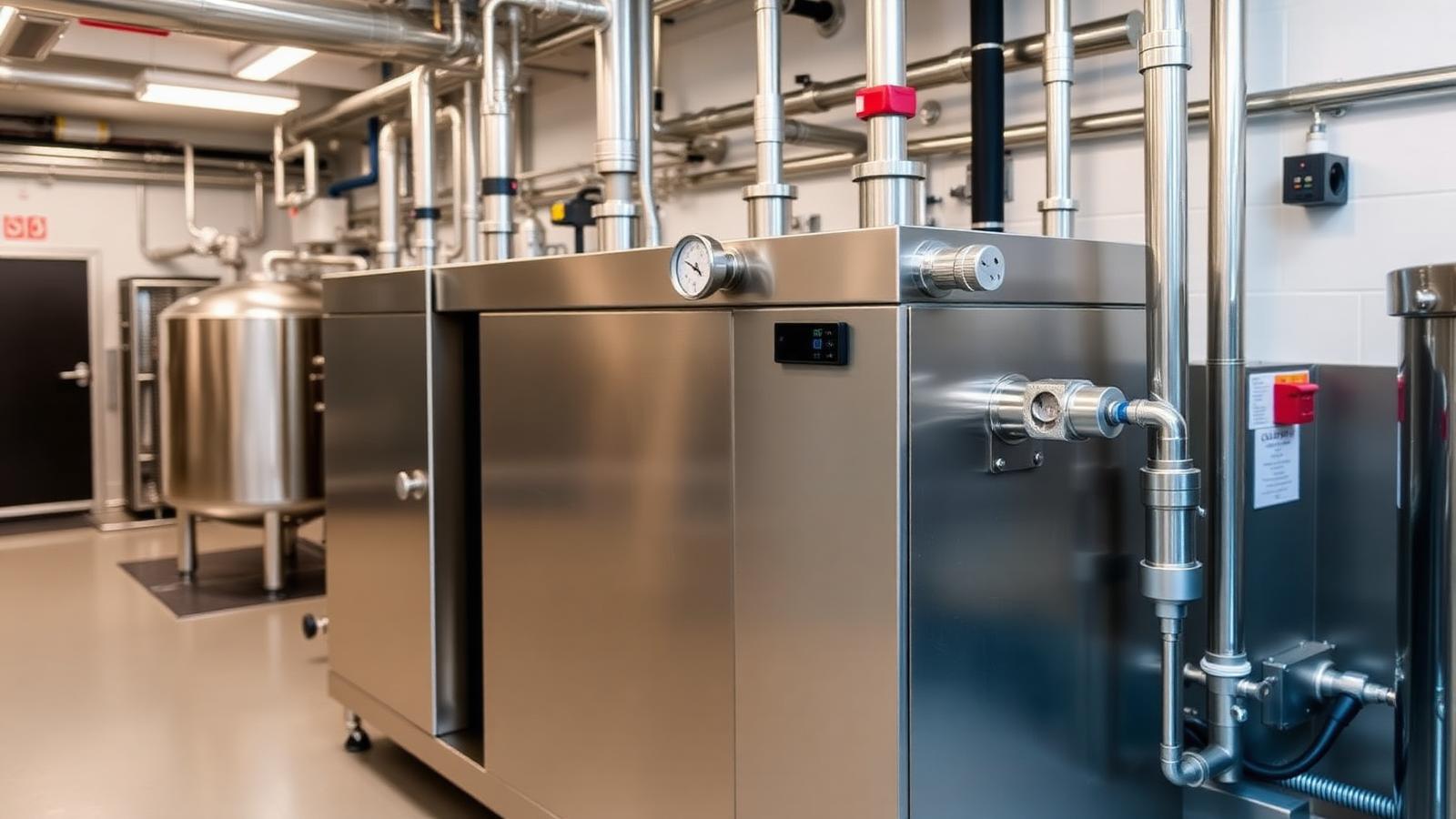
The Role of a Self Cleaning Side Stream Filter in BSRIA Compliance
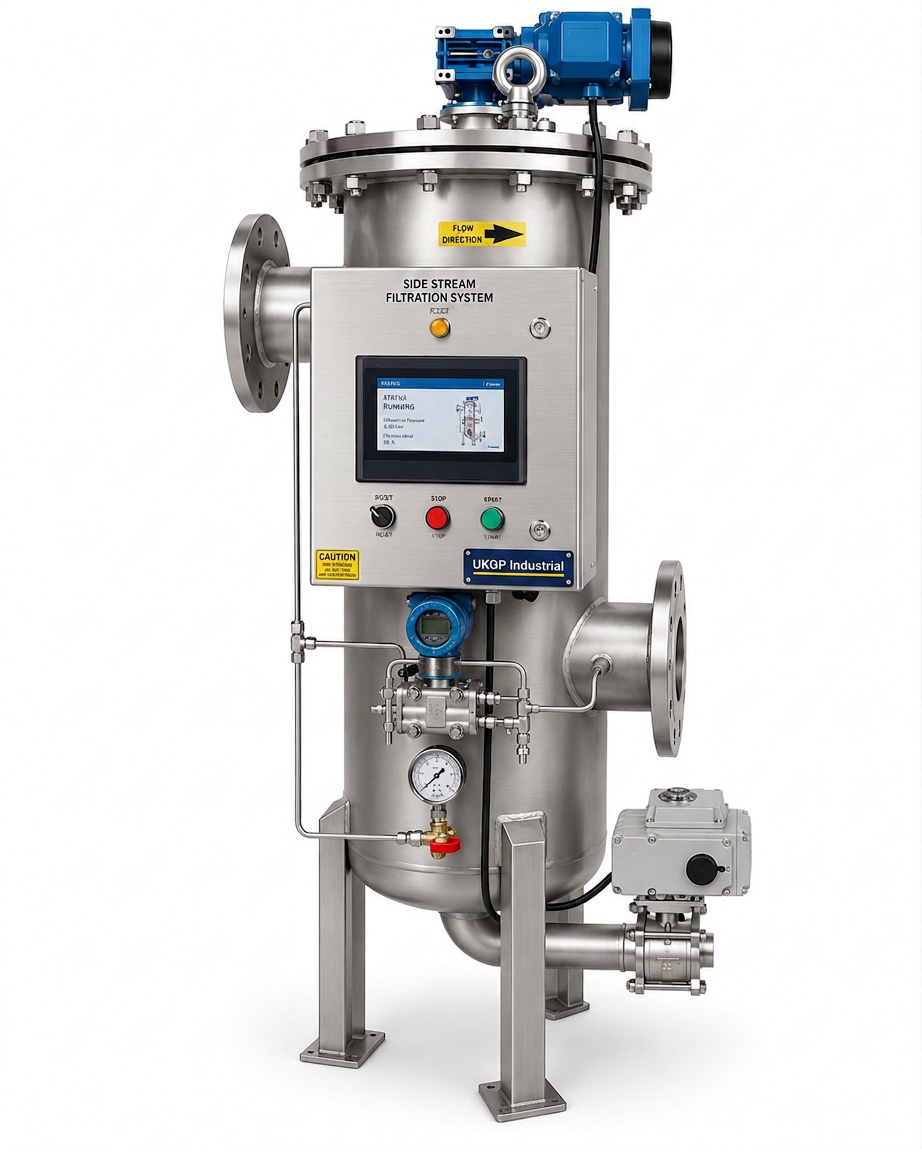
In the UK building services sector, adhering to BSRIA BG50 and BG29 guidelines is the gold standard for maintaining closed-circuit water systems. A self cleaning side stream filter plays a pivotal role in this strategy by providing a constant loop of filtration that targets the fine particulates often missed by standard strainers. Unlike manual systems that require engineers to isolate the unit and replace bags—leading to potential air ingress and system pressure drops—the automated variant uses a backwash or purge cycle to clear debris. This ensures that the system remains within the recommended parameters for suspended solids, significantly reducing the risk of microbial growth and oxygen-led corrosion which can devastate mild steel pipework and sensitive heat emitters.
Choosing UKGP Industrial for your filtration needs means investing in a solution specifically designed for the rigours of UK commercial environments. Our side stream filtration skids are engineered to handle 5% to 15% of the total system flow rate, which is the industry-accepted metric for effective particulate control. By removing magnetite and non-magnetic debris down to sub-micron levels, these units protect high-value assets like condensing boilers and chillers. From a commercial perspective, preventing the build-up of sludge is far more cost-effectively than reactive chemical cleaning or power flushing. Our skids start from approximately £6,800+VAT, providing a robust return on investment by extending the life of your primary plant by several years.
Furthermore, the integration of automated filtration aligns perfectly with CIBSE CP1 Heat Networks Code of Practice. In modern district heating and high-density residential schemes, the reliability of the secondary side is paramount. An automatic self cleaning side stream filter reduces the mechanical stress on pump seals and control valves, which are frequently the first points of failure when suspended solids are allowed to circulate. By maintaining a clear fluid path, the system operates at its designed delta-T, ensuring that heat transfer surfaces remain clean and efficient. This focus on preventative maintenance is what separates high-performing facilities from those plagued by constant call-outs and inefficient energy consumption.
- Ensures alignment with BSRIA BG50 guidelines for water quality monitoring.
- Reduces manual labour costs associated with filter bag replacements.
- Prevents the accumulation of magnetite in low-flow areas of the circuit.
- Maintains consistent system pressure by avoiding clogged filter media.
- Supplied by UKGP Industrial with a comprehensive 2-year warranty as standard.
Technical Advantages of Automatic Backwash Systems
The technical superiority of a self cleaning side stream filter lies in its ability to operate autonomously using differential pressure sensors or timed intervals. When the internal mesh or volcanic media traps a specific volume of debris, the unit initiates a backwash cycle that flushes the contaminants to a foul drain. This process is incredibly efficient, typically losing only a few litres of treated water, which is then replenished by the pressurisation unit. For M&E contractors, this means the system is effectively 'fit and forget' in comparison to traditional basket strainers. UKGP Industrial offers these bespoke skids for pipe sizes from DN50 up to DN100, ensuring they fit seamlessly into both New Build and Retrofit plant room configurations across the UK.
When considering the hydraulic design, it is essential to ensure that the filtration skid does not interfere with the primary system’s pump head. Our skids are designed with high-efficiency centrifugal pumps that draw from the return header and discharge back into the same line, downstream of the intake. This setup ensures that the self cleaning side stream filter remains independent of the main system flow variations. Consequently, even during peak heating or cooling loads, the filtration process continues unabated. With a made-to-order lead time of 6-8 weeks, these units are a strategic addition to any project timeline, providing the necessary protection during the critical post-commissioning phase when debris load is typically at its highest.
Beyond particulate removal, the automation facilitates better data logging for Facilities Managers. Many of our units can be interfaced with a Building Management System (BMS), providing real-time alerts on backwash frequency. A sudden increase in cleaning cycles can serve as an early warning sign of an internal corrosion event or a failing component elsewhere in the system. This proactive diagnostic capability is a significant leap forward from the reactive 'wait and see' approach of the past. Our technical team at UKGP provides full support throughout the specification process, ensuring that the selected unit matches the specific fluid characteristics and volume of your building’s HVAC network.
- Automated differential pressure monitoring triggers cleaning cycles.
- Available in high-grade stainless steel for longevity and corrosion resistance.
- Minimal water wastage during the high-velocity backwash phase.
- BMS compatibility for remote monitoring and fault reporting.
- Flexible footprint designs to accommodate tight UK plant room spaces.
Protecting Heat Exchangers and Cooling Towers
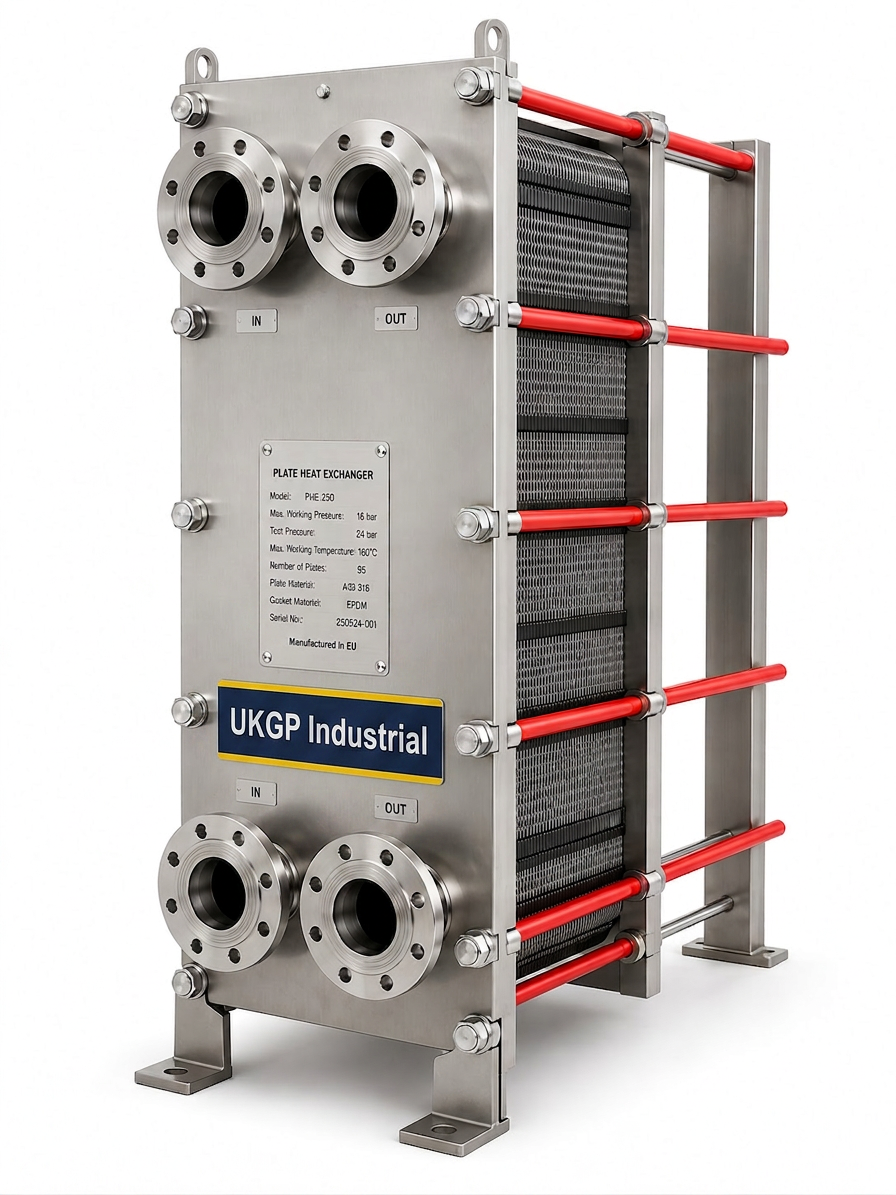
One of the primary beneficiaries of a self cleaning side stream filter is the Plate Heat Exchanger (PHE). These units are susceptible to fouling due to their narrow plate gaps, where even small particles of scale or sludge can significantly reduce the heat transfer coefficient. When debris settles on the plates, it creates an insulation layer that forces the primary heat source to work harder, increasing gas or electricity consumption. By ensuring the secondary water is scrubbed of solids, you protect the PHE from efficiency losses and the risk of localized pitting corrosion. UKGP Industrial can supply both the filtration skids and the heat exchangers, providing a single-source solution for thermal management.
In cooling tower applications, the risks are even more pronounced. Open-loop systems are prone to atmospheric contamination, including dust, pollen, and insects. An automatic side stream filter effectively manages this load, preventing the packing within the cooling tower from becoming a breeding ground for Legionella bacteria. While BSRIA BG50 focuses largely on closed systems, the principles of particulate management apply across all industrial water circuits. Reducing the total suspended solids (TSS) also enhances the efficacy of chemical biocides and inhibitors, as these treatments are not 'used up' by reacting with inert sludge, but instead remain focused on protecting the pipework surfaces.
For procurement leads and asset owners, the financial argument for these systems is clear. While a manual dosing pot and a standard Y-strainer represent a lower initial capital outlay, the ongoing operational expenditure (OPEX) of manual cleaning, chemical top-ups, and eventual component failure quickly exceeds the cost of an automated skid. UKGP's units, starting from £6,800+VAT, are designed to minimize these lifetime costs. Given that our skids are made to order with a 2-year warranty, you are guaranteed a product that meets the specific demands of your site, rather than a generic off-the-shelf component that may not be fit for purpose.
- Prevents fouling of plate heat exchanger surfaces for optimal thermal transfer.
- Reduces the risk of microbial growth by removing organic and inorganic nutrients.
- Enhances the performance of chemical water treatment programmes.
- Minimises downtime during planned maintenance periods.
- Robust construction suitable for heavy-duty industrial and commercial use.
Installation and Commissioning Best Practices
Proper installation is vital to maximise the efficiency of your self cleaning side stream filter. The skid should ideally be located in the plant room, connected across the main return header where the water velocity is lower, allowing particulates to settle more readily into the side-stream take-off. UKGP Industrial provides detailed CAD drawings for our DN50 to DN100 units to assist M&E contractors with spatial planning. It is also important to ensure that the backwash pipework is correctly sized and routed to a suitable drain with an air break, preventing any risk of backflow into the HVAC system. This adherence to UK water regulations is a non-negotiable aspect of professional plant room design.
During the commissioning phase, it is recommended to run the self cleaning side stream filter continuously for the first 24 to 48 hours to clear any 'construction debris' that may have entered the system during installation. Even with the best site practices, small amounts of solder, flux, and metal filings are inevitable. Our automated skids are particularly effective during this stage, as they can handle high particulate loads that would saturate a standard filter bag in minutes. By clearing the water quickly, you ensure that the system is handed over to the client in full compliance with BS 8552, the British Standard for sampling and monitoring of water in building services.
Long-term operational success depends on periodic inspection and maintenance, although the requirements are far lower than manual alternatives. UKGP recommends an annual service to check the integrity of the filter media or mesh, verify the operation of the automated valves, and test the control panel logic. Because our units come with a 2-year warranty and are manufactured right here in the UK, sourcing replacement parts or technical advice is straightforward. This local support is a significant advantage over imported 'white-label' units, providing peace of mind to FM teams who need to ensure zero downtime for their building occupants.
- Strategic placement on return headers ensures maximum particulate capture.
- DN50 to DN100 connections accommodate a wide range of system volumes.
- Ensures compliance with BS 8552 regarding water quality sampling.
- Detailed technical documentation provided for easy contractor integration.
- Made to order in the UK with a reliable 6-8 week lead time.
Comparing Manual vs. Automatic Side Stream Filtration
The debate between manual and automatic filtration often comes down to budget versus performance. A manual filter requires an engineer to physically visit the plant room, often weekly, to check the pressure gauges and replace the filter media. In a busy commercial facility, this task is often neglected, leading to a blocked filter that is bypassed, effectively leaving the system unprotected. A self cleaning side stream filter removes this human error from the equation. While the initial investment is higher—reflecting the advanced sensors, control valves, and pumps involved—the total cost of ownership is significantly lower due to reduced labour and improved system efficiency.
Furthermore, every time a manual filter is opened, there is a risk of introducing oxygen into the system. Oxygen is the primary driver of corrosion in many UK HVAC systems, and as BSRIA BG50 notes, keeping a system 'closed' is essential for longevity. The automatic purging process of our skids is designed to be hermetic, ensuring that debris is removed without inviting atmospheric air into the circuit. This makes the self cleaning side stream filter the technically superior choice for high-pressure or high-temperature systems where oxygen ingress can lead to rapid degradation of pumps and valves. At UKGP, we see this as a critical design consideration for modern buildings.
From a commercial standpoint, specifying a UKGP Industrial skid adds value to your project. Our specialists work with consultants to ensure the filtration rate is balanced perfectly against the system volume. Whether you are dealing with a small office block using a DN50 connection or a larger industrial site requiring DN100, we provide the tailor-made solution you need. With prices starting from £6,800+VAT, our automatic systems are competitively priced for the UK market, especially when considering the 2-year warranty and the high-quality components used in every build. Investing in automation is an investment in the long-term health of your mechanical infrastructure.
- Eliminates the risks of oxygen ingress associated with manual filter changes.
- Reduces engineer site visits and associated health and safety risks.
- Maintains system integrity 24/7 without requiring operator intervention.
- Provides a predictable and measurable filtration performance.
- UK-manufactured quality ensuring compliance with local engineering standards.
Integrating Air and Dirt Separators for Total Protection
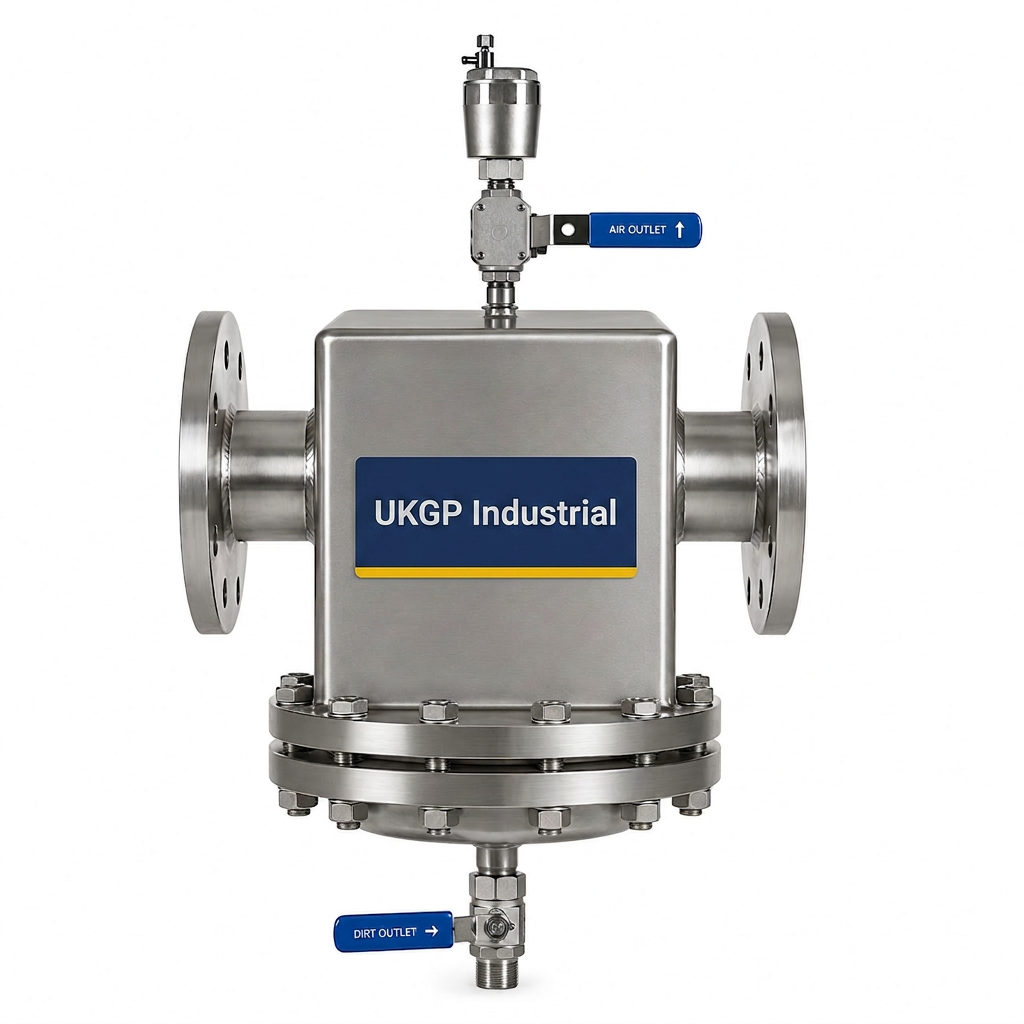
While a self cleaning side stream filter is the heavy lifter for particulate removal, it works most effectively as part of a multi-stage water treatment strategy. We often recommend installing air and dirt separators on the primary flow and return lines. These units use coalescence to remove micro-bubbles and larger debris proactively before they reach the side-stream loop. This belt-and-braces approach is particularly effective in systems with complex pipework runs where air pockets can be trapped. By removing the air, you reduce the rate of oxidation, which in turn reduces the volume of magnetite that the side-stream filter has to process.
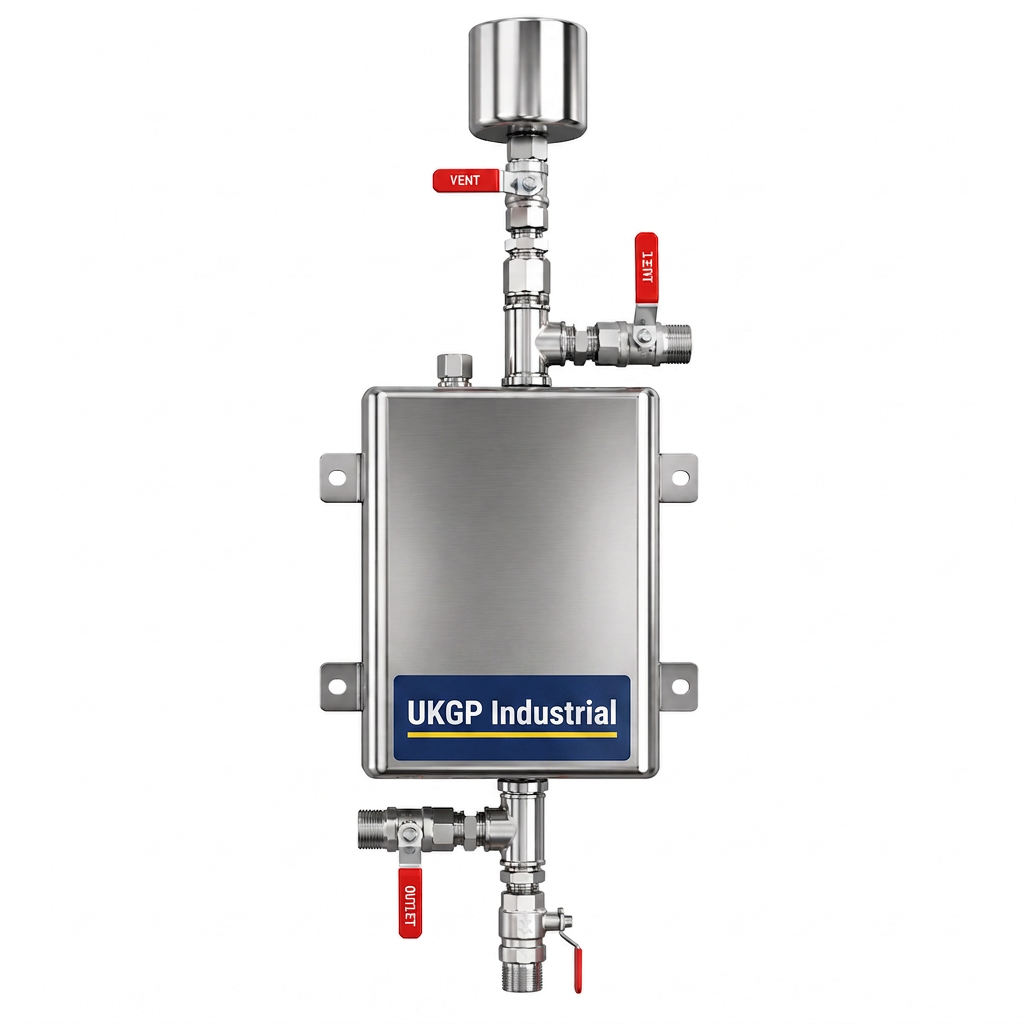
At UKGP Industrial, we understand that every plant room has unique challenges. Whether it is limited space, specific temperature requirements, or high-pressure ratings, our range of equipment is designed to be versatile. We also supply chemical dosing pots to facilitate the easy introduction of inhibitors and biocides. When combined with an automatic side stream filter, you create a comprehensive water treatment regime that meets and exceeds the requirements of CIBSE and BSRIA. This holistic view of the system's hydraulic health is what ensures the thermal performance promised by the manufacturer is actually delivered in practice.
To get a bespoke quote for your project, simply contact our engineering team with your system volume and flow rates. We will specify a self cleaning side stream filter that fits your requirements, ensuring a lead time of 6-8 weeks so your project stays on track. Our commitment to quality means every unit is rigorously tested before it leaves our Surrey facility. With the added security of a 2-year warranty, you can be confident that you are installing the very best in UK-made filtration technology. Protect your plant, reduce your energy bills, and ensure compliance by choosing an automated solution today.
- Pairs perfectly with air and dirt separators for multi-stage cleaning.
- Easily integrated with dosing pots for complete chemical control.
- Maintains the design efficiency of chillers and condensing boilers.
- Reduces the environmental impact by lowering energy consumption.
- Comprehensive support from initial design to final commissioning.
Frequently asked questions
What is the typical lead time for a UKGP side stream filter?
- Our automatic self cleaning side stream filter skids are made to order at our Surrey facility, with a typical lead time of 6 to 8 weeks from order placement.
How does this unit assist with BSRIA BG50 compliance?
- BSRIA BG50 emphasizes the removal of suspended solids to prevent corrosion and fouling. Our filters continuously scrub the water, significantly reducing TSS to maintain the system within recommended limits.
What pipe sizes are available for the filtration skids?
- We offer standard skid configurations for pipe sizes ranging from DN50 to DN100, though larger custom sizes can be manufactured upon request to meet specific project needs.
Do you offer a warranty on your filtration equipment?
- Yes, all our side stream filtration units come with a comprehensive 2-year warranty as standard, reflecting our confidence in the high-quality UK manufacturing process.
What is the starting price for an automated filtration skid?
- Prices for our automated self cleaning side stream filter skids start from £6,800+VAT, depending on the specific flow rate requirements and sizing.